

Pakistan pushes mediation as US-Iran talks hinge on Hormuz blockade
Kamran Khan highlights rising confusion as ceasefire deadline approaches with no final agreement

News Desk
The News Desk provides timely and factual coverage of national and international events, with an emphasis on accuracy and clarity.
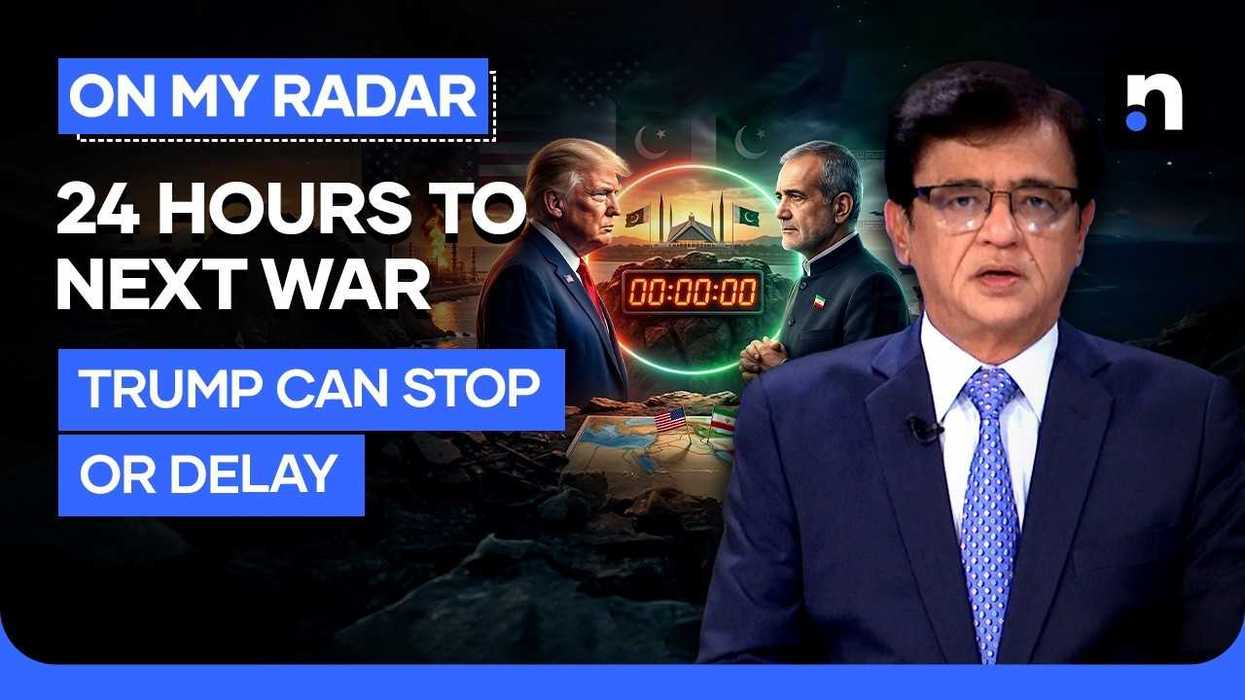
The ceasefire deadline between the United States and Iran is set to expire on Wednesday, intensifying diplomatic pressure on both sides to reach an agreement as tensions over the Strait of Hormuz continue to dominate negotiations, according to remarks discussed on Kamran Khan’s program “On My Radar.”
Iran is insisting that before any negotiations proceed, restrictions or blockade conditions related to the Strait of Hormuz must be lifted, while U.S. President Donald Trump has maintained that a deal must be reached first before any easing of maritime restrictions.
Speaking in a CNBC interview on Tuesday, Trump said the United States is in a strong negotiating position and that Iran has no choice but to send a delegation for talks. He also reiterated that there would be no extension of the ceasefire deadline and urged Tehran to move quickly toward a deal he said would benefit Iran.
CNN has reported that Trump’s statements are seen by some analysts as a major obstacle to progress in peace efforts. Former Secretary of State Hillary Clinton has also criticized Trump’s approach, saying his team lacks the capability to effectively negotiate a deal with Iran.
According to multiple media reports, including CNN and Reuters, U.S. Vice President JD Vance and members of his team were expected to depart Washington for Islamabad on Tuesday evening, though their travel status remains unclear. The Wall Street Journal reported that Iran has told mediating countries it will send a delegation to the Islamabad talks on Tuesday. The Associated Press also reported that negotiators from both sides had confirmed plans to attend talks in Pakistan. However, Iranian state media continued to report late Tuesday that no delegation had been dispatched to participate in the Islamabad discussions. Pakistan’s Information Minister Attaullah Tarar said in a post on X that Iran has not confirmed sending a delegation to the negotiations.
Tarar added that the ceasefire is scheduled to expire at 4:50 a.m. on April 22, making Iran’s decision on participation in the talks critical. He said Pakistan has made sincere efforts to persuade Iranian leadership to take part in the negotiations and continues to do so.
Earlier, Pakistan’s Chief of Defense Forces Field Marshal Asim Munir reportedly urged Trump to support lifting restrictions around the Strait of Hormuz, describing it as a key obstacle to progress. Prime Minister Shehbaz Sharif also held a telephone conversation with Iranian President Masoud Pezeshkian, urging Tehran to send a delegation. However, the Iranian president reportedly said no delegation would be dispatched unless the Hormuz blockade issue is resolved.
Tensions have also escalated at sea, with U.S. forces intercepting an oil tanker in the Indian Ocean that Washington said was previously sanctioned over alleged Iranian oil smuggling. Over the weekend, U.S. authorities also seized an Iranian cargo vessel accused of violating sanctions related to maritime restrictions. Iran has described these actions as violations of the ceasefire framework. Former U.S. Ambassador to Pakistan and Iraq Ryan Crocker told CNN that restoring the pre-crisis status of the Strait of Hormuz is essential for any successful diplomatic outcome. Meanwhile, Iranian Parliament Speaker Mohammad Baqer Qalibaf said Iran would not engage in talks under threats and warned that Tehran has prepared “new cards” in response to pressure.
Pakistan has positioned itself as a key mediator in the escalating crisis, with officials continuing diplomatic outreach to both Tehran and Washington. Despite rising tensions, global markets have remained relatively stable, with major indices steady and oil prices showing limited volatility, suggesting investors are currently pricing in the possibility of a diplomatic breakthrough rather than further escalation.
While officials on all sides signal that a second round of talks remains likely, uncertainty continues to cloud the diplomatic process as final confirmations remain pending. Analysts cited in broadcast discussions noted that competing public statements from Washington, Tehran, and state media outlets have added to confusion over timing and participation. Pakistan’s mediation efforts are expected to continue in the hours leading up to the deadline, with diplomatic channels still active. Observers say the coming hours will determine whether the parties move toward a negotiated framework or allow the ceasefire window to lapse without agreement.
The situation remains fluid as diplomatic and military developments continue to unfold across multiple channels.




Comments
See what people are discussing