

Pakistan reduces diesel prices by PKR 32.12 per liter
PMO statement says decision is part of government’s broader effort to ease financial burden on public

Business Desk
The Business Desk tracks economic trends, market movements, and business developments, offering analysis of both local and global financial news.
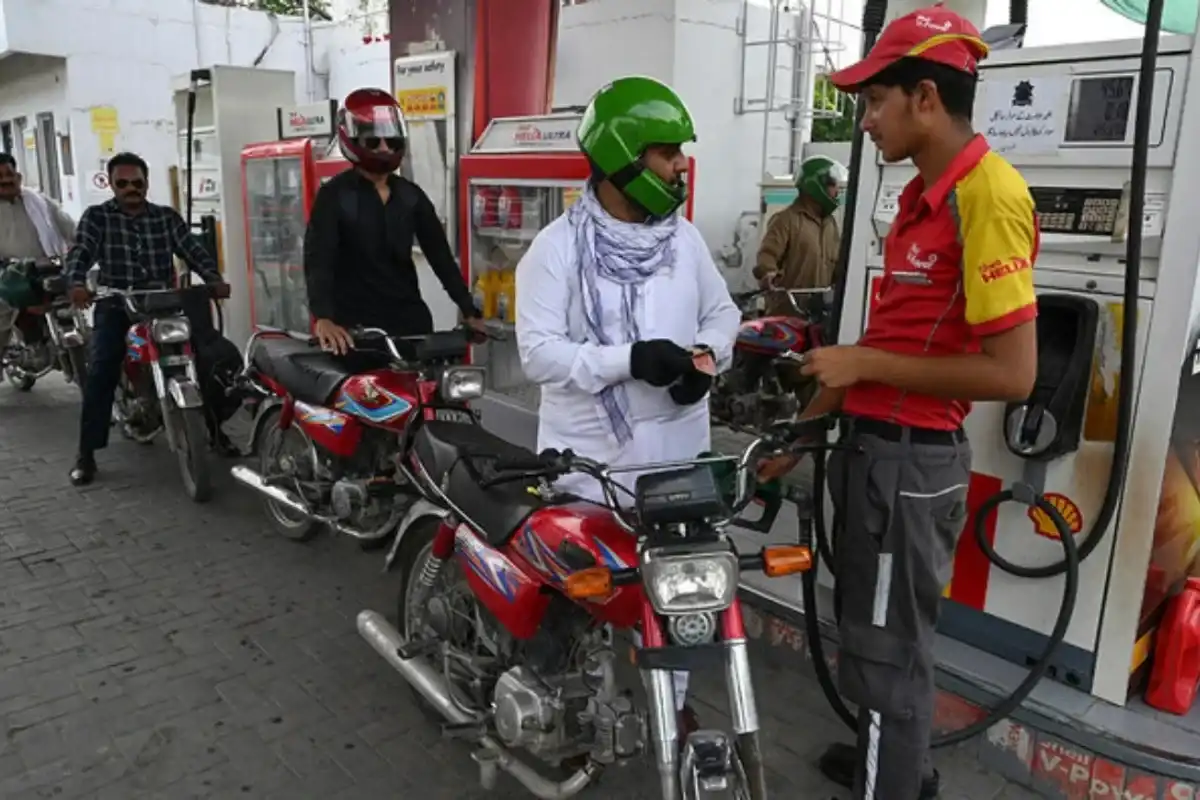
Pakistan’s prime minister has approved a significant reduction in diesel prices, cutting the cost by PKR 32.12 per liter, in a move aimed at consumer relief, according to a statement from his office.
The price has been reduced from PKR 385.54 per liter to PKR 353.43 per liter.
The government said the decision is part of its broader effort to ease the financial burden on the public.
Sharif directed authorities to ensure the impact of lower fuel prices is passed on to consumers as quickly as possible.
Global oil prices fell sharply after Iran’s foreign minister said passage for all commercial vessels through the Strait of Hormuz is now open for the remaining ceasefire period, in line with that in Lebanon.
Brent crude futures fell $8.46, or 8.5%, to $90.93 a barrel at 1300 GMT, while the U.S. West Texas Intermediate crude futures fell $8.87, or 9.4%, to $85.82 a barrel.
Lower oil prices have provided some respite to Pakistan, where petrol and diesel prices had shot to record levels after the closure of the Strait of Hormuz disrupted global supplies.
On April 3, the price of petrol was increased by PKR 137.3 per liter to PKR 458.47 and that of diesel by PKR 184.49 to PKR 520.35 per liter. Later, petrol was lowered by PKR 80.
Before raising the prices, the government gave a subsidy ok around PKR 130 billion by keeping the prices unchanged for two weeks even as global prices rose steeply.
Global price spike
Since the US and Israel launched strikes on Iran on February 28, oil prices have risen sharply as the shipping of petroleum products via the Strait of Hormuz came to a virtual standstill, creating global disruptions.
The price of Dubai crude – the benchmark for fuel prices in Pakistan – increased by 61% from USD 71.2 per barrel on Feb 27 to USD 114.6 by April 2. The prices of diesel and petrol in the international market surged by 222.2% and 79.5%, respectively, during the same period.
Petroleum levy
Fuel prices in Pakistan are influenced not only by global crude prices but also by the government’s tax structure, particularly the Petroleum Development Levy (PDL).
The PDL is a fixed amount per liter levied on petroleum products. It is a key source of non-tax revenue for the federal government because, unlike the general sales tax, which must be shared with provinces under the National Finance Commission Award, the petroleum levy remains entirely with the federal government.
Pakistan collected more than PKR 180 billion in PDL during the past six weeks amid heightened tensions linked to the U.S.-Iran conflict, according to finance ministry sources.
Total petroleum levy collections reached PKR 1.234 trillion in the current fiscal year from July through mid-April, significantly higher than the same period last year, sources said. The figure marks an increase of nearly PKR400 billion compared with the corresponding period of the previous fiscal year.
In March alone, the government collected PKR 52 billion more than it did in March of fiscal year 2024–25, reflecting higher fuel consumption and sustained levy rates.


Comments
See what people are discussing