

Pakistan's new provinces debate puts Karachi's future in focus
Kamran Khan examines growing government support for a referendum and opposition from PPP

News Desk
The News Desk provides timely and factual coverage of national and international events, with an emphasis on accuracy and clarity.
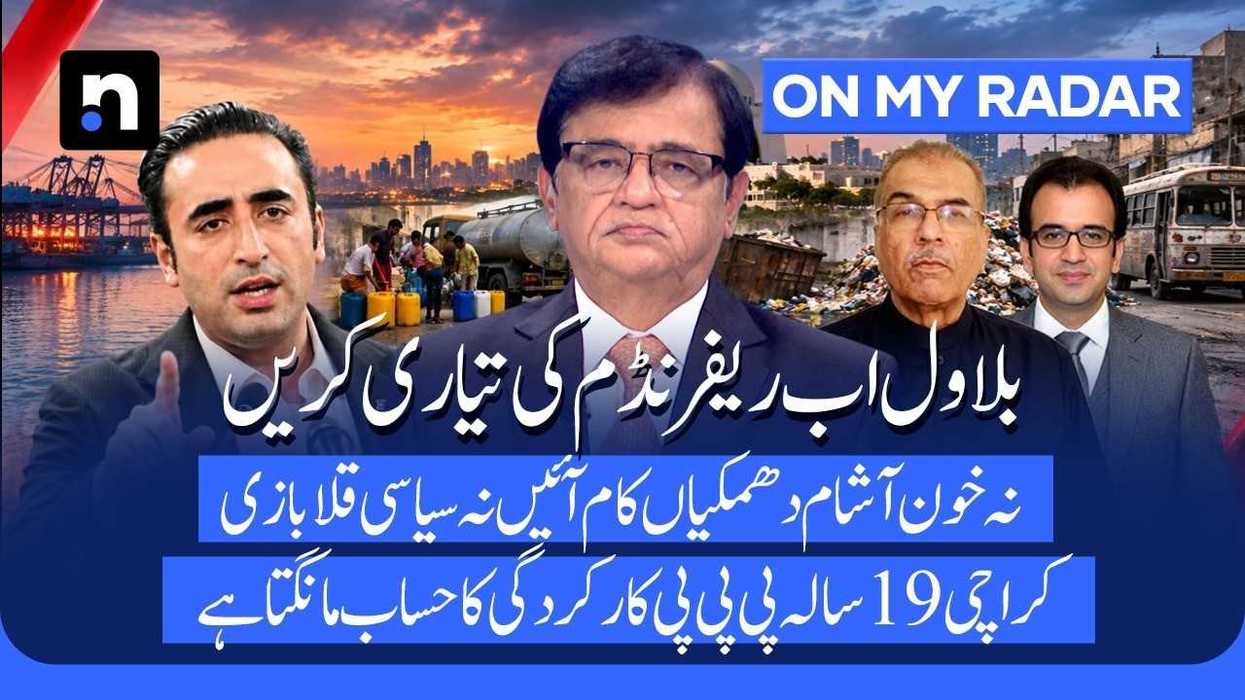
Pakistan's debate over creating new provinces has moved to the center of political discussions, with senior government ministers discussing a possible referendum, setting tentative timelines and holding a series of meetings with President Asif Ali Zardari. The debate has also revived calls for Karachi, the country's economic hub, to receive a separate provincial or empowered administrative status.
In the latest episode of his program On My Radar, Kamran Khan said developments in Islamabad and consultations at the presidency suggested that key political decision-makers were considering major changes to Pakistan's administrative structure.
The ruling Pakistan Muslim League-Nawaz (PML-N) also appears increasingly willing to support the creation of smaller provinces, although disagreements remain over how the process should be carried out and whether a referendum is constitutionally appropriate.
Interior Minister Mohsin Naqvi initially brought the proposal into the national debate. Defense Minister Khawaja Asif, Information Minister Attaullah Tarar, Parliamentary Affairs Minister Tariq Fazal Chaudhry and several other government figures have since publicly supported the idea.
Chaudhry has said a referendum would take place and that the PML-N would make every effort to persuade its coalition partner, the Pakistan Peoples Party (PPP), to support the proposal.
Asif has also suggested that a timeline has been established. According to the defense minister, discussions could take a clearer shape by the end of this year, with practical progress expected early next year.
However, PPP Chairman Bilawal Bhutto Zardari has strongly opposed the referendum proposal. He maintains that new provinces can only be established through the constitutional process and that provincial boundaries cannot be changed through a referendum.
Despite the opposition, government circles remain hopeful that the PPP can be persuaded to discuss both the referendum and a broader plan for creating new administrative units.
Zardari holds three key meetings
The presidency has emerged as a major center of political consultations, with three high-level meetings involving Zardari and senior government figures over the past 10 days.
On Nov. 14, Zardari met Prime Minister Shehbaz Sharif in Lahore. Media reports said the two agreed that any creation of new provinces or administrative units would follow constitutional procedures and that Parliament could not be bypassed on the referendum question.
On Nov. 19, Sharif and Naqvi met Zardari at the presidency. The country's political situation and the proposal for new provinces were reportedly discussed.
Another meeting took place on Nov. 22, when Deputy Prime Minister Ishaq Dar and National Assembly Speaker Ayaz Sadiq met the president. Former prime minister Raja Pervaiz Ashraf and Sen. Sherry Rehman also attended. Reports said the proposed referendum and the PPP's reservations about it were among the issues discussed.
The consultations have continued despite Bilawal's public opposition, indicating that the government is still seeking to bring the PPP on board.
The PML-N is also expected to hold an important party meeting this week to discuss the creation of new provinces, the referendum proposal and a strategy for securing support from coalition partners.
However, the proposal has exposed differences within the ruling party over how to advance the debate.
Prime Minister's adviser Rana Sanaullah criticized Naqvi for raising the referendum proposal at what he described as an inappropriate forum and through an inappropriate speech. He argued that the PPP should have been taken into confidence before such a sensitive issue was made public.
His criticism, however, was directed primarily at the way the proposal was introduced rather than necessarily rejecting the idea of a referendum itself.
Karachi's future becomes central to debate
The possible creation of new provinces has particular significance for Karachi, Pakistan's largest city and economic center. Despite contributing a substantial share of national tax revenue, the city continues to struggle with basic infrastructure and public services.
Khan highlighted the city's longstanding problems after nearly 19 years of PPP-led provincial government, questioning why Karachi remained deprived of essential facilities despite the resources available to the Sindh government.
Residents continue to depend on water tankers, while damaged roads, mounting garbage, inadequate sewage systems and incomplete mass transit projects remain major challenges. Local government institutions also have limited authority and financial resources to address the city's problems.
The Sindh government receives thousands of billions of rupees in annual budget allocations, raising questions about why the funding has not translated into substantial improvements in Karachi's infrastructure and public services.
Supporters of a separate province for Karachi argue that the city needs a new administrative identity, greater control over its resources and the authority to make its own decisions.
Opponents of dividing Sindh, including the PPP leadership, defend the province's existing boundaries. But Khan argued that those opposing a separate administrative arrangement must also explain how and when Karachi's problems can be resolved under the current system.
He said Bilawal had every political right to defend Sindh's existing boundaries, but Karachi residents also had the right to question the PPP's performance after nearly two decades in power.
The broader debate raises a fundamental question for Pakistan's political leadership: whether to retain the existing distribution of authority and resources among the country's four provinces or introduce a new governance structure through smaller provinces and administrative units.
For Karachi, the issue goes beyond acquiring a new geographical identity. The central demand is for a system that gives the city resources, authority and public services commensurate with its contribution to the national economy.
Although no final decision has been announced, the growing political consultations suggest that the debate over Pakistan's administrative structure has reached the country's highest levels. Whether it produces meaningful change for Karachi and other underserved regions remains to be seen.




Comments
See what people are discussing