

Pakistan says return to global bond markets signals renewed investor confidence
Finance Minister Muhammad Aurangzeb says Pakistan market return signals economic trust

Business Desk
The Business Desk tracks economic trends, market movements, and business developments, offering analysis of both local and global financial news.
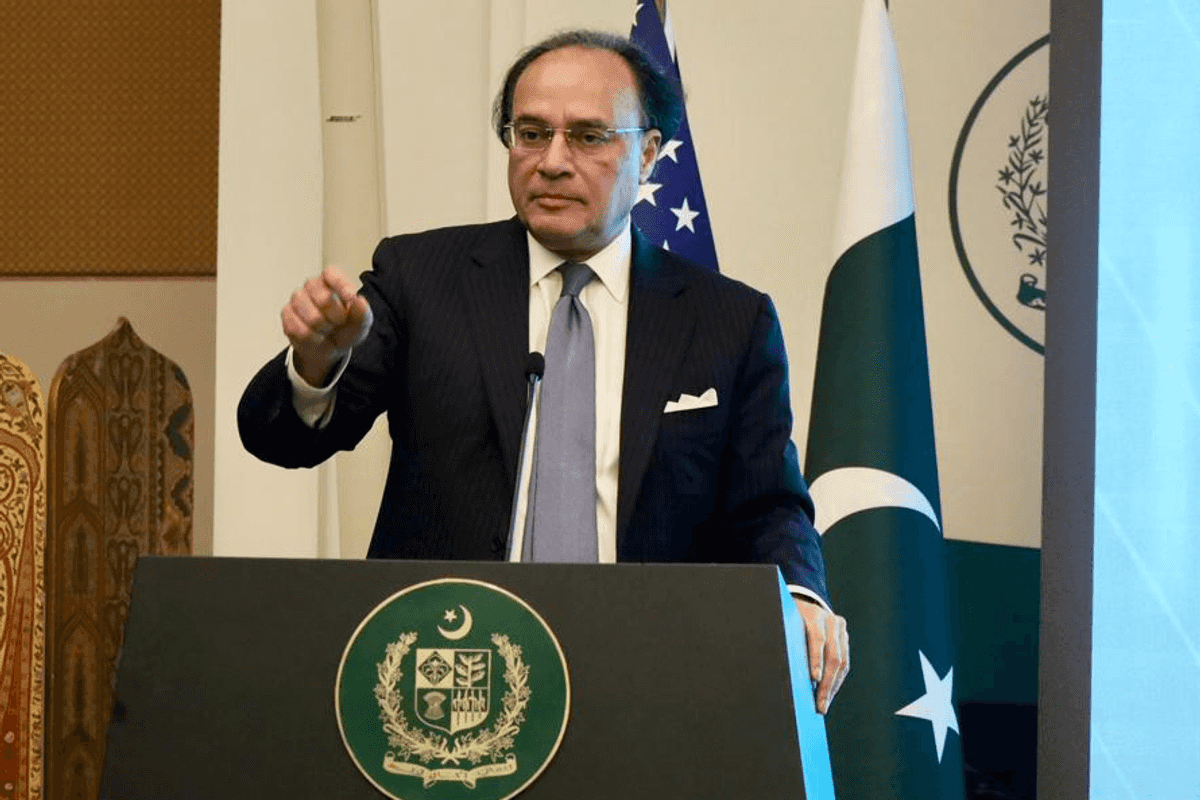
Pakistan’s Finance Minister Muhammad Aurangzeb said Friday that the country’s return to international capital markets reflects renewed investor confidence as the government continues economic reforms.
Aurangzeb spoke to Pakistani journalists in Washington during the World Bank-IMF Spring Meetings 2026. He said the three-year bond issuance showed confidence in Pakistan’s economic direction, policy consistency and leadership.
He said rebuilding investor trust depends on maintaining “basic economic hygiene” and following sound macroeconomic fundamentals.
Aurangzeb was joined at the briefing by State Bank of Pakistan Governor Jameel Ahmad and Pakistan’s ambassador to the United States, Rizwan Saeed Sheikh.
The finance minister cited what he described as improving external sector indicators. He said Pakistan posted a current account surplus of more than $1 billion in March, while remittances reached $3.8 billion during the same month.
He added that inflows through the Roshan Digital Account hit a record $261 million in March, which he said highlighted growing contributions from overseas Pakistanis.
Aurangzeb said meetings with officials from China, the United States and the United Kingdom focused on expanding trade, investment and cooperation in information technology, minerals and energy.
On fiscal policy, he said preparations for the next national budget were underway, with consultations involving business groups and other stakeholders.
He said the government was working to broaden the tax base, adding that final decisions would be made after cabinet and parliamentary review.
Aurangzeb also highlighted reforms aimed at strengthening financial oversight and formalizing exchange companies.
He said the finance ministry, central bank and law enforcement agencies were coordinating efforts to improve transparency and documentation of financial flows.
Addressing structural challenges, Aurangzeb said the government was seeking to improve the business climate by simplifying regulations and reducing administrative delays.
He described those issues as long-standing barriers to investment.
On energy and climate policy, he said Pakistan was pursuing a transition toward renewable energy while addressing inefficiencies in the power sector.
He added that lessons from recent climate-related shocks had improved the country’s fiscal preparedness and disaster response capacity.
Aurangzeb reiterated Pakistan’s commitment to meeting its financial obligations.
He said international financial forums should be used for cooperation and knowledge-sharing rather than debt relief advocacy.
The minister also pointed to increased transshipment activity at Pakistan’s ports and improved logistics management as signs of economic momentum despite global challenges.
He said maintaining policy continuity, including initiatives such as the Roshan Digital Account, remained essential for sustaining investor confidence and supporting long-term growth.



Comments
See what people are discussing