

Pakistan steps up diplomacy as Iran signals conditional openness to talks
Kamran Khan highlights Pakistan-China plan as Trump signals US exit within weeks

News Desk
The News Desk provides timely and factual coverage of national and international events, with an emphasis on accuracy and clarity.
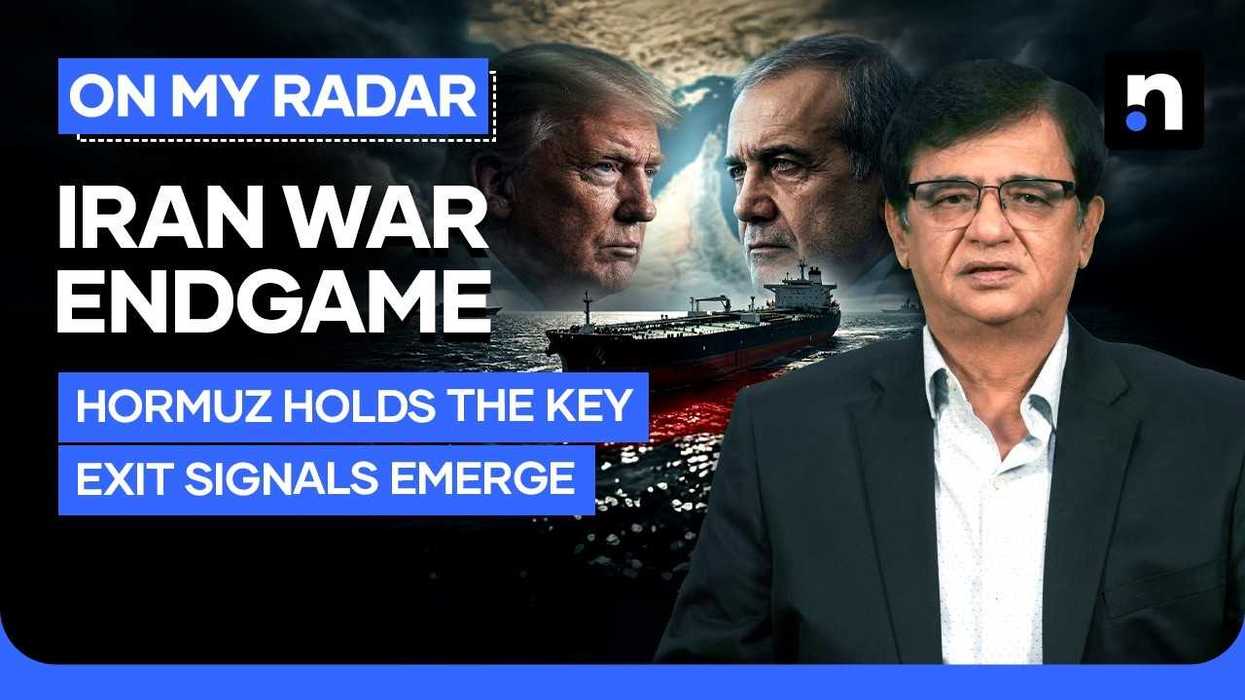
Kamran Khan says signs are emerging that war clouds over the Middle East may be slowly receding, even if an immediate end to fighting between the United States, Israel and Iran remains unlikely.
Speaking on his show “On My Radar,” Khan said developments over the past 48 hours point to a possible diplomatic opening.
He noted that President Donald Trump announced at the White House that the United States could exit the Iran conflict within two to three weeks, with or without a deal. Khan cautioned that global confidence in Trump’s statements remains limited but said the announcement signaled urgency in Washington.
More significantly, Khan said Iran showed “clear flexibility” for the first time.
Iranian President Masoud Pezeshkian said Tehran would be ready to stop the war if its fundamental conditions were met, according to Khan. Iran’s foreign minister, Abbas Araghchi, also confirmed both direct and indirect contacts with the United States through regional partners, though he said trust in Washington remains “at zero.”
Khan said Pakistan appears to be gaining diplomatic credit for its mediation efforts.
In recent days, Islamabad has sought to facilitate dialogue between Washington and Tehran and offered to host negotiations. Last week, Pakistan joined foreign ministers from Saudi Arabia, Egypt and Turkey in Islamabad to outline a roadmap aimed at ending the conflict, Khan said.
Following what he described as progress toward a ceasefire, crowds gathered late at night in Tehran chanting “Thank you, Pakistan” and waving Pakistani flags. Participants carried banners in Urdu expressing gratitude, he said.
Khan described Pakistan’s approach as a balancing act that preserved ties with Arab states, China, Iran and the United States without alienating any side.
He said Pakistan’s Foreign Minister Ishaq Dar traveled to China for a one-day visit, where he met Chinese Foreign Minister Wang Yi. The two sides presented a five-point joint plan for peace in the Middle East.
According to Khan, the plan calls for an immediate ceasefire, guarantees for the sovereignty and security of Iran and Arab states, a halt to attacks on non-military installations, and the restoration of secure shipping through the Strait of Hormuz.
Khan said neither Washington nor Tehran has rejected the proposal.
He added that Trump supports diplomatic efforts. Citing U.S. journalist Barak Ravid, Khan said Trump indicated in a brief phone exchange that diplomacy was “going well” when asked about the Pakistan-China initiative.
At the same time, Khan said Washington faces mounting international and domestic pressure.
He said NATO allies declined to allow the United States to use their bases in operations against Iran and did not endorse Washington’s narrative. In an interview with The Telegraph, Trump reportedly described NATO as a “paper tiger” and said he was considering leaving the alliance. U.S. Secretary of State Marco Rubio has also questioned the value of NATO if allies restrict U.S. base access, Khan said.
Tensions with Western allies deepened after Trump wrote on Truth Social that the United States would no longer stand ready to defend certain partners, particularly Britain. British Prime Minister Keir Starmer responded at a press conference, saying he faced “considerable pressure” to join the Iran war but would act in Britain’s national interest.
Domestically, Khan cited a University of Massachusetts Amherst poll showing 29% of Americans support Trump’s actions against Iran, while 63% oppose them. The survey also found that 17% of those who voted for Trump in 2024 now express concerns about their choice, he said.
Khan said the United States now finds itself in a serious moment, facing eroding global influence and rising internal political pressure.
He said Trump’s “Make America Great Again” pledge risks becoming “Make America Alone” as alliances strain and diplomatic credibility weakens.



Comments
See what people are discussing