

Pakistan tightens rules for foreign media after Kashmir election coverage
Islamabad has introduced new rules for foreign media, tightening accreditation, travel and staffing requirements after restricting Al Jazeera's Kashmir coverage.

Razi Wani
Producer - News Desk
Razi Ud Din Ahmed Wani is a multimedia journalist and digital storyteller with a strong background in fact-checking, South Asian politics, documentary filmmaking, scriptwriting, and digital content production. With an MA in Mass Communication from the University of Karachi, he has experience directing and scripting web series and socio-political satires. And has worked across various media and digital platforms, focusing on emerging trends and storytelling formats.
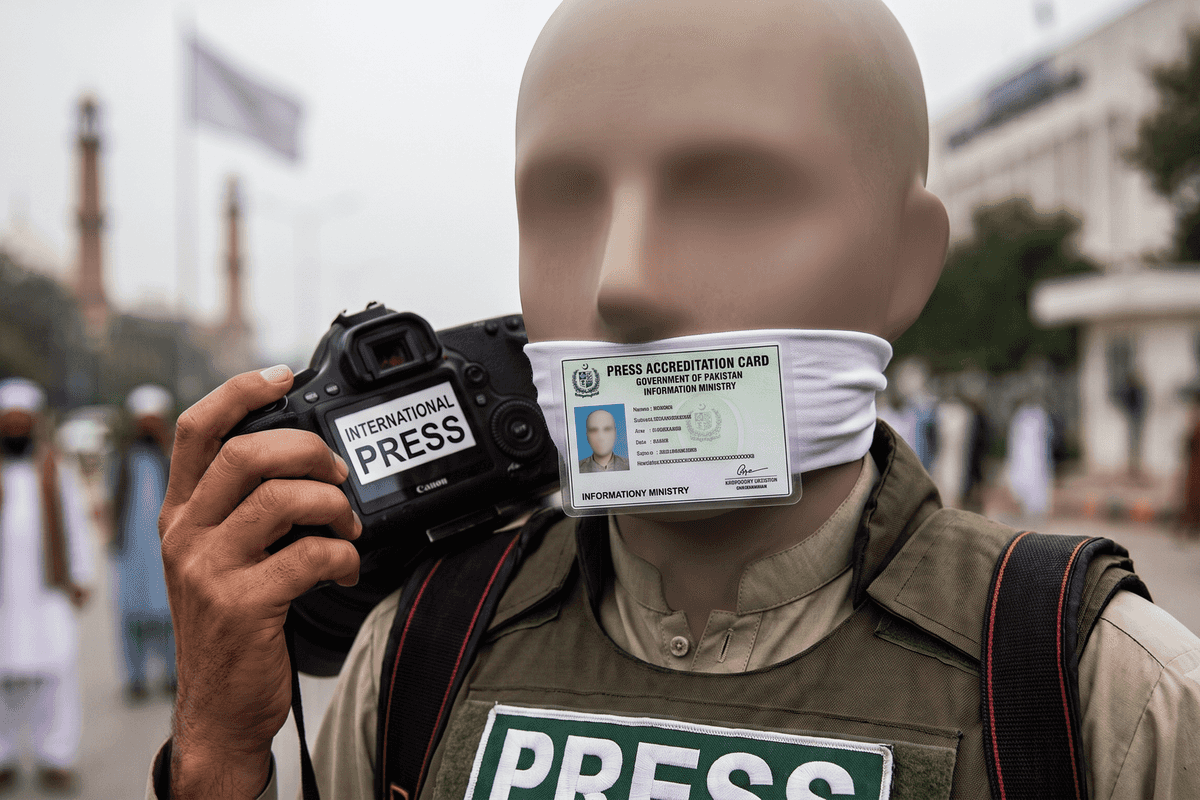
Pakistan’s Ministry of Information and Broadcasting (MoIB) formally notified its updated Foreign Media Facilitation Guidelines - 2026 on Monday following escalating friction with international news outlets.
AI-generated image
Pakistan has introduced sweeping new rules for foreign media, tightening accreditation, travel and staffing requirements. The move follows authorities restricting access to Qatar-based broadcaster Al Jazeera over its coverage of elections and unrest in Azad Jammu and Kashmir. The Ministry of Information and Broadcasting formally notified the change on Monday.
Why has Pakistan tightened rules for foreign media?
Pakistan tightened its rules for foreign media after restricting Al Jazeera's coverage of elections and unrest in Azad Jammu and Kashmir. The Ministry of Information and Broadcasting notified the Foreign Media Facilitation Guidelines 2026 on Monday. The guidelines expand state oversight of foreign news organizations operating in the country, administered by the ministry's External Publicity Wing.
What do the new Foreign Media Facilitation Guidelines require?
Under the new framework, all foreign print, broadcast and digital media organizations must register their local fixers, translators, stringers and administrative staff on a government portal. This creates an official digital record of personnel supporting foreign news operations. The rules also prohibit foreign correspondents from reporting outside Islamabad, Lahore and Karachi without first obtaining a No Objection Certificate, limiting independent reporting from other parts of the country, including Azad Jammu and Kashmir.
The guidelines give the External Publicity Wing broad authority to suspend or revoke press accreditation.
"Accreditation may be suspended or revoked if an individual acts against the ideology, sovereignty, security, or public order of Pakistan, or whenever the authority deems appropriate," the ministry said.
How will journalists get accreditation under the new rules?
Portal registration is now mandatory before journalists can obtain Press Accreditation Cards. Resident correspondents will receive annual QR-enabled PVC cards, while visiting journalists will be issued temporary credentials valid for up to three months. Portal registration will be processed within seven working days, but final accreditation requires a four-to-six-week administrative review.
Accredited journalists will get access to official government events, though the ministry clarified that accreditation does not grant government status or permit the use of official titles on professional profiles. Journalists whose applications are rejected can appeal to the ministry's secretary. Organizations that fail to report internal staffing changes within seven days risk having their accreditation revoked.
What has been the reaction to the new guidelines?
The ministry presented the framework as a modern administrative system to streamline foreign media operations. Critics say the measures significantly expand government oversight of international reporting and could further restrict press freedom. Senior journalist and Nukta Pakistan Editor Amber Rahim Shamsi criticized the new policy.
"If you translate the word 'facilitate' to 'control,' the Ministry of Information and Broadcasting's 'guidelines' start to make sense," she said. "Bureaucrats are now being granted the power to register, accredit, and approve everyone who works with foreign journalists, including vulnerable fixers and freelancers who lack institutional protection. This extensive red tape is actively being used to muzzle independent journalism. Instead of addressing the core issues, the state is simply punishing the messenger."





Comments
See what people are discussing