

Pakistan approves transfer of PKR 100B from development fund for fuel subsidies
Economic Coordination Committee approved proposal to import one million metric tons of wheat

Business Desk
The Business Desk tracks economic trends, market movements, and business developments, offering analysis of both local and global financial news.
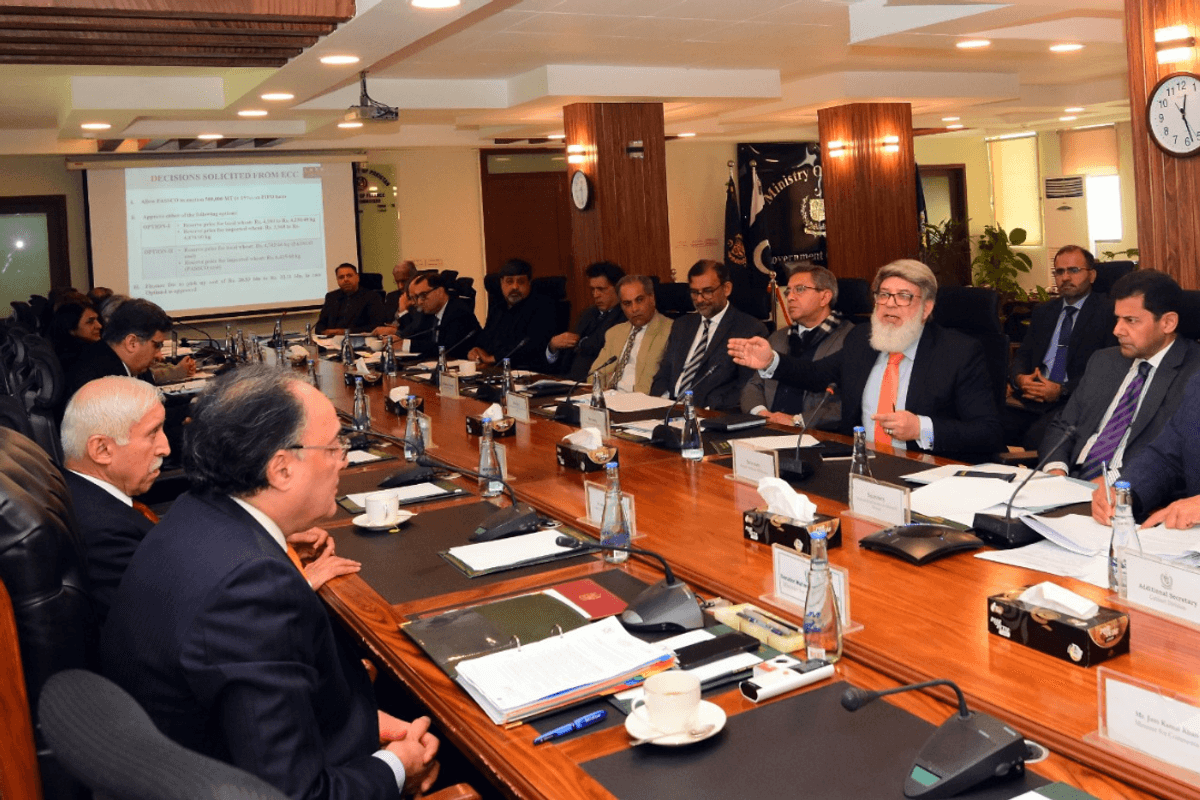
Finance Minister Muhammad Aurangzeb chairs a meeting of the Economic Coordination Committee on January 24, 2026
The Economic Coordination Committee (ECC) of the Cabinet, Pakistan's second-highest economic decision-making body, has approved the transfer of PKR 100 billion from the development fund to pay for fuel subsidies.
Pakistan has kept petrol and diesel prices unchanged for the past two weeks, after increasing both by PKR 55 in early March. The steep rise in global oil prices following the US-Israel war on Iran meant the government had to provide a subsidy of PKR 69 billion to keep the prices unchanged.
The ECC, on Thursday, approved a summary submitted by the Finance Division to transfer PKR 100 billion to the Prime Minister’s Austerity Fund 2026.
The committee was informed that, in light of conflict in the Gulf region and its potential impact on international petroleum prices, the prime minister had directed the use of the Public Sector Development Program (PSDP) to pay the differential on petroleum products.
The ECC noted that the proposed allocation is being met through rationalization and surrender of PSDP funds by various ministries and divisions.
It was emphasized that the reallocation exercise has been undertaken to minimize disruption to priority and well-performing projects while creating the required fiscal space.
Wheat imports
The ECC also considered a summary submitted by the Ministry of National Food Security and Research to procure wheat for the federal strategic reserves.
The committee was apprised of the current supply and demand outlook, including production estimates, evolving weather conditions, and existing public and private stock positions. It was noted that while projections suggest improved crop conditions, uncertainties remain, warranting a cautious and calibrated approach to maintaining adequate reserves.
The ECC discussed the need to balance market stability, farmer support, and fiscal considerations, while avoiding premature interventions that could distort market signals or create uncertainty.
The committee also highlighted the importance of distinguishing between strategic and commercial reserves, ensuring that procurement decisions are aligned with actual requirements and do not impose unnecessary fiscal or storage burdens.
The ECC approved procurement of up to one million metric tons of wheat through a transparent and competitive process to be executed by the private sector.
The Committee emphasized that procurement levels and financial commitments should remain flexible and responsive to updated crop assessments and market conditions.
The meeting was attended by Federal Minister for Commerce Mr. Jam Kamal Khan, Federal Minister for Investment Mr. Qaiser Ahmed Sheikh, and Federal Minister for National Food Security and Research Mr. Rana Tanveer Hussain, who all participated virtually, along with federal secretaries and senior officials from the relevant ministries, divisions and regulatory authorities.





Comments
See what people are discussing