

Pakistan urges UN Security Council to protect Gulf shipping, prevent economic fallout
Pakistan urges UN Security Council to protect Gulf shipping, warning that attacks on vessels near Hormuz and Bab al-Mandab threaten global trade

News Desk
The News Desk provides timely and factual coverage of national and international events, with an emphasis on accuracy and clarity.
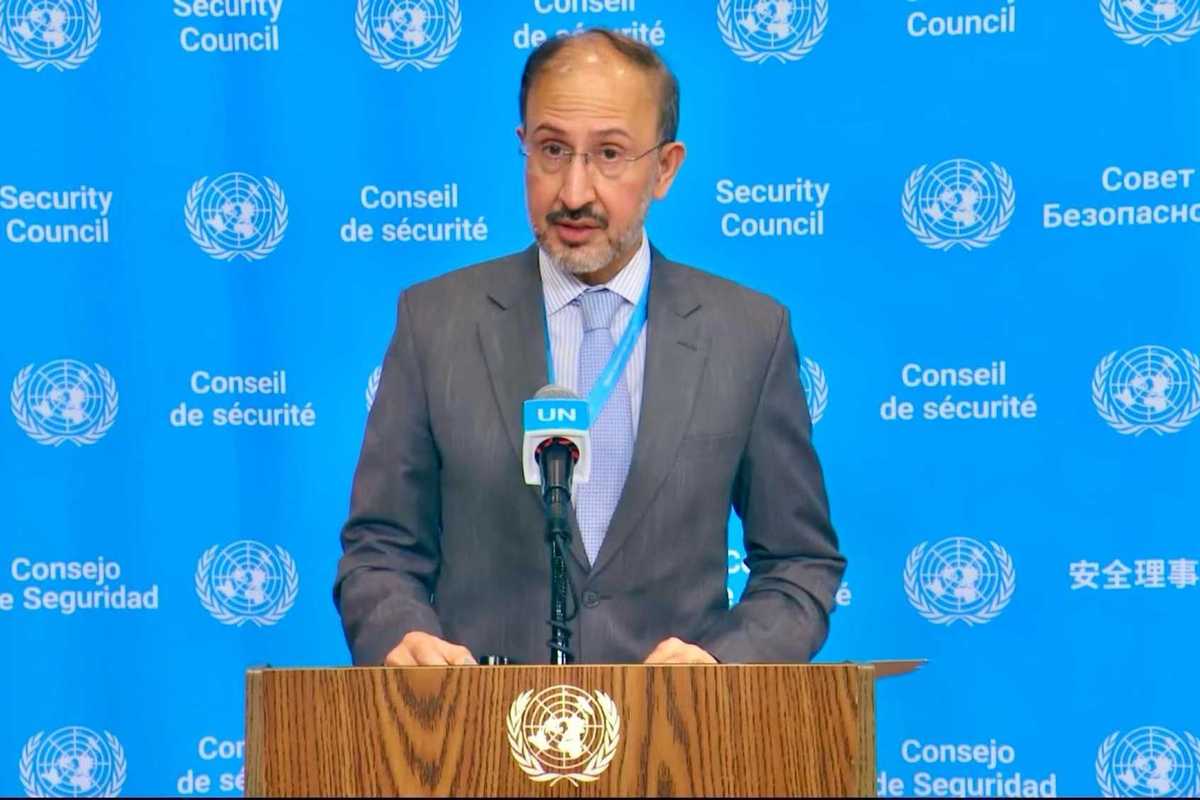
Pakistan’s UN Ambassador Syed Haider Shah urged the Security Council on Friday to protect commercial shipping in the Gulf and end military provocations.
He warned that disruptions around the Strait of Hormuz and Bab al-Mandab could deepen economic pressure on developing countries, APP reported.
What did Pakistan ask the UN Security Council to do?
Pakistan asked the Council to demand an end to military provocations and attacks on commercial vessels. Ambassador Shah said instability around the Strait of Hormuz and Bab al-Mandab threatens global trade and economic security. He also urged support for diplomacy and regional mediation to prevent further escalation.
Shah was speaking at a meeting of the 15-member Council convened by Bahrain on rising Gulf tensions and maritime security. He said disruptions to shipping and attacks on merchant vessels have consequences well beyond the region.
He warned that uncertainty around the strategic waterways has contributed to higher energy prices and increased the risk of food insecurity. Developing economies are particularly exposed, he said. He also stressed the need to protect commercial vessels and ensure humanitarian supplies reach affected populations.
What solutions did Pakistan propose for Gulf security?
Shah called on the Council to address the underlying causes of regional instability and support diplomatic efforts. He proposed a regional security framework based on peaceful coexistence, mutual cooperation and shared economic development.
Dialogue remains the most viable path to lasting stability, the Pakistani envoy said. He added that Islamabad’s diplomatic efforts reflect its commitment to sovereignty, civilian protection and negotiated solutions.
He urged all parties to halt attacks, keep communication channels open and support regional mediation, alongside the good offices of the UN secretary-general. Pakistan, he said, would continue its efforts to promote de-escalation.
Shah also condemned attacks on Gulf Cooperation Council (GCC) countries and expressed solidarity with Saudi Arabia. He denounced Houthi strikes on Saudi airports, energy facilities and civilian infrastructure, and reaffirmed Pakistan’s support for the Kingdom’s sovereignty and territorial integrity.
How serious are the shipping disruptions in the Strait of Hormuz?
UN Assistant Secretary-General Khaled Khiari opened the meeting by warning that continued tensions around the Strait of Hormuz and Bab al-Mandab pose serious risks to regional stability and the global economy. Khiari heads Political and Peacebuilding Affairs and Peace Operations at the UN.
He said many commercial vessels and their crews have been stranded in the Persian Gulf for months, while restrictions on maritime movement continue to create uncertainty. Energy export volumes from the Gulf have largely recovered, but overall maritime shipments remain below pre-conflict levels.
Khiari cautioned against reading the energy recovery as a return to normal conditions. October saw the highest monthly number of incidents involving commercial shipping since February 2026, with 134 confirmed. As of November 11, 25 seafarers had been killed in incidents across the Strait of Hormuz and the wider Middle East maritime region, according to International Maritime Organization (IMO) figures. He called the attacks unacceptable.
What did Gulf states say at the Security Council?
Bahrain’s Ambassador Jamal Fares Alrowaiei, speaking for the GCC, accused Iran of repeated missile and drone attacks on Gulf countries. He warned that civilian infrastructure, international trade and regional security remain under threat.
He said Gulf security is closely linked to international peace and stability, citing approximately 7,000 attacks on GCC countries and Jordan. Around 1,600 vessels have been disrupted in the Strait of Hormuz, he said, leaving more than 23,000 seafarers stranded.
Alrowaiei called for full implementation of UN Security Council Resolution 2817 (2026), saying civilian safety should not be used as leverage in regional disputes. He also condemned Houthi attacks on Saudi Arabia and threats to navigation through Hormuz and Bab al-Mandab.
The Bahraini envoy welcomed mediation by Oman, Qatar and Pakistan and reiterated GCC support for diplomatic solutions. He said the security of member states is indivisible and that Gulf countries should be included in negotiations on the region’s future security arrangements.
How did Iran respond to the Gulf states’ accusations?
Responding to Bahrain, Iran’s UN Ambassador Gholamhossein Darzi accused Western Council members of overlooking the causes of the conflict and portraying the aggressor as the victim. He blamed the United States and Israel for launching what he described as wars of aggression against Iran on June 13, 2025, and February 28, 2026.
He accused the two countries of violating international law through attacks that killed Iran’s Supreme Leader, officials and nuclear scientists, as well as strikes on civilian infrastructure.
Citing Iranian casualty figures, Darzi said the attacks had killed 5,000 people, including 254 children. He argued that insecurity around the Strait of Hormuz is a direct consequence of US and Israeli military actions, which he characterised as war crimes and crimes against humanity.



Comments
See what people are discussing