

Pakistan urges unity as Arab-Islamic bloc condemns Iran over regional strikes
Joint statement urges Iran to halt attacks, end militia support and avoid disrupting shipping in the Strait of Hormuz and Bab al-Mandab
Aamir Abbasi
Editor, Islamabad
Aamir; a journalist with 15 years of experience, working in Newspaper, TV and Digital Media. Worked in Field, covered Big Legal Constitutional and Political Events in Pakistan since 2009 with Pakistan’s Top Media Organizations. Graduate of Quaid I Azam University Islamabad.
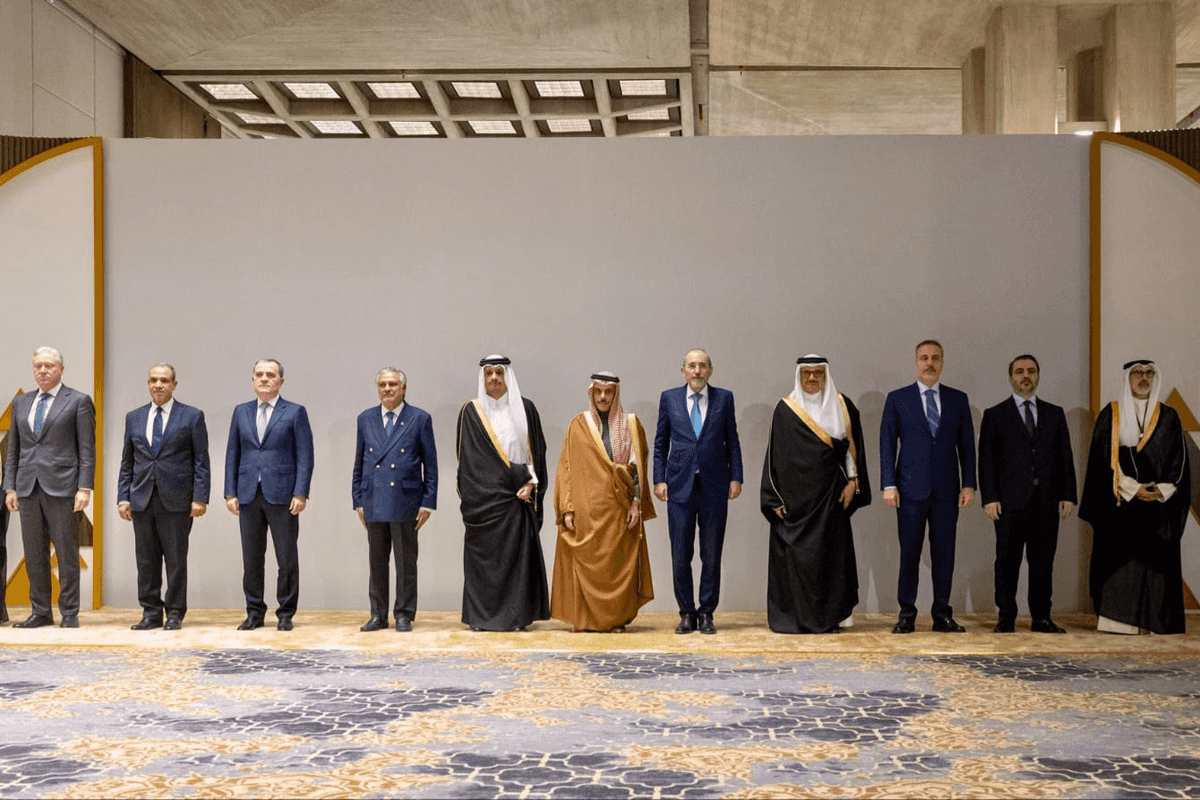
Ishaq Dar reiterated Pakistan’s support for the sovereignty and territorial integrity of all regional states.
FO
Pakistan’s Deputy Prime Minister and Foreign Minister Ishaq Dar joined foreign ministers from Arab and Islamic countries in Riyadh on Thursday, where leaders strongly condemned recent attacks attributed to Iran and called for urgent de-escalation.
The consultative ministerial meeting, hosted by Saudi Arabia, brought together senior diplomats from Pakistan, Turkey, Azerbaijan, Egypt, Qatar, the United Arab Emirates, Jordan, Kuwait, Lebanon, Syria, and Bahrain to discuss the escalating regional security situation.
In a joint statement issued after the meeting, ministers condemned what they described as deliberate Iranian missile and drone attacks targeting Gulf Cooperation Council countries as well as Jordan, Azerbaijan, and Turkey. The strikes reportedly struck civilian areas and critical infrastructure, including oil facilities, desalination plants, airports, residential buildings, and diplomatic premises.
The ministers declared such actions “cannot be justified under any pretext” and reaffirmed the right of states to self-defense under Article 51 of the United Nations Charter. They called on Tehran to immediately halt attacks, respect sovereignty, and refrain from interfering in the internal affairs of other states.
The statement also urged compliance with United Nations Security Council Resolution 2817 (2026), which calls for an immediate cessation of hostilities and provocative actions, and demanded that Iran stop supporting and arming allied militias in the region. Officials also warned against any disruption to maritime shipping in the strategically vital Strait of Hormuz and Bab al-Mandab.
Pakistan calls for diplomacy and stability
Addressing the meeting, Dar reiterated Pakistan’s support for the sovereignty and territorial integrity of all regional states while urging restraint and dialogue to prevent further escalation. He emphasized the importance of unity within the Muslim world and stressed that conflicts should be resolved through diplomacy.
Dar condemned attacks on civilians and key infrastructure, noting that such actions threaten regional energy security and could have far-reaching global economic impacts. He briefed participants on Pakistan’s ongoing diplomatic efforts and reaffirmed Islamabad’s commitment to a constructive role in promoting peace and stability in the region.
During the visit, Dar conveyed Pakistan’s solidarity to Saudi Foreign Minister Faisal bin Farhan Al Saud and held bilateral meetings with Turkish Foreign Minister Hakan Fidan and Azerbaijani Foreign Minister Jeyhun Bayramov to discuss regional developments. He also took part in a quadrilateral meeting with Egypt, Pakistan, Saudi Arabia, and Turkey to coordinate joint initiatives.
The ministers reaffirmed support for Lebanon’s sovereignty and stability, emphasizing that weapons must remain under state control, and condemned ongoing Israeli aggression in the country.
Participating countries pledged continued coordination and consultation to address emerging threats, safeguard regional security, and formulate a unified response to ongoing challenges in the Middle East.




Comments
See what people are discussing