

Pakistan sees record urea sales in August
Off-take jumps 46% to 817,000, the second-highest figure in history for August

Business Desk
The Business Desk tracks economic trends, market movements, and business developments, offering analysis of both local and global financial news.
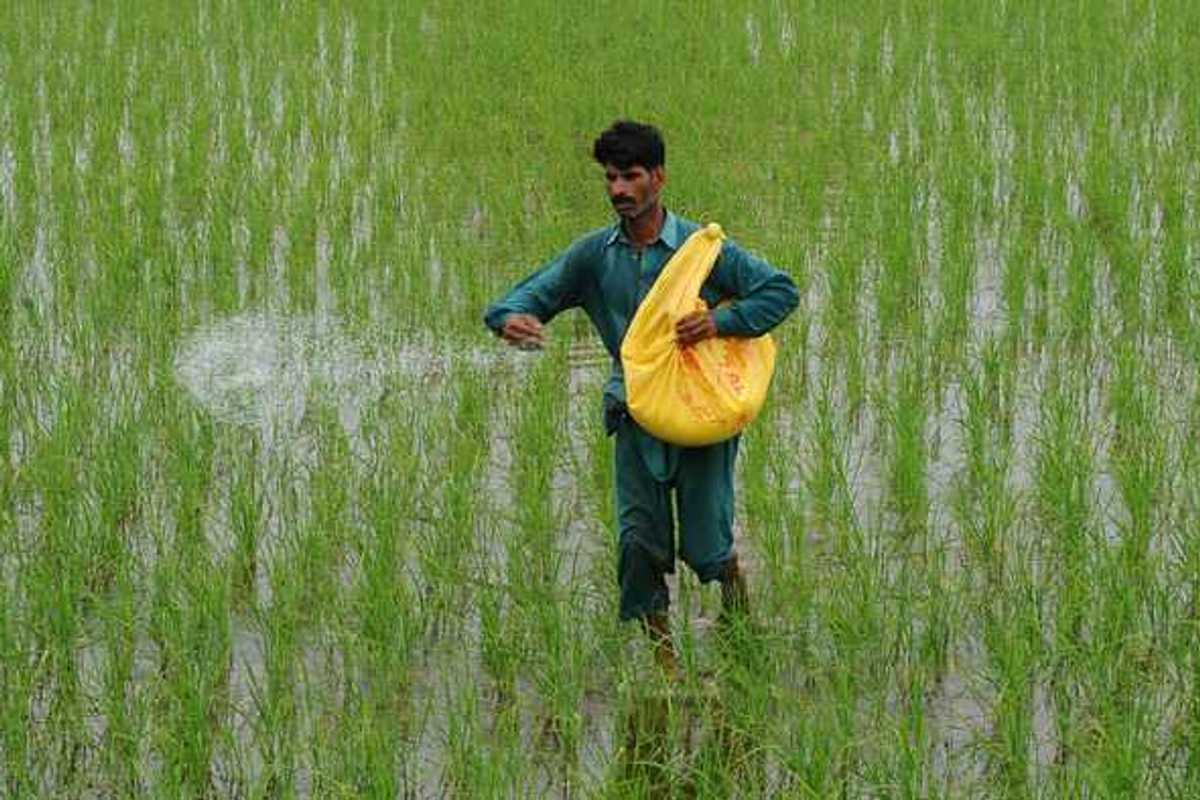
A farmer disperses fertilizer in a rice paddy field on the outskirts of Lahore, Pakistan.
AFP/File
Pakistan’s witnesses record urea sales in August with 817,000 tonnes, marking the second-highest figure for the month in history after August 2017’s 948,000 tonnes, according to industry data.
The sales surged 46.2% year-on-year, bringing the total offtake for the first eight months of 2025 to 3.78 million tonnes, down 10.2% from 4.21 million tonnes in the same period last year.
Analysts attribute the August rebound to subdued offtake earlier in the Kharif season — an agricultural cycle where crops are sown from June to July and harvested from September to November — and government-led incentives, including interest-free loans and cash assistance provided by the Punjab government.
However, cumulative volumes remain under pressure due to persistent challenges in farm economics and changing climate patterns.
Diammonium phosphate (DAP) sales also posted strong growth in August, with offtake reaching 136,000 tonnes, a 53.2% increase year-on-year.
Despite this monthly spike, DAP offtake from January to August fell 12.4% year-on-year to 698,000 tonnes, weighed down by high domestic prices, weak farmer liquidity, and continued economic uncertainty in the agriculture sector. As a result, DAP inventory levels have risen 36% compared to the same period last year.
Local urea prices in August stood at PKR 4,400 per bag, down 0.56% from July.
The discount between local and international urea prices widened to 40%, up from 35% in May. Meanwhile, DAP prices continued to climb, rising 3.66% month-on-month to PKR 13,508 per bag.
Over the past year, domestic DAP prices have risen 14.5%, while international prices are up 25% over the same period.
In terms of market share, Fauji Fertilizer Company (FFC) saw its urea share dip to 45% in August, down seven percentage points year-on-year.
Engro Fertilizers (EFERT) gained four percentage points, while Fatima Group’s share remained largely unchanged. In the DAP segment, EFERT’s share increased from 13% to 18% a year earlier.
During the upcoming Rabi season — where crops are sown in October/November and harvested in March/April — the urea availability is projected at 4.3 million tonnes against the expected demand of 3.5 million tonnes, with current urea stocks at 1.03 million tonnes. DAP availability is forecast at 826,000 tonnes, falling short of the projected demand of 893,000 tonnes.





Comments
See what people are discussing