

Pakistan, US EXIM discuss PIA and refinery financing, Reko Diq project
Finance Minister Aurangzeb sought support for Boeing aircraft and refinery upgrades while also outlining Pakistan’s digital-economy and virtual-assets agenda in New York

Business Desk
The Business Desk tracks economic trends, market movements, and business developments, offering analysis of both local and global financial news.
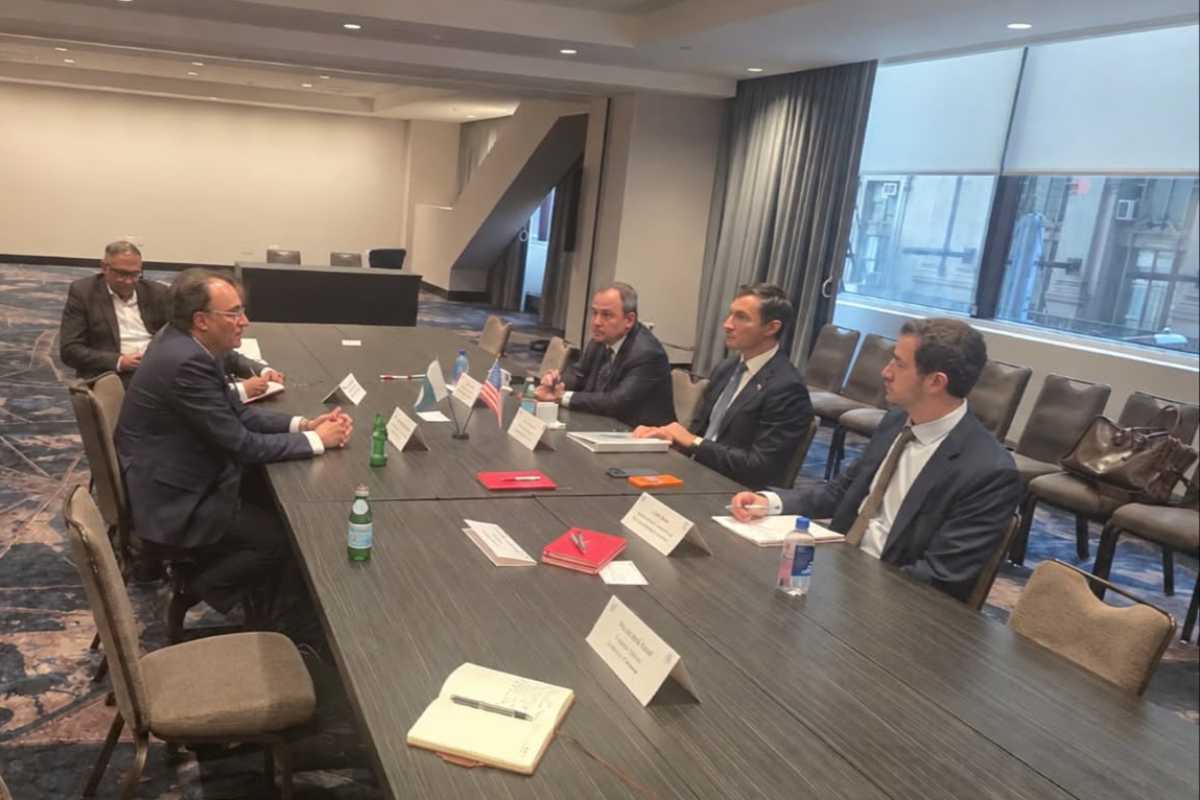
Finance Minister Muhammad Aurangzeb meets US EXIM President and Chairman Jovanovic during his visit for the 81st session of the UNGA.
Ministry of Finance
Pakistan Finance Minister Muhammad Aurangzeb discussed financing opportunities for Pakistan International Airlines aircraft and refinery modernization, as well as the Reko Diq mining project, during a meeting with U.S. Export-Import Bank President and Chairman John Jovanovic in New York, the Finance Division said.
Aurangzeb met Jovanovic during his visit for the 81st session of the United Nations General Assembly. The discussions focused on identifying specific transactions that could receive U.S. EXIM financing while work continues on a broader Pakistan-U.S. cooperation framework.
What financing is Pakistan seeking for PIA?
Aurangzeb outlined PIA’s interest in acquiring Boeing aircraft, particularly 787 Dreamliners, and sought support for a financing package covering aircraft and engines.
He also raised the need for spare parts to return grounded Boeing 777 aircraft to service.
The two sides agreed to continue developing the broader cooperation framework while prioritizing specific transactions, including possible financing for aircraft pre-delivery payments.
The discussion followed Aurangzeb’s September 22 meeting with Boeing Global President Brendan Nelson, when Boeing confirmed it would submit a revised proposal for new aircraft to PIA while exploring earlier delivery slots and interim leasing arrangements.
That meeting also covered potential U.S. EXIM financing, engine procurement, spare parts, maintenance and the restoration of grounded aircraft.
Could US EXIM finance Pakistan’s refinery upgrades?
Refinery modernization was also identified as a potential area for U.S. EXIM financing as Pakistan seeks to modernize domestic refining capacity and reduce reliance on imported petroleum products.
Pakistan has previously discussed refinery modernization with Honeywell Technologies, including potential support from U.S. EXIM, the U.S. International Development Finance Corporation, other export credit agencies and international banks.
Those discussions focused on technology, equipment and financing needed to modernize and expand Pakistan’s refinery sector.
What did Aurangzeb discuss on Reko Diq?
Aurangzeb emphasized the importance of the Reko Diq copper-gold project for Pakistan’s future exports and highlighted the economic cost of delays.
He welcomed U.S. EXIM Bank’s continued commitment to the project.
U.S. EXIM has already authorized USD 1.25 billion in direct financing for Reko Diq, distinguishing the project from the new financing opportunities being explored for PIA and refinery modernization.
The government has allocated PKR 38 billion in its FY2027 budget toward its capital-expenditure obligation for Reko Diq, alongside PKR 2 billion for a third-party guarantee fee.
Barrick has also slowed development activity at Reko Diq while reviewing the project amid heightened security risks, adding context to Aurangzeb’s emphasis on the economic cost of delays.
What is Pakistan’s digital transformation strategy?
Separately, Aurangzeb told a Digital Cooperation Organization high-level ministerial dialogue that digital transformation was central to Pakistan’s transition from economic stabilization to sustainable growth.
He highlighted digital public infrastructure and cashless payments while calling for greater upskilling and reskilling to help freelancers and other digital workers move into higher-value services.
Aurangzeb also outlined Pakistan’s work on legislation, regulatory oversight and licensing for virtual assets.
He said potential applications extended beyond cryptocurrency to lower-cost remittances and possible tokenization of public debt and real estate.
The finance minister called for closer cooperation among DCO member states to share successful approaches and attract investment into the digital economy.
The engagements reflect Pakistan’s efforts to secure external financing for aviation and energy projects, advance the Reko Diq development and attract investment into its digital economy.



Comments
See what people are discussing