

Pakistan delivers final warning to Afghan Taliban over cross-border terrorism in Istanbul talks
Islamabad demands verifiable action against TTP; five soldiers martyred in latest border clashes
Aamir Abbasi
Editor, Islamabad
Aamir; a journalist with 15 years of experience, working in Newspaper, TV and Digital Media. Worked in Field, covered Big Legal Constitutional and Political Events in Pakistan since 2009 with Pakistan’s Top Media Organizations. Graduate of Quaid I Azam University Islamabad.
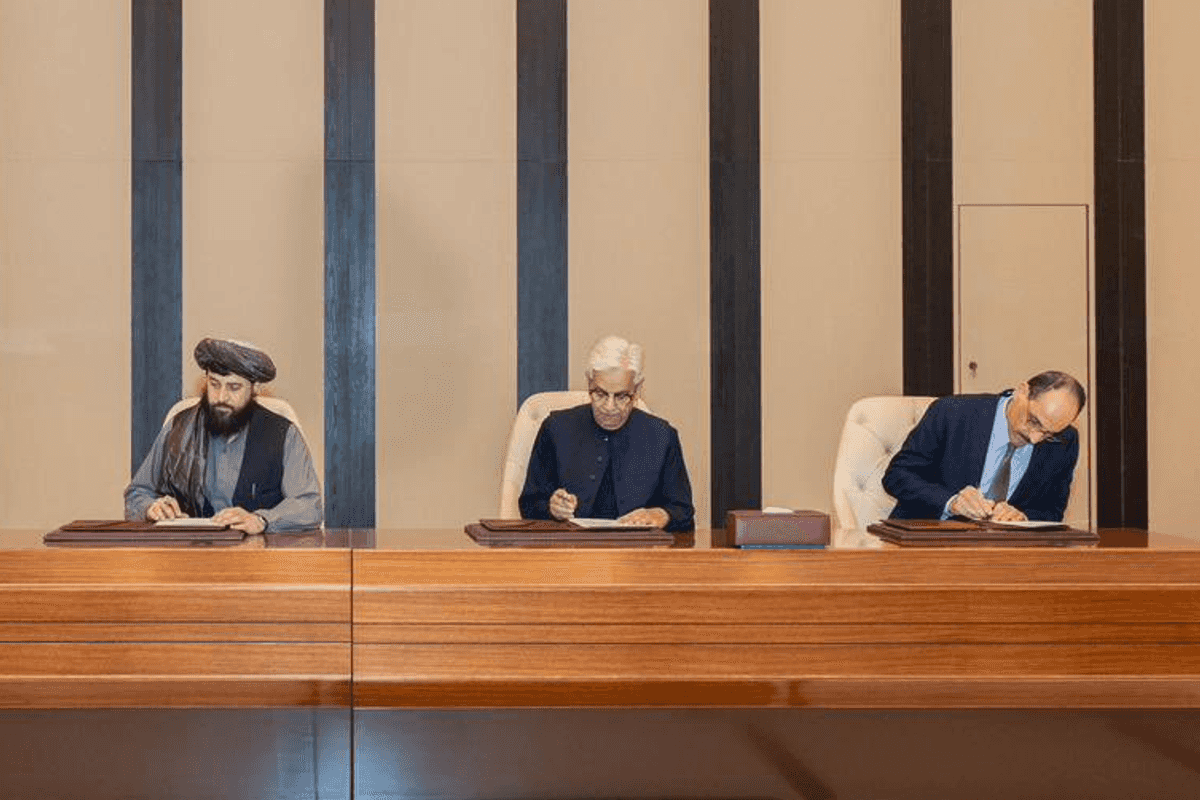
An earlier round in Doha focused on implementing a temporary ceasefire along border regions.
Pakistan has presented its final position to the Afghan Taliban during the latest round of talks in Istanbul, urging Kabul to take concrete action against militant groups operating from Afghan soil, security sources said on Sunday.
The discussions, held amid renewed cross-border clashes, focused on growing militant activity along the frontier and Islamabad’s demand for “firm and irreversible” measures to curb terrorism.
According to security sources, the Pakistani delegation conveyed a clear message that Islamabad would no longer tolerate the Afghan Taliban’s continued patronage of terrorist outfits, particularly those behind attacks inside Pakistan.
“Pakistan has categorically conveyed that any form of support or facilitation of terrorists by the Afghan Taliban is unacceptable,” the sources said. They added that Islamabad sought “concrete and verifiable actions” to dismantle militant networks based in Afghanistan.
The Pakistani side also cautioned that failure by the Taliban to act decisively could have “serious consequences” for bilateral relations.
In contrast, the Taliban delegation’s arguments were described by the sources as “illogical and detached from ground realities.” “It appears the Taliban are pursuing a different agenda – one that does not align with the stability of Afghanistan, Pakistan, or the wider region,” one official noted.
The Istanbul meeting was part of ongoing diplomatic efforts to ease tensions along the Pakistan-Afghanistan border, where repeated attacks by militants have strained relations between the two neighbors.
Pakistan has consistently accused the Taliban-led government in Kabul of harboring and supporting the banned Tehreek-e-Taliban Pakistan (TTP) and allied groups responsible for attacks across the border. The Afghan authorities have denied these allegations, calling them unfounded.
Officials said further progress now hinges on the Taliban’s response. “The ball is in their court,” one source remarked.
The Istanbul talks marked the second formal engagement between Islamabad and the Taliban this month, following an earlier round in Doha that focused on implementing a temporary ceasefire along border regions.
Diplomatic observers said Pakistan’s tougher tone in Istanbul reflected its growing frustration with Kabul’s inability – or unwillingness – to rein in TTP militants despite repeated assurances.
Unlike the Doha round, for which Pakistan’s Foreign Ministry had released a statement and photographs, no press release or images were shared after the Istanbul meeting – a sign, analysts said, that the talks were security-driven and led by senior intelligence and military officials.
Earlier in the day, at least 25 militants were killed when Pakistani security forces repelled infiltration attempts from Afghanistan over the past two days, the military said.
According to a statement from the Inter-Services Public Relations (ISPR), two large groups of militants – referred to as khawarij, a term Pakistan uses for the TTP – tried to cross into Pakistan through the Ghaki area of Kurram district and Spinwam in North Waziristan between October 24 and 25.
“Own troops effectively engaged these groups of khawarij,” the ISPR said. “As a result of precise and skillful engagements, fifteen khawarij, including four suicide bombers belonging to Indian proxy Fitna al Khawarij, were sent to hell in Spinwam. Another ten infiltrating khawarij were killed in Ghaki.”
A large quantity of weapons, ammunition, and explosives was recovered from the militants.
Five Pakistani soldiers were killed during the intense exchange of fire. They were identified as Havildar Manzoor Hussain, 35, from Ghizar; Sepoy Nauman Ilyas Kiyani, 23, from Poonch; Sepoy Muhammad Adil, 24, from Kasur; Sepoy Shah Jehan, 25, from Vehari; and Sepoy Ali Asghar, 25, from Pakpattan.
“These brave sons of soil fought gallantly and paid the ultimate sacrifice,” the ISPR said, adding that their actions reaffirmed Pakistan’s resolve to defend its borders.





Comments
See what people are discussing