

Pakistan warns UN Security Council of rising cross-border terror threats from Afghanistan
Pakistan’s UN envoy says four years after the Taliban takeover, regional security has sharply deteriorated
Aamir Abbasi
Editor, Islamabad
Aamir; a journalist with 15 years of experience, working in Newspaper, TV and Digital Media. Worked in Field, covered Big Legal Constitutional and Political Events in Pakistan since 2009 with Pakistan’s Top Media Organizations. Graduate of Quaid I Azam University Islamabad.
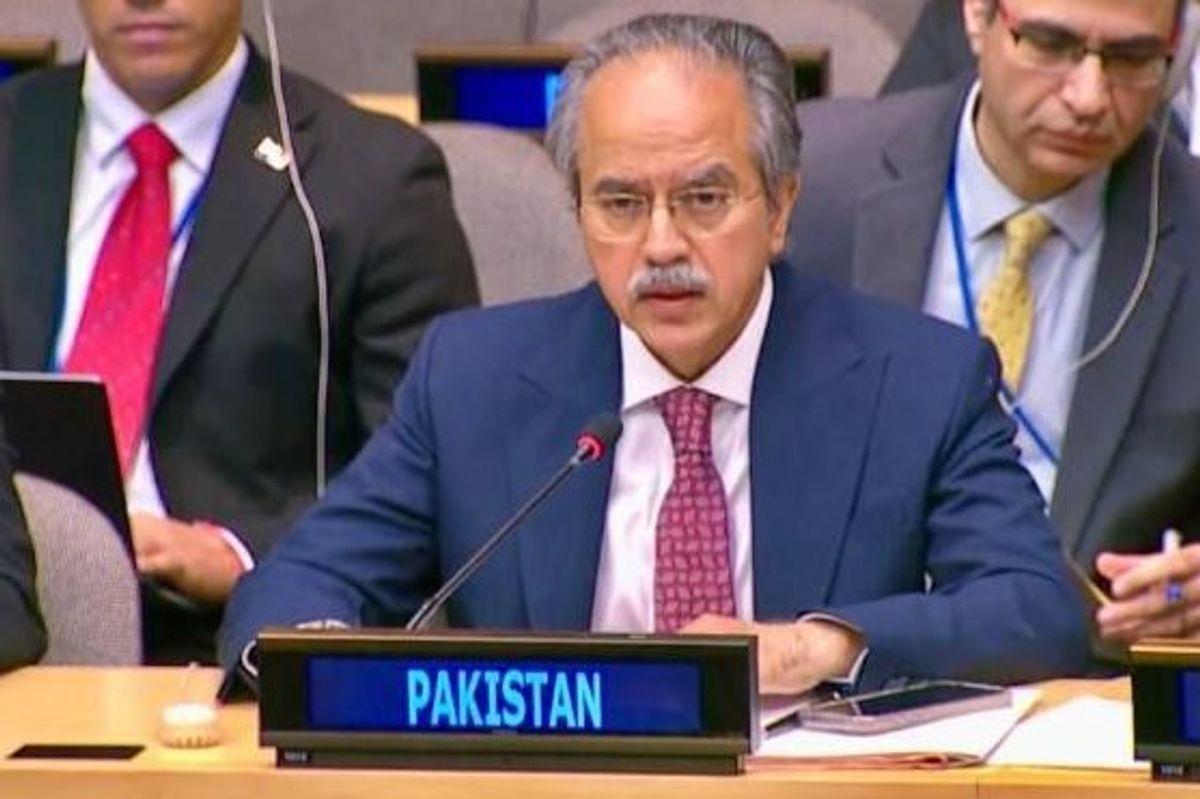
Pakistan’s Permanent Representative to the U.N., Ambassador Asim Iftikhar Ahmad.
APP/File
Pakistan warned the U.N. Security Council that Afghanistan has again become a safe haven for terrorist groups, accusing the Taliban of failing to meet counterterrorism commitments and allowing militants to operate freely from Afghan territory.
Pakistan’s Permanent Representative to the U.N., Ambassador Asim Iftikhar Ahmad, said the regional security situation has sharply deteriorated more than four years after the Taliban takeover. He told the council that Pakistan continues to bear the brunt of escalating terrorist attacks.
Ahmad said Pakistan maintained extensive diplomatic engagement with Kabul, along with humanitarian support, trade facilitation and high-level visits. But he argued the Taliban had not taken “concrete, effective and decisive actions” against groups including ISIL-K, al-Qaida, the Tehreek-e-Taliban Pakistan (TTP), ETIM, BLA and the Majeed Brigade.
“Afghanistan is once again a safe sanctuary for terrorist groups and proxies,” he said.
According to Ahmad, nearly 1,200 Pakistanis were killed in terrorist attacks this year. He said those attacks were planned and directed from Afghan soil. He added that since 2022, Pakistan has neutralized more than 214 Afghan terrorists, including suicide bombers, during counterterrorism operations.
Citing U.N. Monitoring Team assessments, Ahmad said the TTP — estimated at about 6,000 fighters — remains the largest U.N.-designated terrorist group operating from Afghanistan. He said Pakistan has foiled cross-border infiltration attempts and seized advanced military equipment left behind by foreign forces in Afghanistan.
He alleged that elements within the Taliban “support these terrorist groups and allow them safe passage.” He also pointed to growing collaboration among militant outfits involving joint training, the arms trade and coordinated attacks.
Ahmad, in a veiled reference, accused a “regional spoiler” of increasing support for anti-Pakistan militants operating from Afghan territory.
He called on the U.N. Assistance Mission in Afghanistan to enhance efforts against the illicit arms trade and to provide an objective assessment of border security. He warned that Pakistan would take “all necessary defensive measures” to protect its sovereignty if the Taliban failed to curb terrorist networks.
The ambassador also highlighted what he described as the worsening humanitarian and human rights situation in Afghanistan. He said sanctions, a dysfunctional banking system, poverty, narcotics production and restrictions on women and girls reflected the Taliban’s “inhumane policies and misplaced priorities.” He added that OIC member states have repeatedly said these restrictions are inconsistent with Islamic principles.
Ahmad said Pakistan has hosted Afghan refugees for decades but argued that, with the conflict over, Afghans should return home in a “dignified, phased and orderly manner.” He urged the international community to share the burden more equitably.
He said Pakistan continues to facilitate legal travel for Afghans, issuing more than 536,000 medical visas since September 2023.
Reaffirming support for the U.N.-led Doha Process and its “Mosaic approach,” Ahmad stressed the need for a comprehensive roadmap for the international community’s engagement with Afghanistan.
“No country desires peace and stability in Afghanistan more than Pakistan,” he said. “And no country has suffered more from the consequences of decades of conflict and instability.”
Recent reporting has added urgency to Pakistan’s warnings.
A report by the U.S. watchdog Special Inspector General for Afghanistan Reconstruction confirmed that billions of dollars’ worth of American-supplied weapons, equipment and security infrastructure left behind during the 2021 U.S. withdrawal now form the backbone of the Taliban’s security apparatus.
Parallel assessments by U.N. monitoring teams and reporting by the Washington Post indicate that some of these weapons have reached the TTP, bolstering a group responsible for rising attacks inside Pakistan.
A U.N. panel also reported that the Taliban continue to provide logistical and operational support to the TTP, reinforcing Islamabad’s concerns about safe havens and cross-border militancy.
The developments come days after a new round of peace talks between Pakistan and Afghanistan ended without a breakthrough. Both sides agreed to maintain their fragile ceasefire.
The talks in Saudi Arabia last weekend were the latest in a series of meetings hosted by Qatar, Turkey and Saudi Arabia aimed at easing tensions after deadly border clashes in October.
At the center of the dispute, Pakistan says Afghan-based militants carried out recent attacks inside the country, including suicide bombings involving Afghan nationals. Kabul denies the charge, saying it cannot be held responsible for security inside Pakistan.
Dozens were killed in the October clashes, the worst border violence since the Taliban seized power in 2021.







Comments
See what people are discussing