

Pakistan weekly inflation up 7% year-on-year as fuel price hike takes toll
Week-on-week, the Sensitive Price Indicator rose 0.21%

Business Desk
The Business Desk tracks economic trends, market movements, and business developments, offering analysis of both local and global financial news.
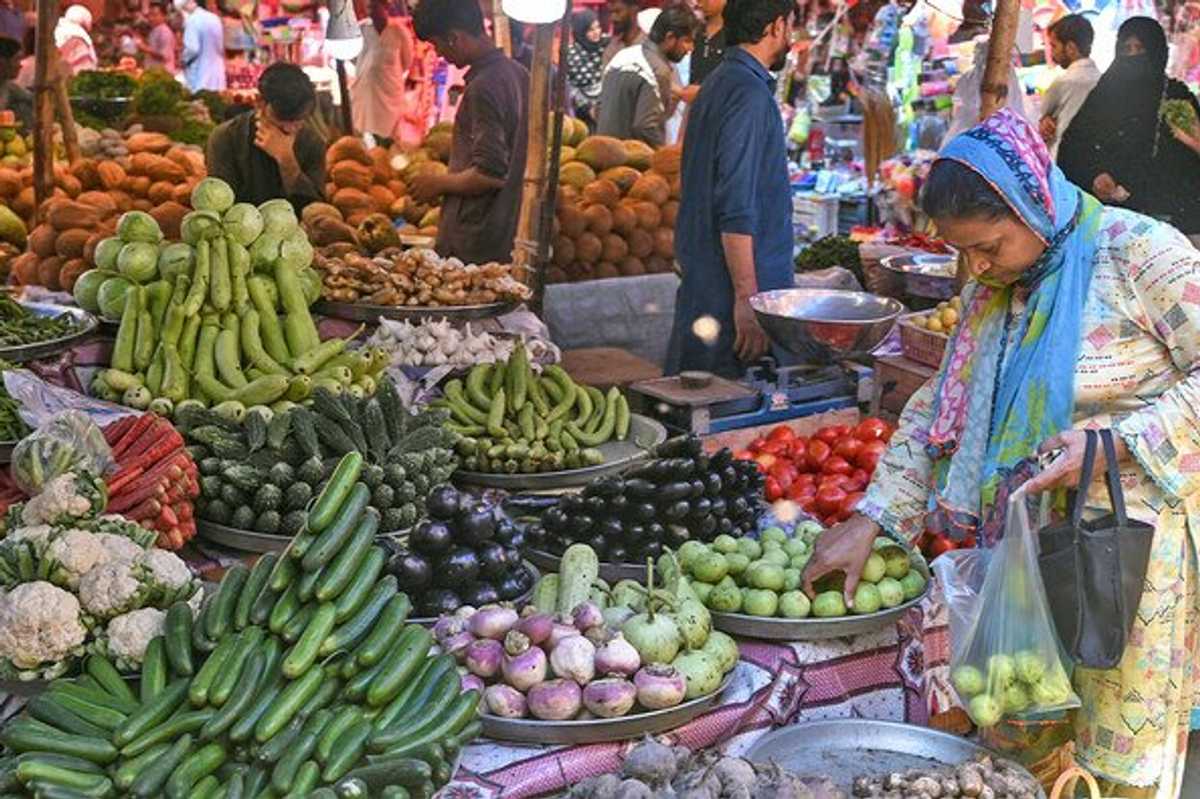
Pakistan's inflation accelerated to 7.04% in the third week of March as the impact of higher petrol prices began reflecting in the broader economy, according to official data.
On a week-on-week basis, the Sensitive Price Indicator (SPI) increased by 0.21%.
The sharp uptick in year-on-year inflation follows the government's decision earlier this month to raise petrol and diesel prices by PKR 55 per liter, pushing fuel costs to historic highs and triggering secondary price pressures across food and transport sectors.
The fuel price increase has begun cascading through the economy, with transport-dependent items like chicken and bread showing notable weekly increases. Year-on-year comparisons reveal diesel prices up nearly 30% and petrol up 25.75%, reflecting the cumulative impact of multiple adjustments over the past year.
According to data released by the Pakistan Bureau of Statistics (PBS), the biggest year-on-year increase was observed in the prices of diesel (29.94%), gas charges (29.85%), wheat flour (26.46%), petrol (25.75%), and LPG (23.86%).
The biggest week-on-week increase was observed in the prices of tomatoes (24.85%), chicken (7.33%), bread (1.08%), energy saver bulbs (0.91%), and cooked daal (0.65%).
The items whose prices saw the biggest decrease included garlic (4.76%), LPG (2.67%), onions (2.52%), pulse masoor (1.34%), and wheat flour (1.05%).
Pakistan tracks inflation weekly and monthly. The former is called the SPI, while the latter is tracked through the Consumer Price Index (CPI).
The SPI, which tracks the prices of 51 essential commodities from 50 markets across 17 cities, is used as a key gauge of short-term inflation trends.
During the week ended March 18, out of 51 items, the prices of 18 (35.29%) items increased, nine (17.65%) items decreased and 24 (47.06%) items remained stable.
In February, the CPI or headline inflation jumped to 7.0% from 5.8% in January, marking the highest level since October 2024.
In early March, the State Bank of Pakistan (SBP) kept the key policy rate unchanged at 10.5% for the second consecutive meeting, citing heightened uncertainty from the Middle East conflict and rising global oil prices.
The central bank expects inflation to remain above 7% for the remainder of fiscal year 2026 and into fiscal year 2027.
It added the impact of higher domestic energy prices may be partly offset by easing food prices and improved agricultural supply conditions.


Comments
See what people are discussing