

Pakistani fuel stocks ‘sufficient’ to withstand temporary supply disruption
Finance minister says ensuring the availability of energy supplies is the government’s primary objective

Business Desk
The Business Desk tracks economic trends, market movements, and business developments, offering analysis of both local and global financial news.
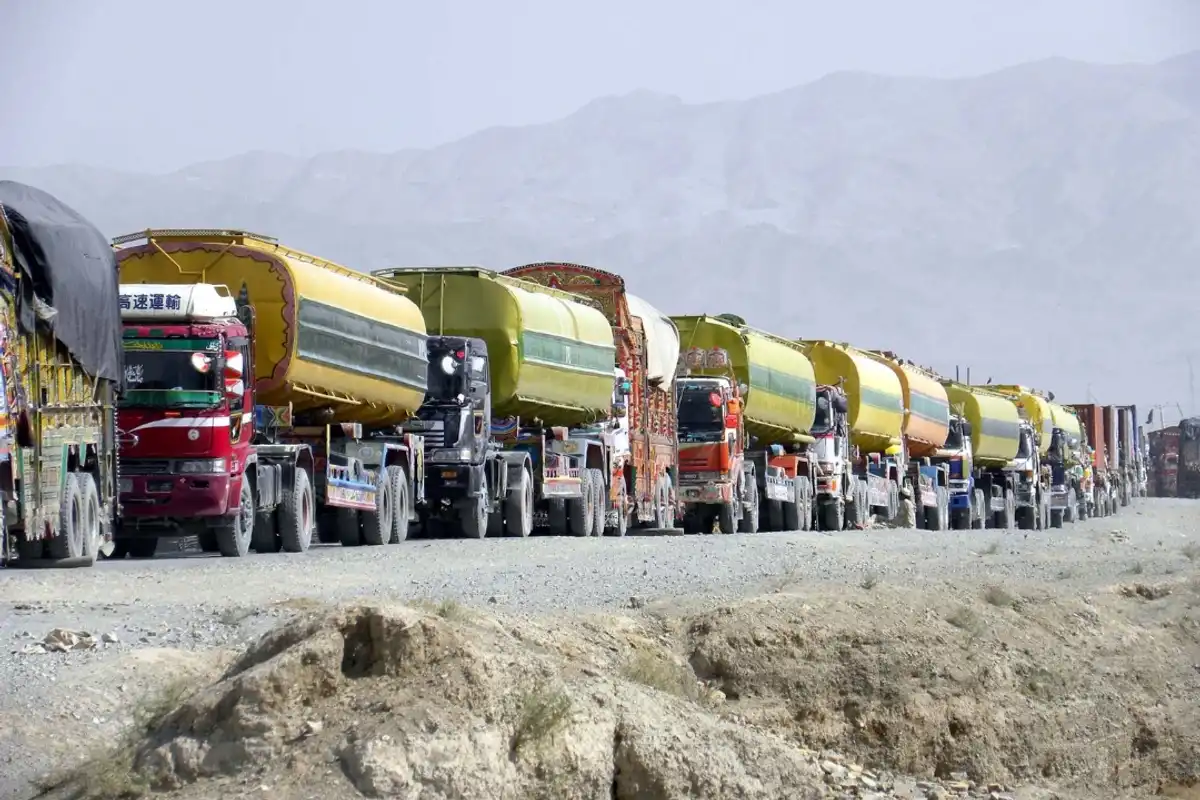
A meeting of top Pakistani officials, chaired by Finance Minister Muhammad Aurangzeb, was told that the country has sufficient fuel stocks to withstand any disruption to supply due to the ongoing conflict in the Middle East.
The Strait of Hormuz, one of the world’s most critical energy corridors, is facing renewed disruption after conflict in the region, triggered by U.S. and Israel strikes on Iran, expanded on Monday.
Roughly 20 to 21 million barrels per day of crude oil, condensate and petroleum products — nearly 20% of global petroleum liquids consumption — transited the narrow waterway in 2023-24. About one-fifth of the world’s liquefied natural gas (LNG) trade, primarily from Qatar and the United Arab Emirates, also passes through the strait on its way to Asian markets.
Pakistan relies heavily on Gulf energy supplies shipped through the Strait. It imports LNG from Qatar, diesel from Kuwait and crude oil largely from the Abu Dhabi National Oil Company.
Amid fears of a supply distortion, Pakistan’s prime minister, Shehbaz Sharif, formed a committee on Sunday to assess the country’s oil stocks.
The committee, which met on Monday, reviewed “trends in forward and futures prices of petroleum products” and assessed supply chain stability, said a statement issued after the meeting.
The committee was informed that national stocks of petroleum products are presently at comfortable levels.
The finance minister emphasized that there is no immediate supply stress, while acknowledging the “fluid and evolving” international environment.
The committee noted that the closure of the Strait of Hormuz and tensions around the Strait of Bab Al-Mandeb are major challenges for global energy security. If the situation persists, then it may have implications for Pakistan’s energy supply chain.
Aurangzeb said ensuring the availability of energy supplies is the government’s primary objective. He directed all relevant entities to intensify coordination, validate physical stock positions, closely track shipments and storage, and remain fully prepared to respond to emerging developments.
The meeting also reviewed LNG and LPG supply positions, shipment schedules, terminal operations, and line-pack considerations. The committee will hold daily meetings to “enable real-time monitoring of international price movements, domestic stock levels, foreign exchange exposure, and supply chain developments”.
The meeting was attended by Federal Minister for Petroleum Ali Pervaiz Malik, Federal Minister for Power Sardar Awais Ahmad Leghari, Minister of State for Finance Bilal Azhar Kayani, along with federal secretaries and other senior officials.




Comments
See what people are discussing