

Pakistan’s grid power generation falls as rooftop solar boom drives record total output
Think tank report says distributed solar reached 51 GW by March 2026, reshaping demand and reducing reliance on the national grid
Haris Zamir
Business Editor
Experience of almost 33 years where started the journey of financial journalism from Business Recorder in 1992. From 2006 onwards attached with Television Media worked at Sun Tv, Dawn Tv, Geo Tv and Dunya Tv. During the period also worked as a stringer for Bloomberg for seven years and Dow Jones for five years. Also wrote articles for several highly acclaimed periodicals like the Newsline, Pakistan Gulf Economist and Money Matters (The News publications)
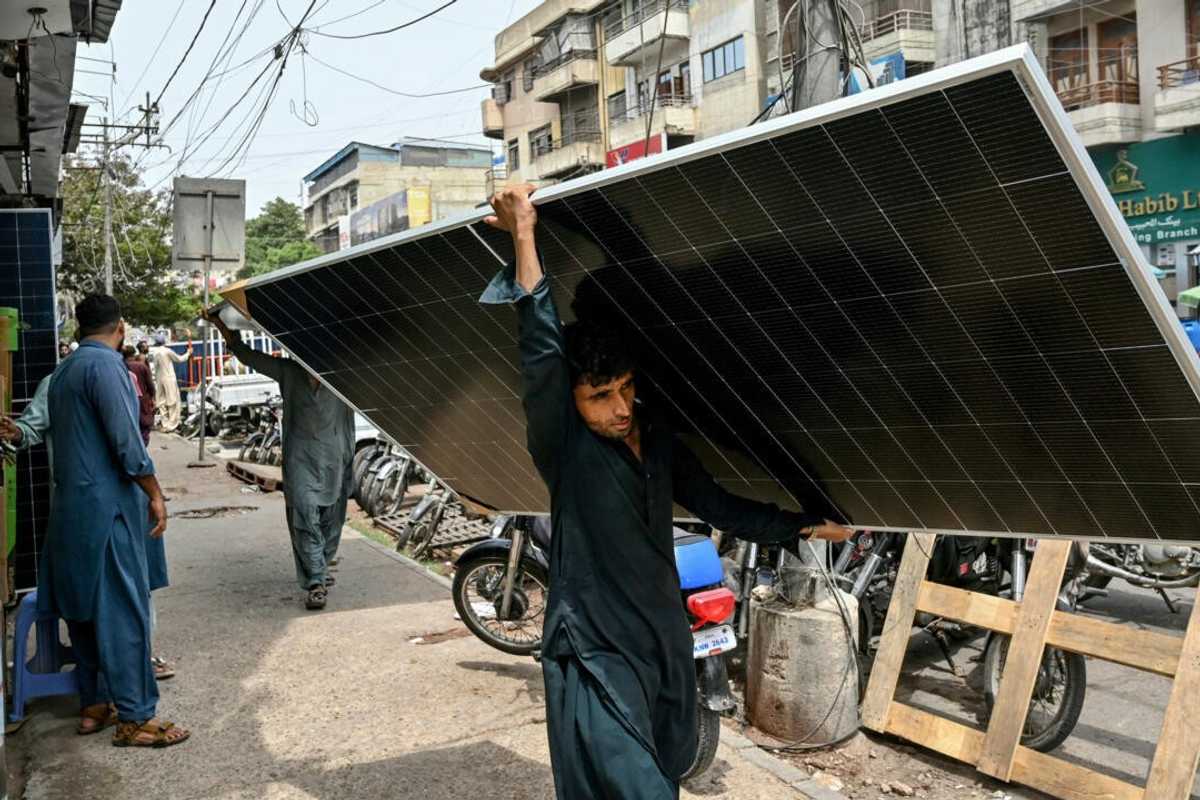
Pakistan’s electricity sector is undergoing a rapid transformation as consumers increasingly shift to distributed solar power, pushing total electricity generation to record levels despite a continued decline in reliance on the national grid, according to a new report released Tuesday by energy think tank Renewables First.
The group’s “Pakistan Electricity Review 2026” estimated the country had deployed 51 gigawatts (GW) of solar capacity by March 2026, while solar module imports reached 54 GW by the end of the same month.
The report said electricity generated from utility-scale power sources fell 2% year on year to 135 terawatt-hours (TWh) in fiscal 2025 (July 2024 to June 2025). It marked the fourth consecutive annual decline in grid-based electricity generation, down from a peak of 154 TWh recorded in fiscal 2022.
However, distributed solar generation, including net-metered, behind-the-meter and off-grid installations, produced an estimated 51 TWh in fiscal 2025, lifting Pakistan’s total electricity generation to a record 186 TWh.
According to the report, electricity generated through distributed solar was equivalent to nearly 46% of the electricity supplied through the national grid during the same period.
“New growth in electricity is increasingly being met by distributed solar,” said Nabiya Imran, associate – energy insights at Renewables First, during a webinar launching the report.
“It is being met outside the grid,” she said. “In other words, demand that was previously entirely on the grid has migrated to behind-the-meter and net-metered distributed solar.”
The report said grid sales, defined as electricity purchased by consumers from the state-owned utility network, rose 1.7% year on year to 111 TWh in fiscal 2025, though they remained below peak levels recorded in fiscal 2022.
“This does not reflect falling electricity demand,” the report noted. “Instead, a growing share of consumption is being met through distributed solar, indicating that underlying electricity use continues to rise but is increasingly bypassing the grid.”
Analysts say the shift toward solar adoption has been driven by persistently high electricity tariffs, frequent power shortages and a steep decline in global solar panel prices, making self-generation increasingly attractive for households and businesses.
The report warned Pakistan’s power sector is now operating through two parallel systems, a centralized grid dependent largely on thermal power generation and a fast-growing decentralized renewable energy network led by consumers.
“On one side, we have the centralized grid, which is structured around unidirectional power flows, thermal plants and thermal dependence,” Imran said.
“At the same time, consumers are increasingly investing in distributed solar, driven by high electricity tariffs and cheaper solar panel costs,” she added. “So there is a mismatch between these two systems.”
The think tank said the growing penetration of distributed solar is eroding utility revenues faster than thermal generation capacity can be rationalized, creating mounting financial and operational challenges for the power sector.
“The sector’s inflection point will depend on how quickly planning and policy frameworks adapt to decentralized, bi-directional electricity flows,” the report said.
It added Pakistan will need to shift its focus from expanding generation capacity toward optimizing the power system through greater flexibility, battery storage and demand-side management to improve efficiency and lower costs.
In the report’s foreword, Sohaib Malik, senior fellow – energy transitions at Renewables First, said policymakers have begun recognizing the structural challenges facing the country’s centralized electricity model, though the full scale of the transition remains underestimated due to incomplete data.
The report also highlighted economic opportunities from the clean energy transition, saying technologies such as solar panels, battery storage systems and electric vehicles could support domestic manufacturing and strengthen macroeconomic resilience if backed by coherent industrial policy.





Comments
See what people are discussing