

Panama Canal to reduce daily ship passages as El Nino-fueled drought worsens
The Panama Canal Authority announced plans to reduce daily vessel transits from 36 to 32 starting in September due to an El Niño-driven drought

News Desk
The News Desk provides timely and factual coverage of national and international events, with an emphasis on accuracy and clarity.
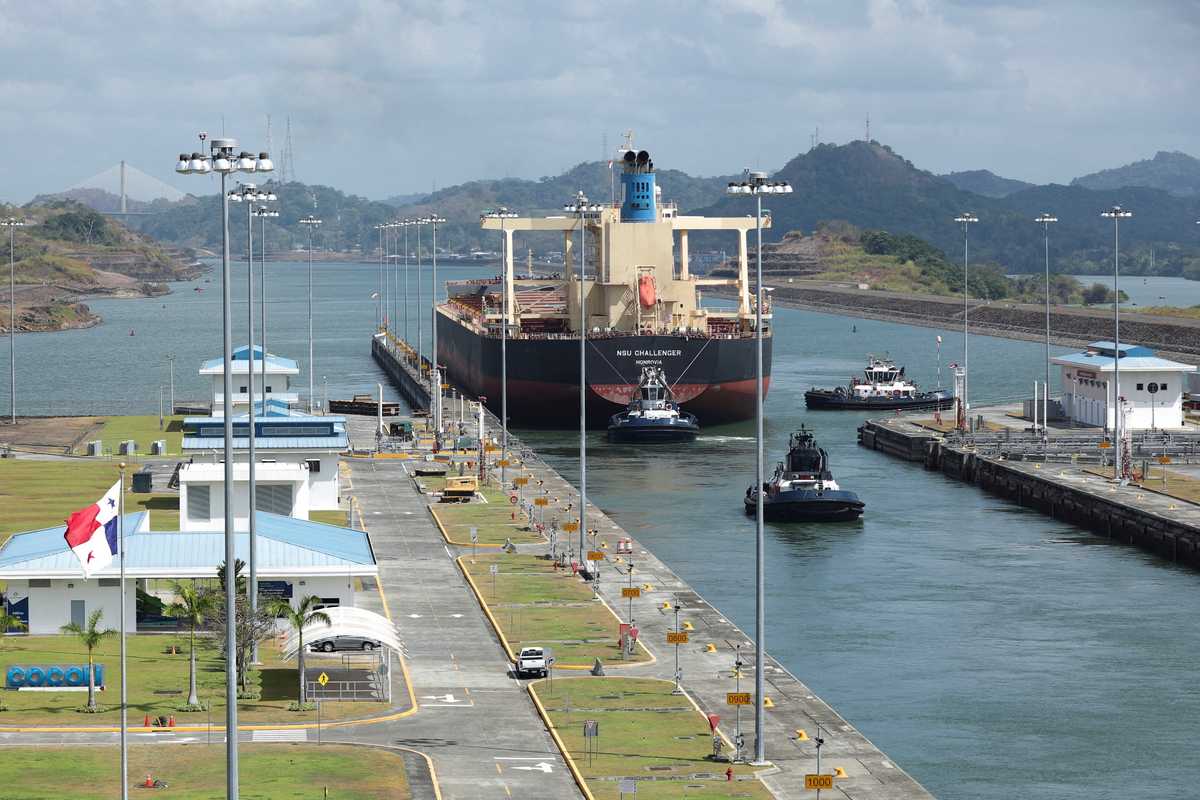
The Panama Canal Authority announced Thursday that it will restrict daily ship transits starting next month due to a severe drought driven by the El Niño weather phenomenon.
Beginning September 3, the maximum number of daily vessel crossings will drop from 36 to 34, before decreasing further to 32 starting September 15 to conserve water across the waterway's feeding reservoirs.
Why is the Panama Canal cutting daily vessel transits?
The transit restrictions follow months of below-average precipitation across the canal's watershed. Official rainfall measurements between May and August registered a 34 percent decline compared to historical averages, while water inflows into artificial lakes Gatun and Alhajuela dropped 44 percent below normal levels.
According to The Guardian, the Panama Canal handles roughly 5 percent of global maritime commerce and 40 percent of US container cargo traffic. To maintain long-term operational sustainability, canal administrators have already implemented water conservation protocols, including lowering maximum vessel draft depths for larger Neopanamax ships.
The upcoming capacity caps will apply unevenly across locks, limiting Neopanamax locks to nine daily slots while reducing Panamax lock transits to 23 by mid-September. Authorities warned that ships navigating without prior booking reservations face significantly longer queue delays.
What is the broader impact on global shipping and local water supplies?
The daily transit limits threaten to increase maritime transport costs and bottleneck global supply chains connecting Asia and the Americas. Transit slot auctions have experienced extreme price surges, with one commercial vessel paying $4 million in April to secure passage through the chokepoint.
Major user nations—including the United States, China, Japan, Chile, and South Korea—are preparing for prolonged shipping disruptions. Beyond commercial logistics, the water shortage impacts domestic infrastructure, as Gatun Lake provides drinking water for over half of Panama's 4.2 million citizens. Neighboring Central American countries face similar environmental stress, with Honduras declaring a drought alert across 80 percent of its territory.





Comments
See what people are discussing