

Pakistan petrol price likely to rise PKR 9.30 for next week
High-speed diesel could climb PKR 4.16 as global crude rebounds,

Business Desk
The Business Desk tracks economic trends, market movements, and business developments, offering analysis of both local and global financial news.
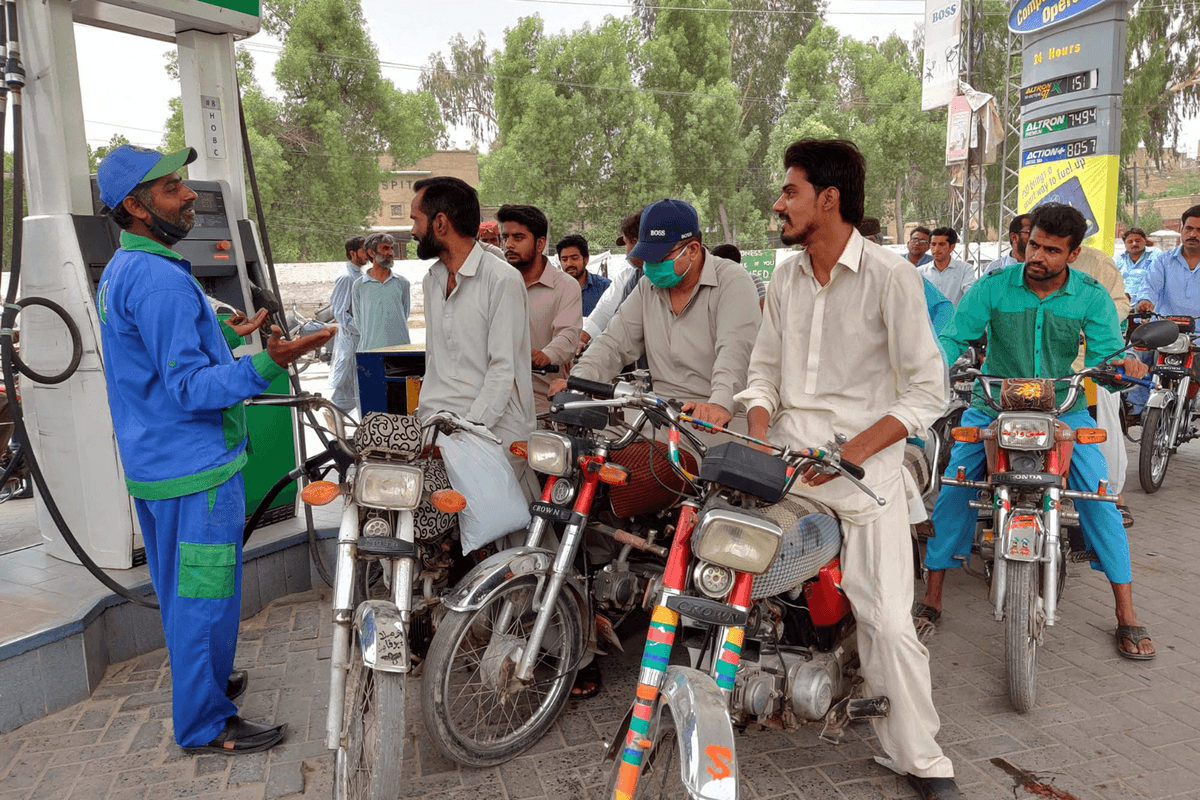
Pakistan's petroleum product prices are expected to rise sharply in the upcoming review on the back of higher global crude oil prices, with petrol likely to increase by around PKR 9.30 per liter and high-speed diesel (HSD) by PKR 4.16 per liter, according to oil industry calculations.
The ex-refinery price of petrol may climb to PKR 284.34 per liter from PKR 275.04, with diesel rising to PKR 341.68 per liter from PKR 337.51. The new prices will be announced on Friday.
Why are Pakistan's fuel prices rising?
The expected increase is primarily driven by a rebound in international crude oil benchmarks. Concerns over tightening global supplies and improved demand expectations in major economies have lifted prices.
The FOB price of petrol rose to $148.71 per barrel from $143.38 per barrel. FOB diesel prices climbed to $176.90 per barrel from $174.63 per barrel.
Pakistan relies heavily on imported petroleum products. Any increase in international prices immediately translates into higher domestic pricing pressure, an oil marketing industry official said.
How is the rupee affecting fuel prices?
The average dollar exchange rate remained largely stable during the pricing period. It stood at PKR 278.73, against PKR 278.80 in the previous fortnight.
This means the projected price hike is almost entirely linked to higher international product prices, not currency depreciation.
The import parity price of petrol rose to PKR 260.72 per liter from PKR 251.43, while diesel import costs climbed to PKR 310.15 from PKR 306.24 per liter.
What is the impact on Pakistan's inflation?
Analysts said the expected fuel price increase could add to inflationary pressures. Transport and logistics costs are particularly exposed because diesel is widely used in heavy transport, agriculture, and industrial sectors.
"An increase in diesel prices has broader economic implications because it affects freight charges and food transportation costs," said a Karachi-based energy analyst.
"Petrol price hikes mainly hit urban consumers directly, but diesel has a wider inflationary spillover effect," the analyst added.
How often does Pakistan review fuel prices?
The federal government reviews petroleum prices every fortnight. The reviews are based on recommendations from oil regulators and industry calculations, accounting for international market trends and exchange rate movements.
Pakistan has witnessed relative stability in fuel prices in recent months due to softer global oil markets and a stable exchange rate.
Renewed volatility in international crude markets may reverse that trend if prices continue to rise in the coming weeks. The shift could complicate efforts to contain inflationary pressures.



Comments
See what people are discussing