

Pezeshkian says Iran will resist any attempt to force it to surrender
Pezeshkian says Iran will resist any attempt to force it into submission, as diplomacy advances on reopening the Strait of Hormuz to shipping

News Desk
The News Desk provides timely and factual coverage of national and international events, with an emphasis on accuracy and clarity.
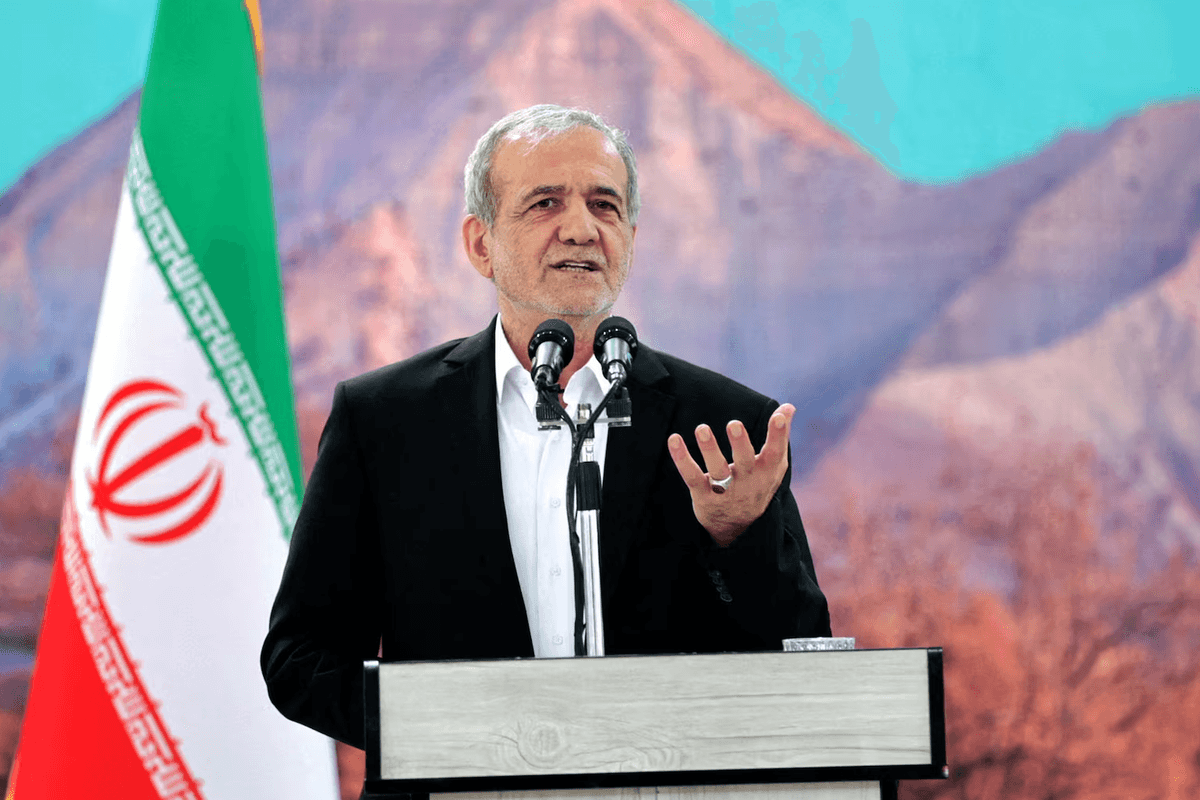
Iranian President Masoud Pezeshkian said Friday that Tehran will resist any attempt to force it into submission, vowing to defend Iran's interests and military capabilities amid its ongoing conflict with the United States and Israel.
He made the remarks in a televised interview marking the second anniversary of his inauguration, according to Iran's Press TV.
What did Pezeshkian say about Iran surrendering?
Pezeshkian said Iran would fight rather than bow to pressure, arguing the country did not need to follow a path favoured by Israel when it could secure its rights through its own capabilities. He also defended his government's willingness to negotiate with Washington despite opposition from hardliners within Iran.
"If they seek to force us into submission, we will fight. We will not back down, nor will we bow our heads," Pezeshkian said in the interview. He questioned why Iran should pursue a course favoured by Israel when it believed its rights could be secured through its own capabilities.
How is diplomacy progressing on the Strait of Hormuz?
Pezeshkian's remarks came as diplomatic efforts appeared to gain traction over reopening the Strait of Hormuz, a crucial global energy route. Disruption to the waterway has severely affected oil shipments and pushed up energy prices worldwide. A US official told Reuters, speaking on condition of anonymity, that Washington expected Iran and Oman to reach an agreement soon that could allow commercial shipping to resume.
"There is progress between Oman and Iran on the strait, and we expect a deal soon," the official said. Washington would lift its blockade of Iranian ports once commercial shipping resumed without impediments, the official added. Any further US measures would depend on Iran fulfilling its commitments under a potential agreement.
What effect has the war had on shipping through the strait?
Before the United States and Israel launched their war against Iran on February 28, roughly one-fifth of the world's oil consumption passed through the Strait of Hormuz. The conflict has since disrupted maritime traffic, with Iran imposing restrictions and charging tolls on some tankers. Tehran has also threatened or fired on vessels attempting to cross without permission.
The disruption has contributed to a sharp rise in energy prices and added to inflationary pressures worldwide. Washington has repeatedly suggested in recent weeks that an agreement to reopen the strait could be imminent. Tehran, however, has denied that formal negotiations are taking place, and it remains unclear whether the latest diplomatic push will produce a durable arrangement.
What is happening with attacks on ships near the Gulf?
The crisis has spread beyond the Gulf, with Iranian attacks on shipping in the Strait of Hormuz coinciding with stepped-up assaults by Yemen-based Houthi forces. The Houthis have targeted vessels near another major maritime chokepoint between the Red Sea and the Gulf of Aden. Abu Dhabi National Oil Company said Friday that 15 of its vessels had been attacked while passing through the Strait of Hormuz since the conflict began.
The company described the incidents as unprovoked, saying one crew member had been killed and 20 others injured. Fears of a wider regional escalation also prompted Saudi Arabia, Pakistan and Turkey to sign a joint defence agreement in Mecca on Friday.
What does the Saudi-Pakistan-Turkey defense pact involve?
Under the pact, an armed attack against any one of the three countries would be treated as an attack against all three, according to a joint statement. The agreement aims to strengthen collective deterrence among the signatories.
Turkey stressed that the pact was defensive in nature and not directed at any particular country.
The agreement comes as tensions remain high between the three US-aligned countries and Iran, whose missile attacks have also affected Gulf states.
Is there progress on ending the Israel-Hezbollah conflict in Lebanon?
Washington has also been pursuing efforts to halt fighting between Israel and Hezbollah, the Iran-backed Shi'ite group, in southern Lebanon. A Lebanese official said Friday that Lebanon and Israel had agreed on a shortlist of countries that could deploy troops to monitor Hezbollah's disarmament under a US-brokered arrangement. The United States is expected to select countries from that list.
Why did Pezeshkian bring up China during the interview?
Questions have also emerged over possible divisions within Iran's leadership as the diplomatic efforts continue. Analysts say differences between Pezeshkian's civilian government, Supreme Leader Ayatollah Mojtaba Khamenei and the Islamic Revolutionary Guard Corps could be complicating efforts to reach a settlement. In the interview, Pezeshkian defended his government's willingness to negotiate with Washington despite opposition from Iranian hardliners, saying most senior military commanders supported talks aimed at ending the conflict.
"America's biggest enemy is China, why don't they fight?" he said. "China is doing its own thing and is getting stronger day by day. When we can get our rights through dialogue, why not do it?"



Comments
See what people are discussing