

PTA announces full restoration of SEA-ME-WE 5 submarine cable internet services
Pakistan's PTA says internet services are back to normal after the SEA-ME-WE 5 submarine cable fault was fully repaired

News Desk
The News Desk provides timely and factual coverage of national and international events, with an emphasis on accuracy and clarity.
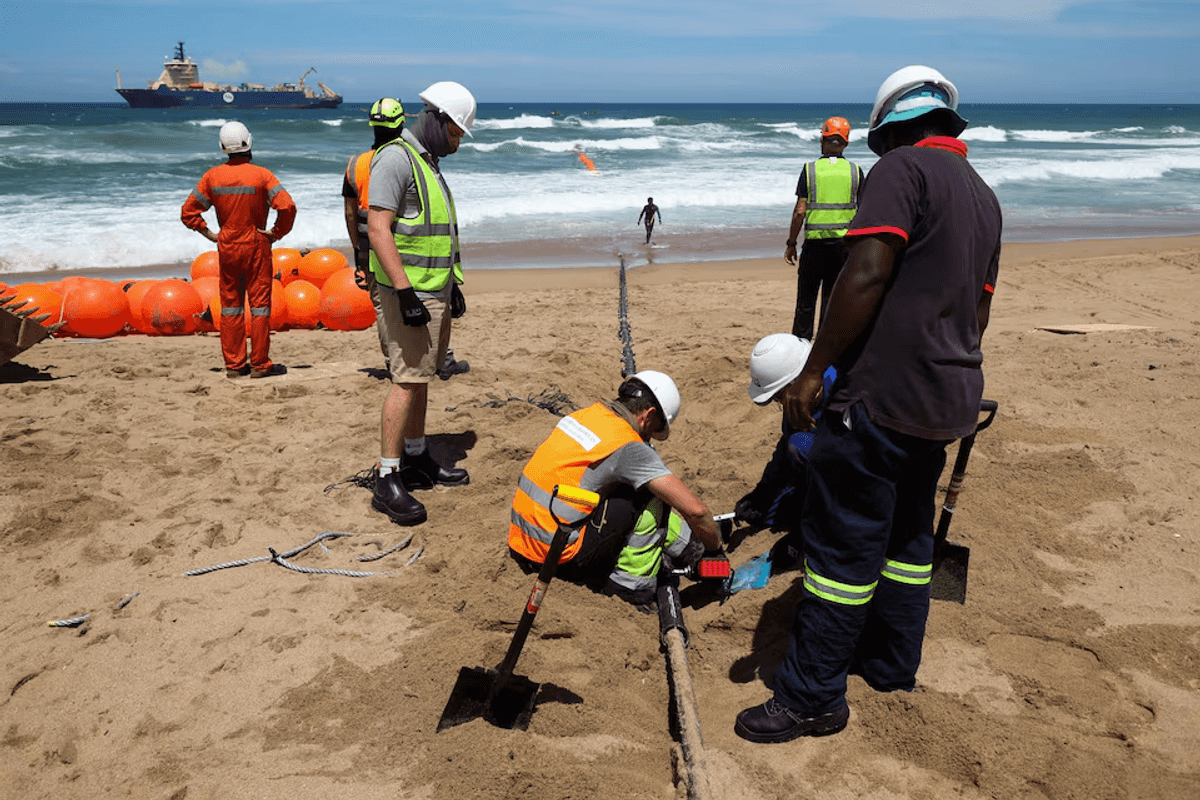
Pakistan's internet services have returned to normal after the SEA-ME-WE 5 submarine cable was fully repaired, the Pakistan Telecommunication Authority announced on Friday. The PTA said the fault affecting the SMW5 cable system had been rectified and the cable was now fully operational.
What caused the internet disruption in Pakistan?
A fault in the SEA-ME-WE 5 submarine cable began causing intermittent slowdowns and connectivity issues for users across Pakistan on Thursday. The PTA coordinated with Transworld Associates throughout the repair process and rerouted internet traffic through alternate international links to minimise disruption. The SMW5 cable is one of the primary international undersea connections carrying Pakistan's internet traffic.
The PTA said internet traffic was maintained through alternate routes while Transworld Associates worked with the SMW5 consortium to complete repairs. Services were confirmed fully restored on Friday, with the authority stating that connectivity had returned to normal operating capacity nationwide.
How vulnerable is Pakistan's internet to submarine cable faults?
Pakistan has experienced similar outages in recent years because much of its international internet traffic depends on undersea fibre-optic cables. In April 2024, another fault on the SEA-ME-WE 5 cable caused slower speeds for some users, though the impact varied depending on individual operators' network architecture and redundancy. In September 2025, multiple cable failures in the Red Sea disrupted internet services across Pakistan, India, the Gulf, and other parts of Asia and the Middle East.
Pakistan took a step toward greater resilience in November 2025 when the SEA-ME-WE 6 cable landed in the country. The Ministry of Information Technology said the new cable has a capacity of more than 100 terabits per second, provides one of the lowest-latency routes between Southeast Asia, the Middle East, and Western Europe, and more than doubles the capacity of earlier SEA-ME-WE systems. The addition improves network redundancy and reduces dependence on any single cable route.




Comments
See what people are discussing