

Qatar commends Pakistan's 'pivotal role' as principal mediator in US-Iran peace deal
Qatar praised Pakistan as the principal mediator of the US-Iran peace deal and confirmed it will join the MOU signing in Geneva on Friday

News Desk
The News Desk provides timely and factual coverage of national and international events, with an emphasis on accuracy and clarity.
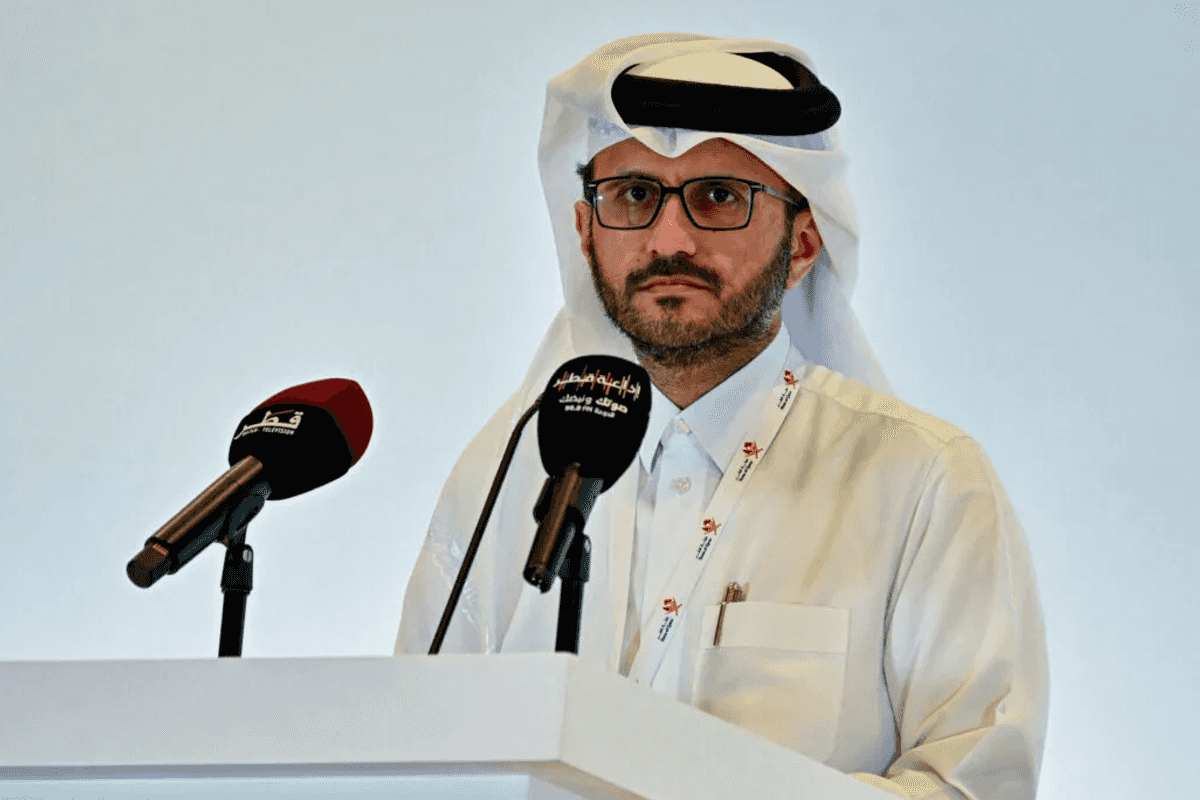
Dr. Majed Al-Ansari, adviser to Qatar's prime minister and foreign ministry spokesman.
Reuters/File
Qatar praised Pakistan on Tuesday for its "pivotal role" as the principal mediator in brokering the US-Iran peace deal, saying Doha had worked alongside Islamabad throughout the negotiations to consolidate a ceasefire and restore freedom of navigation through the Strait of Hormuz.
The US and Iran agreed to the deal on Sunday, declaring an "immediate and permanent" end to military operations, including in Lebanon. The memorandum of understanding is expected to be formally signed in Switzerland on Friday.
What role did Pakistan play in the US-Iran peace deal?
Pakistan served as the principal mediator in the negotiations that ended the three-month US-Iran war, with Qatar providing active support throughout the process.
The deal includes the reopening of the Strait of Hormuz and the removal of a US naval blockade on Iranian ports. World leaders across Europe, Asia and the Middle East praised Pakistan and Qatar for the diplomatic breakthrough.
Dr. Majed bin Mohammed Al-Ansari, adviser to the Qatari prime minister and foreign ministry spokesman, said Qatar had supported Pakistan's efforts to reach "consensus-based language" that would stabilize the truce and reopen the vital waterway, through which roughly a fifth of global oil and gas normally passes.
"The State of Qatar commends the mediation undertaken by Pakistan and the pivotal role it played as the principal mediator in this crisis," Al-Ansari said at a weekly press briefing. Doha reaffirmed its "continued partnership and support" for efforts to consolidate de-escalation and advance peaceful solutions.
Why is Qatar participating in the Geneva signing ceremony?
Qatar said it would join the Geneva signing ceremony to confirm its continued support for the mediation process and its commitment to peaceful solutions. Al-Ansari said negotiators had given "due consideration" to Gulf state security throughout the talks, along with the crisis's impact on energy supply and food security.
The Strait of Hormuz had been largely closed since Iran retaliated to US-Israeli strikes in February, disrupting oil flows and pushing up prices worldwide.
The three-month war strained global energy markets and international shipping routes, drawing in multiple regional powers as mediators. Qatar's formal participation in the signing reflects its role as a key partner in the Pakistan-led framework, even as Islamabad received the bulk of international credit for the breakthrough. Iran's Supreme National Security Council expressed gratitude to both Pakistan and Qatar for their mediation efforts, according to reports.
What did Qatar say about Lebanon and Gaza?
On Lebanon, Qatar said the country's sovereignty was "a red line" and that there could be "no justification" for continued attacks on its territory. Al-Ansari said the strikes threatened Lebanon's security, stability and the safety of its people, reaffirming Doha's position that the conflict must not spread further. The US-Iran deal declared an end to military operations in Lebanon as well.
Qatar also confirmed a separate meeting was underway in Egypt as part of ongoing efforts to reach a ceasefire agreement in Gaza. Al-Ansari stressed that safeguarding Qatar's own national security, its citizens and residents remained a "paramount priority" in all positions Doha takes. The comments underlined Qatar's broader role as a mediator across multiple active conflicts in the region.


Comments
See what people are discussing