

Rubio urges Lebanon not to return seized explosives to Hezbollah, presses for direct Israel deconfliction
US Secretary of State Marco Rubio urged Lebanon’s president to retain 500kg of intercepted explosives linked to Hezbollah, prosecute those responsible and establish military coordination channels with Israel

News Desk
The News Desk provides timely and factual coverage of national and international events, with an emphasis on accuracy and clarity.
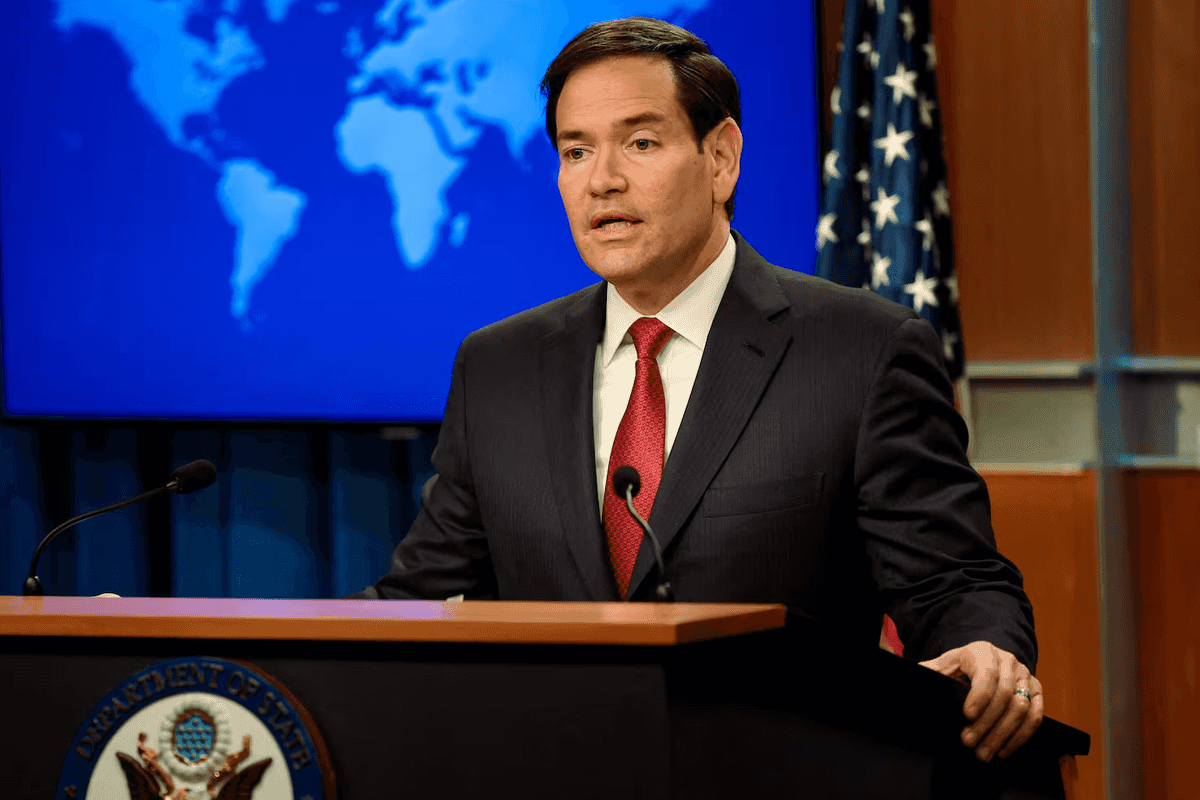
United States Secretary of State Marco Rubio told Lebanese President Joseph Aoun on Thursday that returning hundreds of kilograms of intercepted explosives to Hezbollah should be "out of the question," urging Lebanese authorities to prosecute those responsible for the shipment, according to a senior US official.
Why is Washington pressing Beirut over the intercepted munitions?
The diplomatic intervention follows an admission on Thursday by Hezbollah that a 500-kilogram consignment of explosives seized by Lebanese security forces last week belonged to the group.
Hezbollah lawmaker Hassan Fadlallah publicly asserted that the vehicle and its cargo were designated for "the resistance" against Israel, demanding that Beirut authorities release detained suspects and return the confiscated cache.
In a direct telephone call with President Aoun, Rubio stressed that the Lebanese government must maintain custody of the material and hold accountable all individuals who financed, ordered, and directed the transfer.
The US official, speaking to reporters on condition of anonymity, emphasized that allowing illicit munitions to return to non-state paramilitary factions directly contradicts Lebanon's legal commitments to establish sovereign authority across its borders.
How does the seizure impact the 1955 boycott law and regional deconfliction?
Rubio also addressed Lebanon's 1955 anti-normalization statute, which criminalizes direct relations or communications with Israel. The Secretary of State argued that the decades-old boycott law is impractical under current security conditions, urging Beirut to establish direct military-to-military communications between the Lebanese Armed Forces and the Israel Defense Forces (IDF) for operational deconfliction.
US officials contend that direct military lines would significantly reduce the potential for tactical miscalculations and accelerate the phased implementation of the US-facilitated framework agreement reached at the end of June 2026.
Under that internationally backed framework, Lebanon outlined a phased strategy to disarm irregular militias, including Hezbollah, in tandem with progressive Israeli military withdrawals from southern border areas. However, implementation has faced persistent friction on the ground, with Hezbollah refusing to surrender its arsenals while cross-border skirmishes continue.
According to The National, US diplomats intend to keep working closely with President Aoun and regional partners to ensure the seized munitions are properly secured and to advance neutral military communication protocols.





Comments
See what people are discussing