

Saudi crown prince, Trump hold call on reducing Mideast tensions
Saudi crown prince Mohammed bin Salman urged Trump to prioritize dialogue with Iran during a call on reducing Mideast tensions, SPA reported

News Desk
The News Desk provides timely and factual coverage of national and international events, with an emphasis on accuracy and clarity.
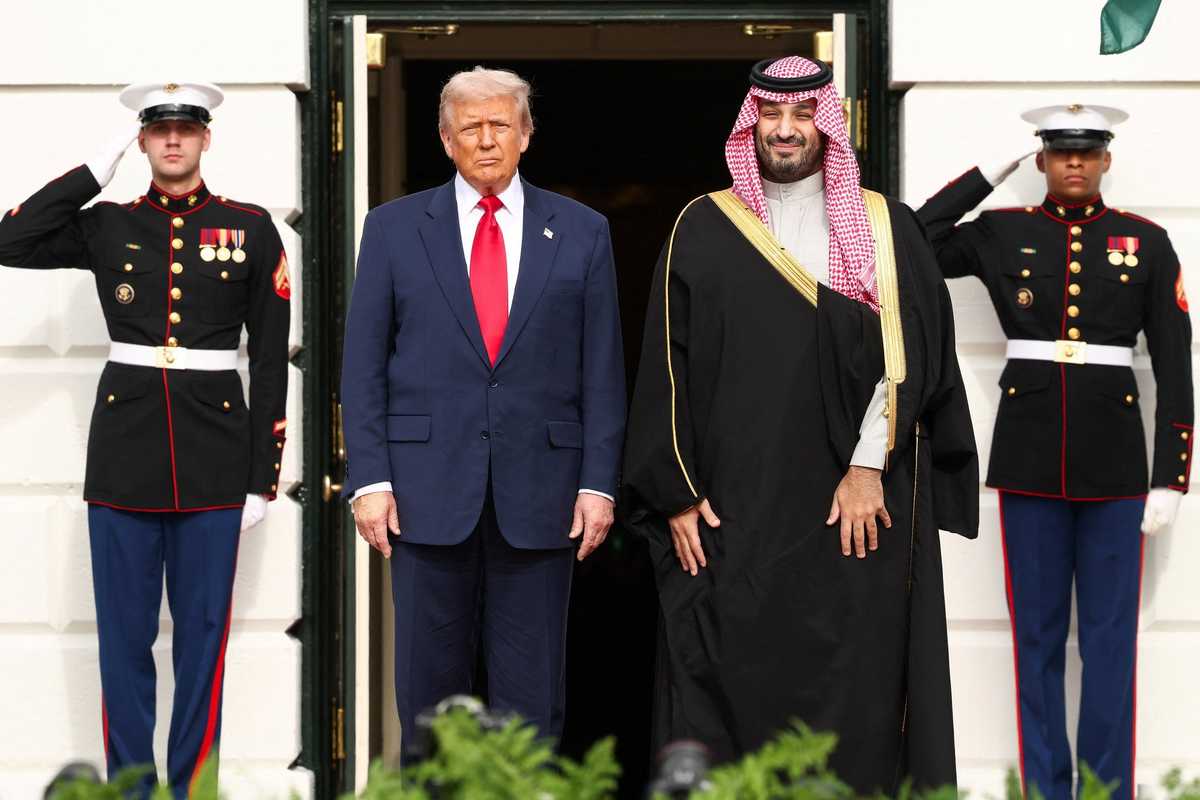
Saudi Arabia's Crown Prince Mohammed bin Salman and U.S. President Donald Trump held a phone call Sunday focused on reducing Mideast tensions, Saudi state news agency SPA reported.
The crown prince urged Trump to prioritize dialogue and pursue a truce that could pave the way for diplomatic solutions amid the ongoing Iran conflict.
Why did the Saudi crown prince and Trump hold the call?
The call followed Trump's Saturday statement that the United States and Israel had agreed to hold off on new strikes against Iran, provided a deal could be reached quickly. Mohammed bin Salman stressed the need to prioritize dialogue to reduce tensions, SPA reported, and to exert every possible effort toward a truce that opens the door to diplomatic solutions.
Trump said he decided to suspend plans for fresh attacks after requests from Gulf countries. He added that Washington remained prepared to take military action against Iran but had agreed to delay new strikes following appeals from Tehran and other regional states.
"Based on this request, I have agreed, for the future benefit of the WORLD and, likewise, the survival of a successful and prosperous Iran, to cancel the attack, subject to being able to rapidly make a DEAL," Trump wrote on his Truth Social platform.
Who else has been holding talks over the Iran conflict?
Iran's state news agency reported that the Saudi and Iranian foreign ministers also spoke by phone. Iran's state broadcaster said Tehran had separately spoken with Pakistan and Turkey, describing both countries as mediators in talks over regional tensions and security risks.
Trump said any eventual agreement would need to include the immediate reopening of the Strait of Hormuz and an end to what he called Iran's nuclear threat. He added that Israel supported this commitment.
The conflict began on Feb. 28 when the United States and Israel launched strikes on Tehran. Fighting resumed in recent weeks despite an earlier ceasefire agreement, and no lasting settlement has been reached. The renewed hostilities have contributed to rising oil prices after an earlier decline during the ceasefire period.
What is the current security situation in the region?
U.S. embassies across the Middle East warned American citizens Saturday about the possibility of unforeseen escalation and urged them to be prepared to leave if necessary. Iran and the United States resumed exchanges of fire last month after a brief lull, though no strikes were reported between Friday and Sunday.
Maritime security concerns have also persisted. Egypt is investigating a drone strike on a U.S.-owned gas vessel in an Egyptian port on Wednesday, while a British maritime agency said an unknown projectile struck a tanker off the coast of Oman on Saturday. Maritime trade tracking firm Kpler said Friday that traffic through the Strait of Hormuz had dropped sharply.
Separately, Yemen's Houthi rebels denied Saturday that they were seeking to charge ships for passage through the Bab el-Mandeb Strait, a key route linking the Red Sea and the Indian Ocean.





Comments
See what people are discussing