

SBP says prudent policies, IMF support drove economic stability in FY25
In its annual report, SBP said inflation fell sharply from 23.4% in FY24 to an eight-year low of 4.5% in FY25

Business Desk
The Business Desk tracks economic trends, market movements, and business developments, offering analysis of both local and global financial news.
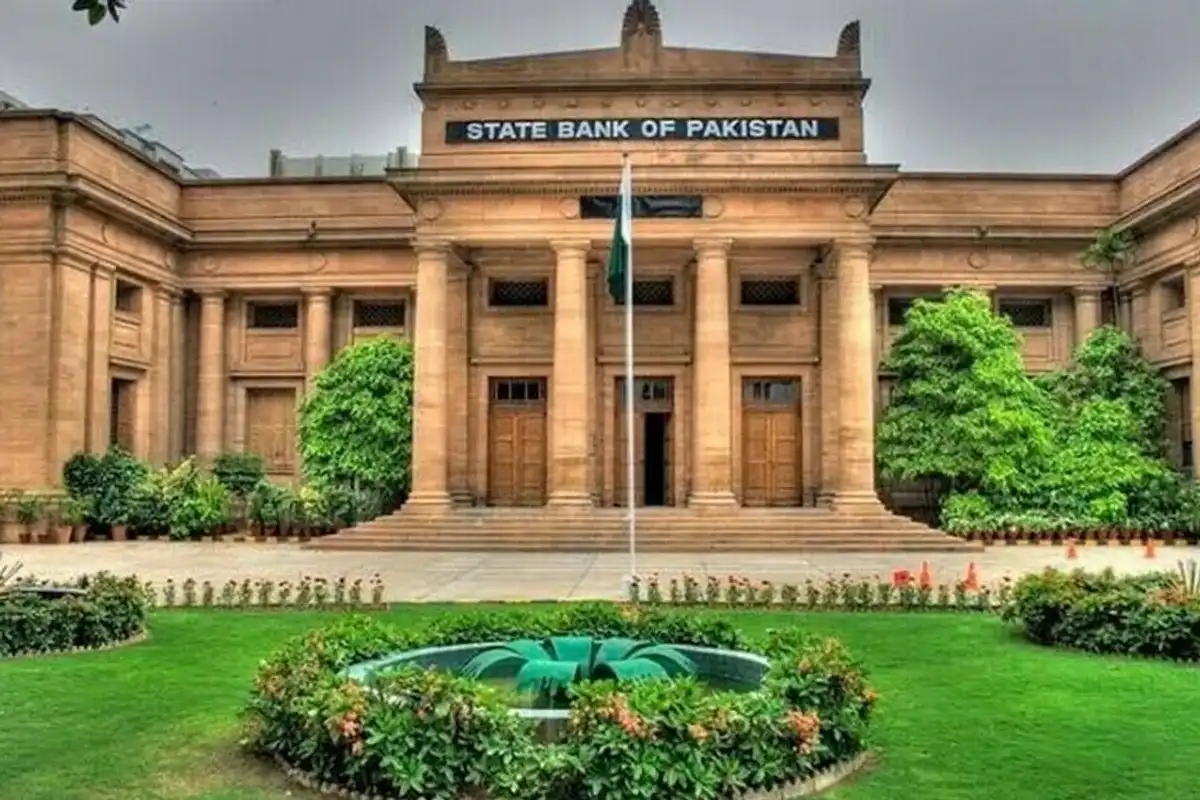
The State Bank of Pakistan (SBP) has released its Annual Report on the State of Pakistan’s Economy for fiscal year 2024-25, highlighting continued macroeconomic stability supported by prudent monetary policy, fiscal consolidation, favourable global commodity trends, and the IMF’s Extended Fund Facility (EFF).
According to the report, real GDP growth improved in FY25, driven by the services sector and a recovery in industrial activity, despite a decline in major crop output and contraction in large-scale manufacturing. Imports rose alongside expanding economic activity, while export growth remained subdued amid softening global food prices, uncertain trade conditions, and rising geopolitical tensions.
Strong workers’ remittances, however, offset the wider trade deficit, leading to a notable current account surplus. Combined with higher external inflows from multilateral and bilateral creditors, this bolstered foreign exchange reserves and brought stability to the FX market.
The report states that continued fiscal consolidation and a sharp rise in SBP profits reduced the fiscal deficit to a nine-year low in FY25, while the primary surplus exceeded budget estimates for the second consecutive year. A cautious monetary stance, together with fiscal restraint, helped keep domestic demand in check. Supported by ample food supply, a stable exchange rate, benign global prices, and progress on energy sector reforms, inflation dropped from 23.4% in FY24 to an eight-year low of 4.5% in FY25.
The sharp fall in inflation, along with an improved outlook and stronger external position, enabled the Monetary Policy Committee to cut the policy rate by a cumulative 1,100 basis points between June 2024 and June 2025.
Addressing long-term structural challenges, the report notes that Pakistan’s low savings rate continues to constrain growth by limiting both private and public investment. A special chapter titled “The Challenge of Low Savings in Pakistan” attributes this to low per capita income, high inflation, fiscal imbalances, a large informal economy, youth dependency, and cultural factors. Persistent fiscal deficits have also weakened savings and investment, while the government’s reliance on bank financing has reinforced a strong sovereign-bank nexus, crowding out private credit.
The report further highlights that frequent climate-related events have disrupted productive activity and strained fiscal and external accounts. Political and economic instability, high and complex taxation, logistics bottlenecks, regulatory hurdles, and security challenges have all weighed on the investment climate. It stresses that sustained reforms are needed to address these structural issues and achieve durable, high growth.
The SBP noted that stable macroeconomic conditions and coordinated monetary-fiscal policy have revived business and household confidence. With fiscal discipline, external stability, and progress under the IMF’s EFF program, all three major international credit rating agencies upgraded Pakistan’s outlook between April and August 2025.
However, flood-induced damage to agriculture and infrastructure poses risks to the outlook. Floods inundated large areas under kharif cultivation, which could slow agricultural growth and disrupt supply chains, affecting agro-based industries. Nonetheless, the lagged impact of lower interest rates is expected to sustain economic momentum, keeping FY26 growth near the lower end of the earlier projected 3.25–4.25% range.
Moderate expansion and flood-related shortages may push up imports, while weak global demand and crop losses could weigh on exports. Still, resilient remittance inflows are expected to keep the current account deficit between 0–1% of GDP in FY26.
The report also warns that flood-related food shortages, along with fading base effects, could temporarily push inflation above the 5–7% target range in the second half of FY26. Yet, subdued domestic demand and a stable global price outlook are likely to contain underlying inflation, guiding it back within target by FY27.




Comments
See what people are discussing