

Pakistan central bank faces split calls ahead of policy decision
Brokerages divided between rate hike and hold as oil risks cloud outlook
Haris Zamir
Business Editor
Experience of almost 33 years where started the journey of financial journalism from Business Recorder in 1992. From 2006 onwards attached with Television Media worked at Sun Tv, Dawn Tv, Geo Tv and Dunya Tv. During the period also worked as a stringer for Bloomberg for seven years and Dow Jones for five years. Also wrote articles for several highly acclaimed periodicals like the Newsline, Pakistan Gulf Economist and Money Matters (The News publications)
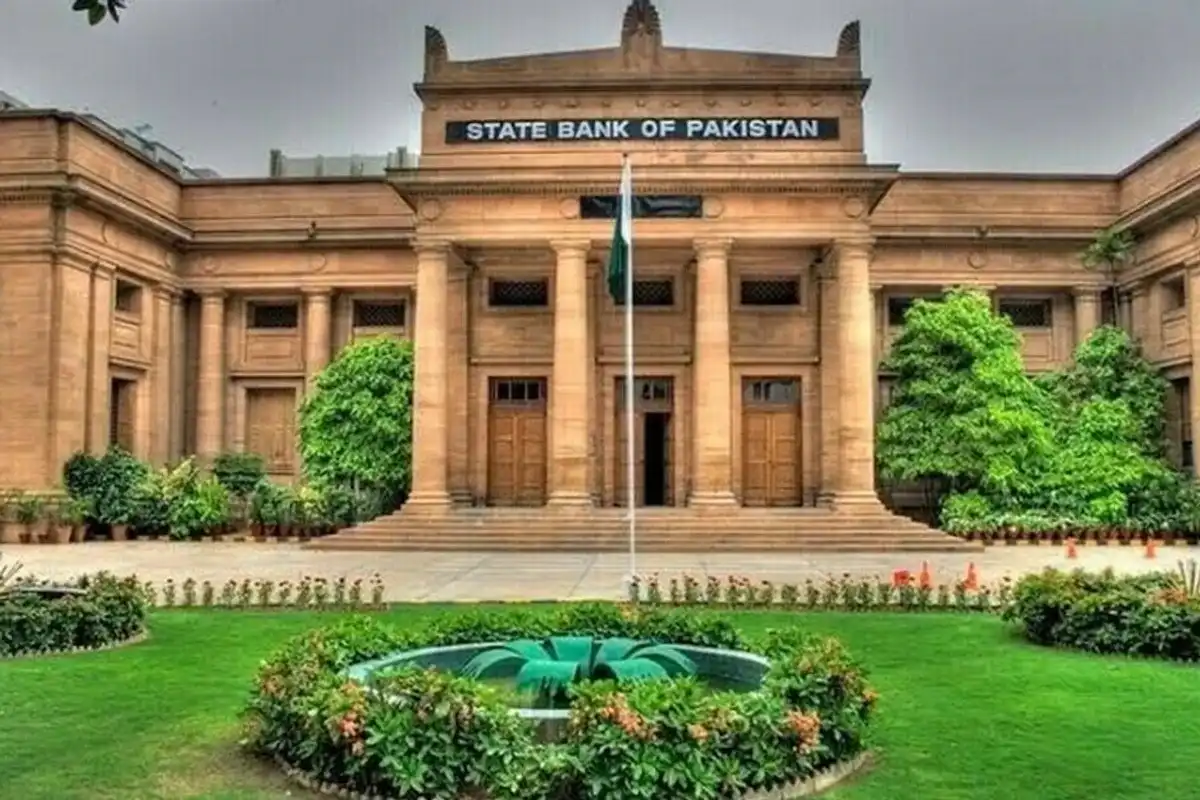
Pakistan’s central bank is widely expected to face a finely balanced decision at its upcoming monetary policy meeting, with leading brokerage houses split on whether rising global risks warrant a rate hike or continued policy restraint.
The State Bank of Pakistan (SBP) is scheduled to convene its Monetary Policy Committee on April 27, as markets weigh the inflationary impact of volatile oil prices against a still-fragile economic recovery.
Arif Habib Limited: Hold at 10.5%
In its latest preview, Arif Habib Limited argued that the case for maintaining the policy rate at 10.5% “still holds weight,” emphasizing that current inflationary pressures are largely supply-driven and temporary.
“Policy must continue to lean toward discipline over impulse,” the firm said, adding that despite global uncertainty — particularly ongoing tensions involving the United States and Iran — Pakistan’s inflation outlook remains broadly anchored.
The brokerage noted that oil prices have been highly volatile, with Arab Light crude swinging between $135 and $77 per barrel in recent weeks. While this has led to spikes in transport costs, broader inflation has remained contained, with consumer price inflation at 7.3% year-on-year in March.
Arif Habib Limited warned against premature tightening, stating, “Responding to such temporary pressures with policy tightening risks overcorrection,” especially as GDP growth has only recently begun to recover, expanding 3.89% in the second quarter of FY26.
The firm also highlighted improving external accounts, including a $1.07 billion current account surplus in March and foreign exchange reserves standing at $15.1 billion, arguing that these buffers reduce the need for immediate policy action.
Topline Securities: Case for a hike builds
By contrast, Topline Securities reported a shift in market sentiment toward tightening, driven by elevated oil prices and uncertainty surrounding the duration of geopolitical tensions.
According to its latest survey, 53% of respondents now expect a rate hike, with the majority anticipating a 50-100 basis point increase. This marks a significant change from the previous month, when 92% had expected no change.
“We attribute this shift to elevated global crude oil prices and uncertainty over the longevity of the conflict,” Topline Securities said, adding that it expects a 50 basis point increase in the upcoming decision.
The firm argued that higher rates could help “absorb the impact of rising oil prices” and contain spillover effects on broader inflation and non-essential imports.
Markets signal modest tightening
Financial markets appear to be pricing in a smaller adjustment. Secondary market yields on six-month Treasury bills and KIBOR have risen above the current policy rate, suggesting expectations of a mild hike rather than aggressive tightening.
Topline Securities noted that yields had briefly surged amid peak geopolitical tensions before easing following ceasefire developments, indicating that market reactions are being driven more by uncertainty than structural imbalances.
Outlook hinges on global developments
Both firms agree that the trajectory of oil prices and geopolitical stability will be critical in shaping policy decisions in the coming months.
While Arif Habib Limited’s internal survey shows 61% expecting no change in rates, Topline’s data reflects a more divided outlook, underscoring the uncertainty facing policymakers.
For now, analysts suggest the SBP may opt for caution. As Arif Habib Limited put it, “Patience remains the more prudent choice,” with greater clarity expected by the next policy review in June alongside the federal budget.


Comments
See what people are discussing