

Shehbaz, Pezeshkian discuss regional peace as Pakistan hosts renewed US-Iran diplomacy push
Leaders reaffirm dialogue as ceasefire nears end, tensions persist over Hormuz and US blockade

News Desk
The News Desk provides timely and factual coverage of national and international events, with an emphasis on accuracy and clarity.
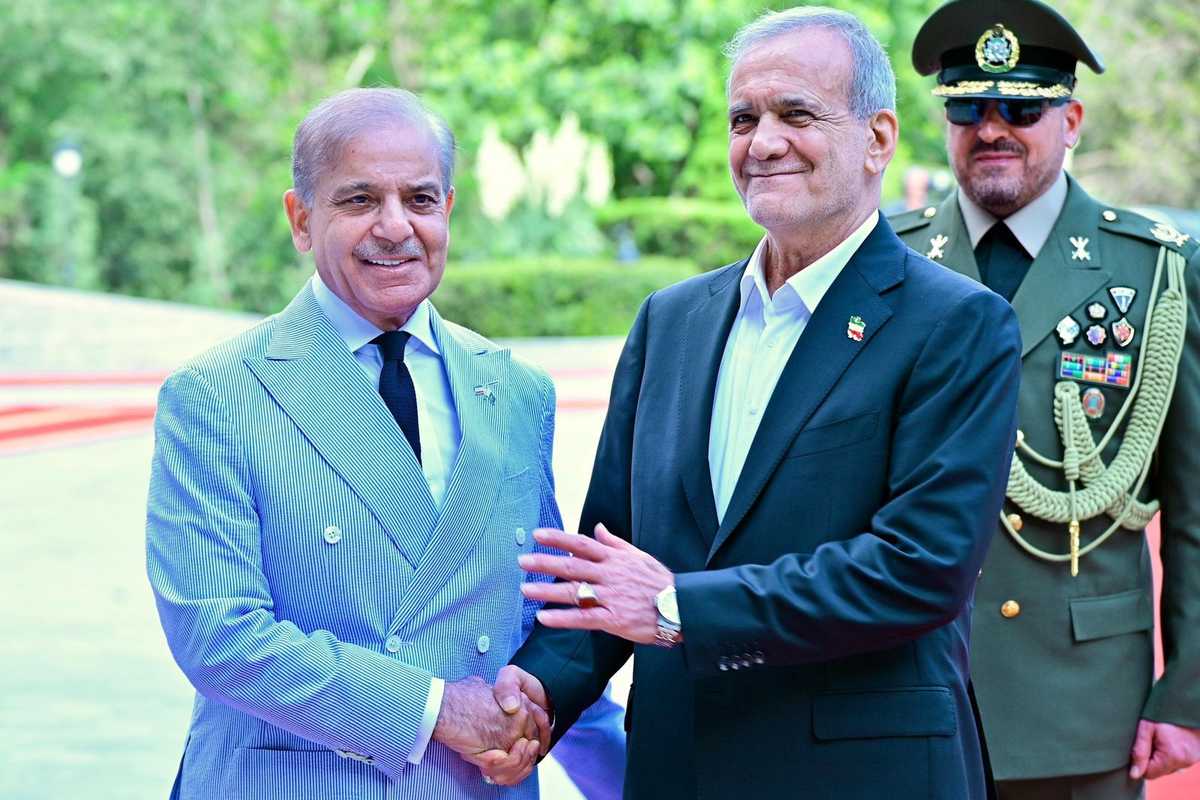
Pakistan’s Prime Minister Shehbaz Sharif and Iranian President Masoud Pezeshkian discussed regional peace efforts in a 45-minute phone call on Sunday, reaffirming their commitment to diplomacy as Islamabad prepares for renewed U.S.-Iran talks.
The leaders held a “cordial and friendly” conversation, exchanging views on key regional developments and efforts to promote peace and stability, according to a statement issued by the Prime Minister’s Office.
Sharif thanked Pezeshkian and Iran’s leadership for sending a high-level delegation to Islamabad on April 11–12, led by Mohammad Baqer Ghalibaf and Foreign Minister Abbas Araghchi.
The Pakistani prime minister also briefed the Iranian president on his recent engagements with leaders from Saudi Arabia, Qatar and Turkey, saying the outreach helped build consensus in favor of dialogue for sustainable peace.
He further welcomed “constructive discussions” during the recent visit of Field Marshal Syed Asim Munir to Tehran, calling them an important step toward stronger bilateral cooperation.
Reaffirming Pakistan’s position, Sharif said the country would continue “sincere and serious efforts,” in collaboration with friendly nations, to promote regional stability. He also conveyed his best wishes to Iran’s Supreme Leader Mojtaba Khamenei.
Pezeshkian thanked Sharif and Pakistan’s military leadership for their commitment to peace initiatives and expressed confidence that bilateral ties would continue to strengthen.
The call came as Donald Trump said U.S. negotiators would arrive in Pakistan on Monday to resume talks with Iran aimed at ending the conflict, while warning of military action if no deal is reached.
Iran, the United States and Israel are three days away from the end of a two-week ceasefire that halted a war triggered by U.S.-Israeli strikes on Iran on February 28.
So far, only one 21-hour round of negotiations has been held in Islamabad, on April 11, which ended without agreement, though preparations for further talks have continued.
Authorities have imposed road closures and heightened security across Islamabad and neighboring Rawalpindi. Armed guards and checkpoints were seen near major hotels, including the Marriott and Serena.
“Citizens are earnestly requested to cooperate with the security agencies,” a city official said in a post on X.
Earlier, Pezeshkian questioned why Iran should give up what he called its “legal right” to a nuclear program.
“How come the U.S. president declares that Iran should not use its nuclear rights but does not say why?” he said. “How in the world is he trying to deprive a nation of its legal rights?”
Tensions remain high around the Strait of Hormuz, a vital route for global oil shipments, as talks between Tehran and Washington remain unresolved.
Iran has said it will not reopen the strait until the United States lifts its blockade of Iranian ports. Ghalibaf said there had been “progress” in negotiations but acknowledged major gaps remain, adding, “We are still far from the final discussion.”
A two-week ceasefire is due to expire Wednesday unless extended.
Shipping traffic through the strait has dropped sharply, with only a handful of vessels passing during a brief reopening before Iran reversed course after Washington reaffirmed the blockade.
Iran’s Revolutionary Guards have warned that vessels attempting to pass without permission could be targeted. Security incidents have been reported, including gunfire at a tanker and damage to another vessel.
India said it summoned Iran’s ambassador over a “shooting incident” involving two Indian-flagged ships.
Diplomatic efforts continue, with Egypt expressing optimism about a possible agreement. However, a major sticking point remains Iran’s stockpile of near-weapons-grade enriched uranium.
Trump said Iran had agreed to hand over about 440 kilograms of enriched uranium, a claim Tehran denied, saying the issue had never been part of negotiations.
Iranian foreign ministry spokesman Esmaeil Baqaei called the blockade “a violation” of the ceasefire and “illegal collective punishment.”
The previous U.S. delegation was led by Vice President JD Vance, but Trump said Sunday that Vance would not lead the next round of talks due to security concerns.
“It’s only because of security,” Trump told ABC News. “JD’s great."

Comments
See what people are discussing