

Syria requests to join global anti-chemical weapons partnership on 13th anniversary of Ghouta attack
Syria requested to join the International Partnership Against Impunity for the Use of Chemical Weapons on the 13th anniversary of the 2013 Ghouta sarin gas attack, launching new technical operations to dispose of remaining stockpiles and pursue perpetrators

News Desk
The News Desk provides timely and factual coverage of national and international events, with an emphasis on accuracy and clarity.
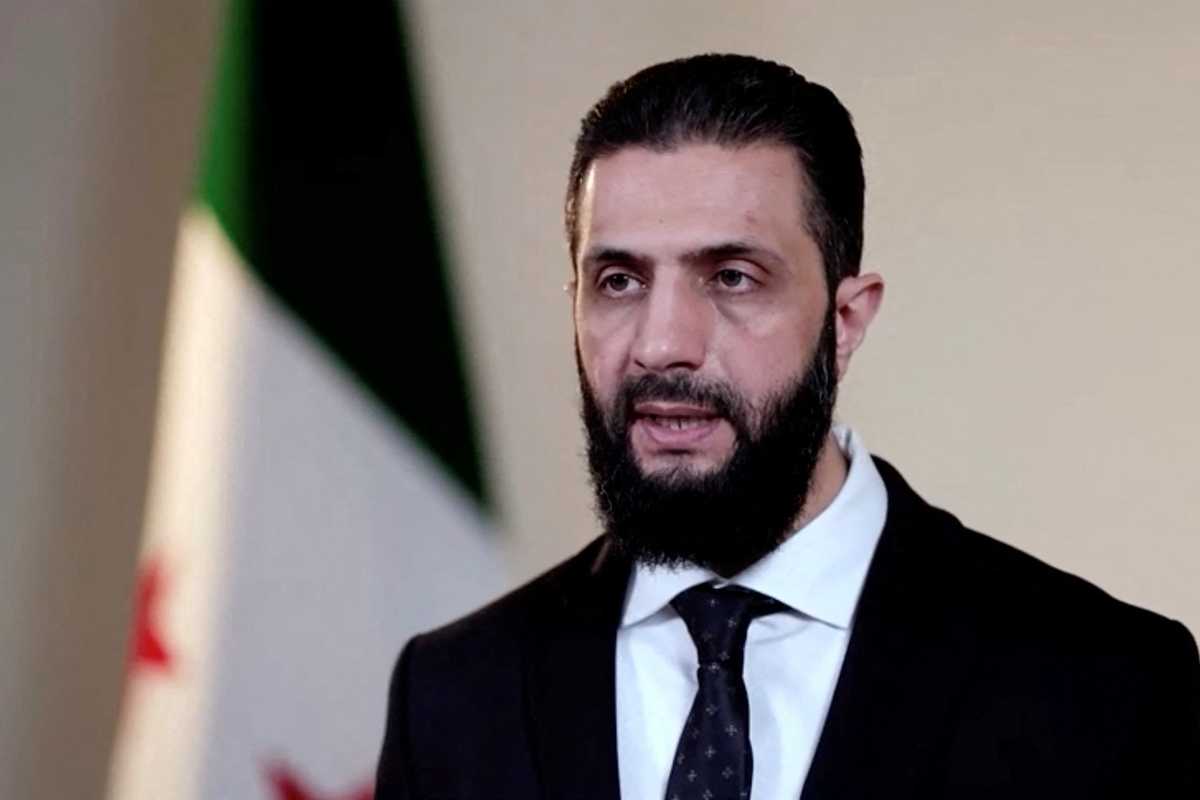
Syria's President Ahmed Al-Sharaa delivers a televised speech in Damascus, Syria, March 9, 2025.
The Syrian Arab Republic has formally requested to join the International Partnership Against Impunity for the Use of Chemical Weapons, according to a joint statement issued with France on Friday.
The request coincided with the 13th anniversary of the 2013 chemical attack on the Damascus suburb of Ghouta, marking a major step by the transitional government to eliminate the chemical weapons legacy of the former regime.
Why did Syria apply to join the anti-chemical weapons partnership?
The application to join the Paris-led partnership reflects ongoing efforts by President Ahmed al-Sharaa's government to strengthen international justice mechanisms and promote accountability for historical war crimes. French officials welcomed the bid, characterizing it as a clear demonstration of Syria's commitment to justice following more than a decade of civil conflict.
According to reporting by France 24 and the Syrian Arab News Agency (SANA), the joint statement follows French President Emmanuel Macron's state visit to Damascus in July 2026. Syrian Foreign Minister Asaad Hassan Al-Shaibani confirmed that technical and operational procedures are underway in collaboration with international partners to dismantle and dispose of all remaining toxic munitions and production facilities.
The August 2013 sarin gas attack on Ghouta killed over 1,400 civilians, including hundreds of women and children, provoking global outcry. While former president Bashar al-Assad denied involvement, subsequent investigations by the United Nations and the Organisation for the Prohibition of Chemical Weapons (OPCW) confirmed that government forces executed the assault.
How is Syria working with international watchdogs to ensure accountability?
The diplomatic push follows the OPCW's decision last month to fully restore Syria's voting rights and privileges within the global watchdog, five years after suspending them over repeated chemical weapons violations under former leadership. International inspectors have since gained access to previously undisclosed military sites across Syria to verify declarations and secure legacy materials.
The New Arab notes that Syrian judicial authorities have arrested several former military officers linked to the Ghouta attack since Assad was ousted in late 2024. Foreign Minister Al-Shaibani emphasized that Syria will continue cooperating with the OPCW and the UN's International, Impartial and Independent Mechanism (IIIM) to prosecute all individuals involved in chemical massacres.


Comments
See what people are discussing