

Aamir Abbasi
Editor, Islamabad
Aamir; a journalist with 15 years of experience, working in Newspaper, TV and Digital Media. Worked in Field, covered Big Legal Constitutional and Political Events in Pakistan since 2009 with Pakistan’s Top Media Organizations. Graduate of Quaid I Azam University Islamabad.
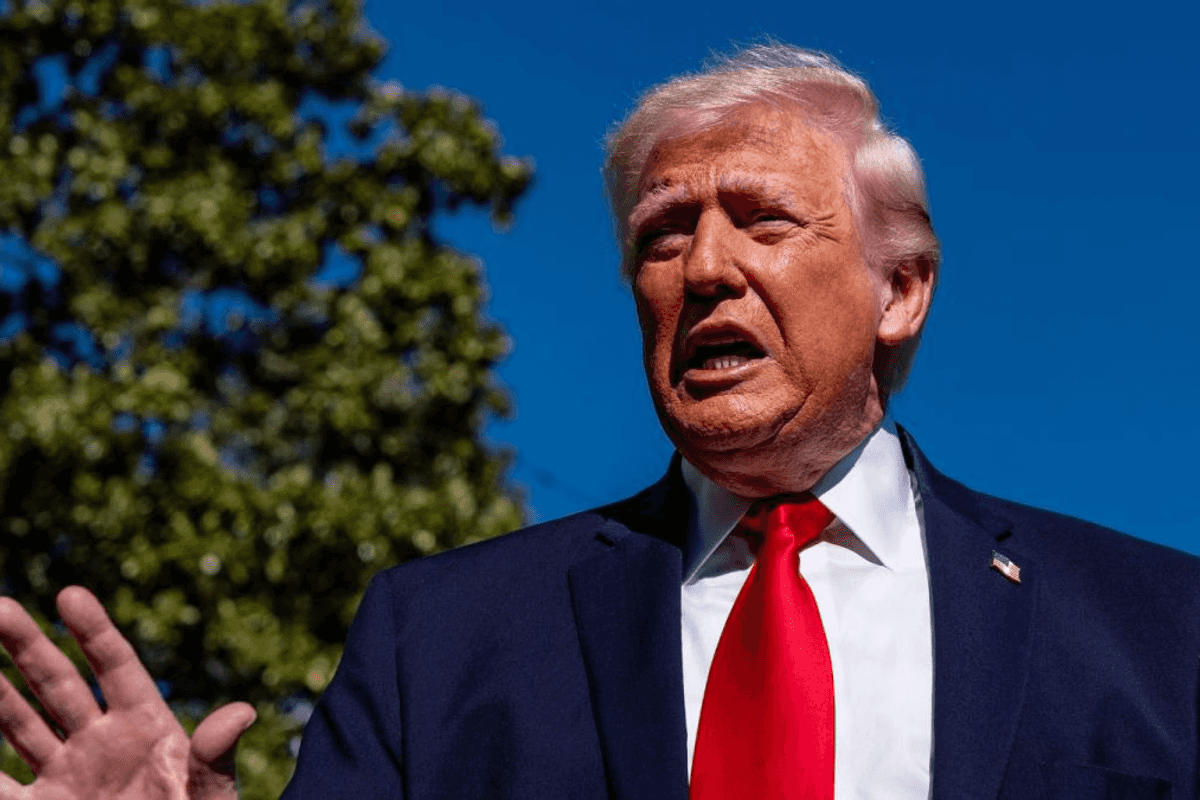
US President Donald Trump said on Saturday he had ordered his envoys not to travel to Pakistan for planned talks with Iranian officials, effectively cancelling a proposed diplomatic mission aimed at exploring ways to end the Middle East conflict.
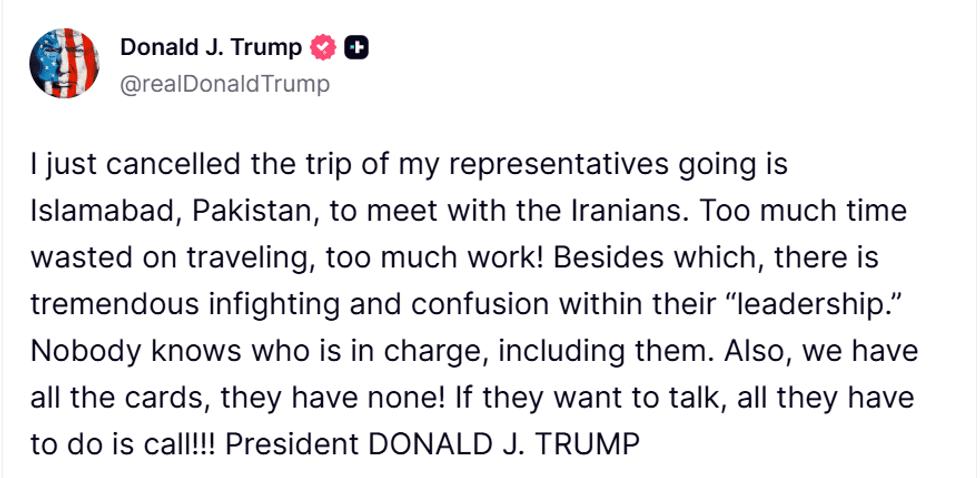
In a post on Truth Social, Trump said he had cancelled the trip, calling it a “waste of time” and citing what he described as “infighting and confusion” within Iran’s leadership. “If they want to talk, all they have to do is call,” he wrote.
Speaking later to Axios, Trump said the cancellation did not automatically signal a return to war with Iran despite the setback in diplomatic efforts. “No. It doesn’t mean that. We haven’t thought about it yet,” he said when asked whether war could resume.
The decision came as Iran’s Foreign Minister Abbas Araghchi concluded a visit to Islamabad on Saturday after meetings with Pakistan’s top civilian and military leadership.
Araghchi met Pakistan’s Chief of Defence Forces Field Marshal Asim Munir, Prime Minister Shehbaz Sharif, and Foreign Minister Ishaq Dar, with discussions focused on regional tensions and efforts to reduce escalation in the Middle East.
In a post on X after departing Pakistan, Araghchi said it was a “very fruitful visit”, adding that Iran valued Pakistan’s “good offices and brotherly efforts” to help restore peace in the region. He said Iran had presented its position on a “workable framework” to permanently end the war, while questioning whether the United States was “truly serious about diplomacy”.
Dar said on social media that his meeting with the Iranian delegation lasted around two hours, during which Pakistan stressed the “importance of dialogue and diplomacy”.
The diplomatic activity followed earlier US signaling that senior envoys Steve Witkoff and Jared Kushner were expected to travel to Pakistan for indirect engagement with Iranian counterparts, amid efforts to reopen stalled negotiations.
However, Iranian state media had indicated ahead of Araghchi’s departure that no direct meeting with US officials was planned, with Pakistan instead acting as a channel for conveying messages between the two sides.
Pakistan’s foreign ministry said the Iranian visit was part of “ongoing efforts for regional peace and stability”, without referencing any direct US-Iran contact.
Iranian officials said separately that Araghchi would continue diplomatic consultations in Oman and Russia, as Tehran seeks broader international support for ending the conflict.
Opening Hormuz remains a flashpoint
Tensions also remain high around maritime security in the Gulf, with Iran’s military warning of retaliation if it faced continued pressure in regional waters.
In a statement carried by state media, Iran’s armed forces said they would respond if “blockade or piracy” against the country continued in the region.
The Strait of Hormuz, a critical global energy route, has remained a key pressure point, with intermittent disruptions adding volatility to global oil markets.
European Council President Antonio Costa called for the waterway to “immediately reopen without restrictions or tolling”, describing it as “vital for the entire world”.
Oil markets and diplomatic deadlock
Oil prices eased on Friday amid expectations that renewed diplomatic efforts could reduce tensions around shipping routes, though negotiations between Iran and the United States remain stalled.
Since the last round of contacts, efforts to restart talks have made little progress, with both sides maintaining differing preconditions for engagement.
With additional input from AFP


Comments
See what people are discussing