

Trump faces impeachment threat if Republicans lose midterms
Kamran Khan says Pakistan-US security ties are likely to survive a Republican defeat and political turmoil in Washington

News Desk
The News Desk provides timely and factual coverage of national and international events, with an emphasis on accuracy and clarity.
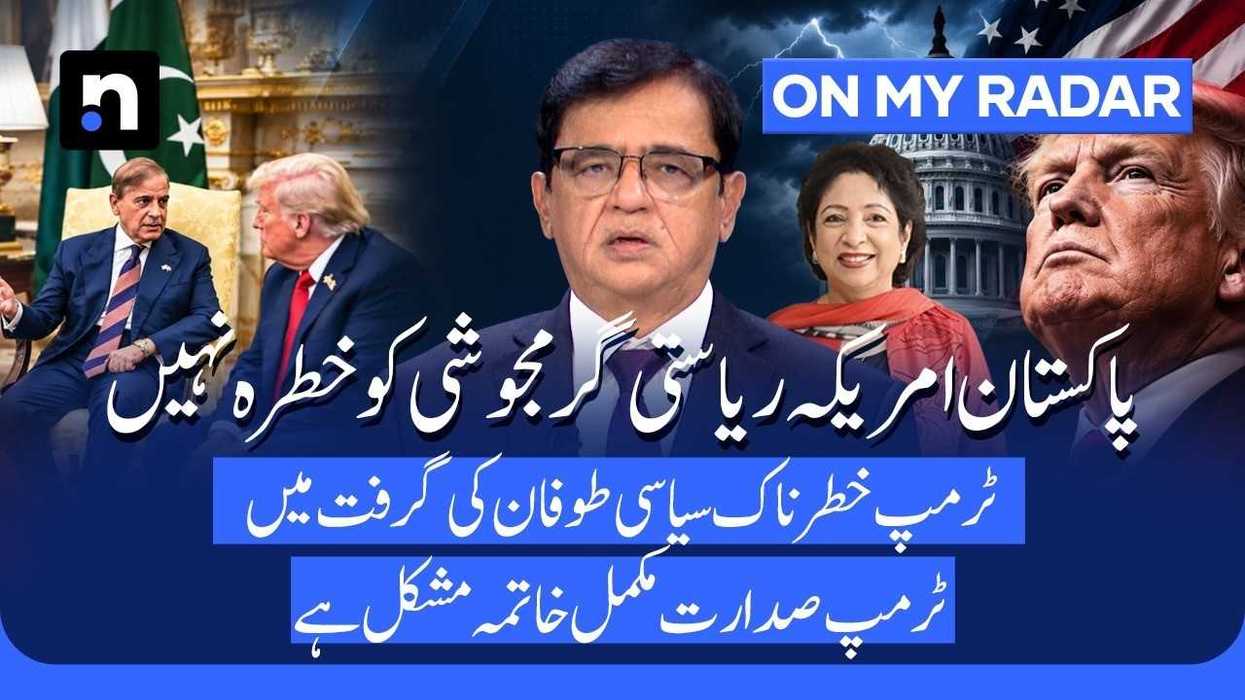
U.S. President Donald Trump could face congressional investigations and possible impeachment proceedings if Republicans lose control of Congress in Tuesday's midterm elections, but Pakistan's recently strengthened strategic relationship with Washington is likely to remain largely intact, according to an analysis by Kamran Khan.
In the latest episode of his show On My Radar, Khan said election forecasts strongly favored Democrats in the House of Representatives, with Republicans also facing a potential challenge to their majority in the Senate. Such an outcome could deal a major blow to Trump's political authority and expose his administration to intense congressional scrutiny.
According to election analyst Nate Silver's latest model, Democrats have approximately a 95% chance of winning a majority in the House. The Cook Political Report, a respected U.S. political analysis organization, projects that Democrats could secure as many as 240 seats. The Senate race remains tighter, although Republicans' majority there is also at risk.
A Democratic victory in Congress could open the door to extensive investigations into Trump and potentially trigger impeachment proceedings. However, removing him from office would remain unlikely because conviction in the Senate requires a two-thirds majority.
For Pakistan, the more important question is whether a weakening of Trump's political position could jeopardize the recent improvement in relations between Islamabad and Washington.
Khan argued that the relationship rests not only on the personal rapport between Trump and Pakistan's Chief of Defense Forces, Field Marshal Asim Munir, but also on growing cooperation between the two countries' militaries, intelligence agencies and national security institutions.
He pointed to a May 2026 statement by U.S. Central Command chief Adm. Brad Cooper before the Senate Armed Services Committee, in which Cooper described Pakistan as a highly important partner in operations against Islamic State Khorasan Province, also known as ISIS-K.
Cooper said close cooperation between the two militaries had produced tangible successes against dangerous terrorists. Khan stressed that the statement represented the formal position of U.S. military leadership before Congress rather than a personal political declaration by Trump.
The cooperation also predates Trump's current presidency. In May 2024, during former President Joe Biden's administration, U.S. Central Command and Pakistan's military leadership maintained high-level coordination and cooperation, Khan said.
In August 2026, the two countries held their fourth round of counterterrorism talks in Washington, agreeing to expand cooperation against Islamic State, al-Qaida, Tehreek-e-Taliban Pakistan (TTP) and Baloch separatist groups.
These developments indicate that the strategic relationship is supported by institutional cooperation and shared security interests rather than depending solely on ties between individual leaders.
Khan identified terrorism originating from Afghanistan, security concerns involving Iran and the wider Middle East, Pakistan's nuclear status and its relationship with China as issues linked to Washington's long-term strategic interests.
However, a Democratic victory could bring greater U.S. pressure on Pakistan over democracy, human rights and the military's role in politics. Some diplomatic and economic priorities could also change, he said.
Citing informed sources, Khan said the underlying military, intelligence and counterterrorism cooperation between Pakistan and the United States was likely to survive even if Republicans suffered an electoral defeat.
Governments can change and presidents can lose political strength, but shared national security interests do not change overnight, he said.
The program also featured former Pakistani ambassador to the United States, United Kingdom and United Nations Dr. Maleeha Lodhi.





Comments
See what people are discussing