

Trump hosts Xi Jinping for White House state dinner as pageantry masks underlying US-China rift
US President Donald Trump welcomed Chinese President Xi Jinping to a lavish White House state dinner attended by prominent American technology executives, concluding a day of elaborate ceremonies

News Desk
The News Desk provides timely and factual coverage of national and international events, with an emphasis on accuracy and clarity.
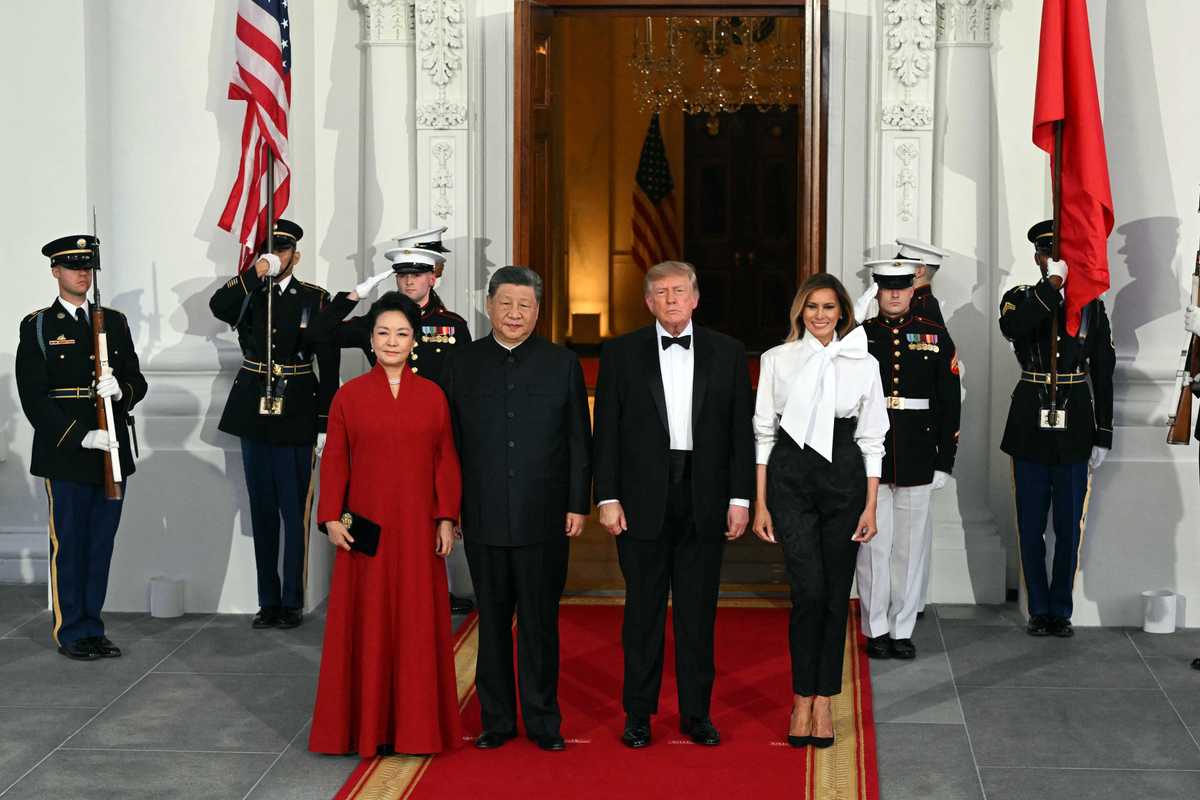
China's First Lady Peng Liyuan, China's President Xi Jinping, US President Donald Trump and US First Lady Melania Trump pose on the North Portico steps of the White House ahead of a State Dinner in Washington, DC, on September 24, 2026.
AFP
U.S. President Donald Trump hosted Chinese President Xi Jinping for an official state dinner at the White House on Thursday evening, marking the centerpiece of Xi’s high-stakes three-day visit to the U.S. capital.
The banquet followed a day of military parades, aerial flyovers, and bilateral discussions designed to project personal goodwill while managing profound geopolitical competition between the two superpowers.
Who attended the state dinner and what were the core topics on the agenda?
The state dinner brought together a wide cross-section of U.S. business, technology, and political leaders, underscoring the critical role of commerce and computing in bilateral relations.
Prominent attendees included Tesla CEO Elon Musk, Apple CEO Tim Cook, Nvidia CEO Jensen Huang, OpenAI CEO Sam Altman, Meta CEO Mark Zuckerberg, Alphabet CEO Sundar Pichai, and Amazon founder Jeff Bezos. Senior cabinet officials, Congressional leaders, and financial sector executives were also present.
During dinner remarks, President Trump praised his relationship with President Xi, stating that while the two nations represent different governance systems, the ties between their people remain enduring.
Trump presented Xi with a custom-made bald eagle statue and invited guests to inspect the ongoing construction site for the White House's new $400 million ballroom. In his address, President Xi called on both major powers to "coexist in peace" and avoid a "Thucydides trap" through sustained crisis prevention and regular dialogue.
What substantive policy issues and disagreements emerged during the summit?
Despite the extensive fanfare—which included a military drill review and a B-2 bomber flyover above the West Wing—analysts noted that substantive policy breakthroughs remained limited. The primary concrete outcome was a temporary two-month extension of the existing bilateral trade truce through January 2027, falling short of Beijing's preference for a multi-year agreement.
Key policy sticking points raised during Oval Office discussions included:
- Artificial Intelligence Safety: President Xi urged that advanced AI must remain "always under human control" and warned against catastrophic risk, while the White House maintained its stance against imposing international regulatory constraints.
- Taiwan & Regional Security: Xi urged Washington to exercise "prudence" and refrain from supporting independence movements regarding Taiwan.
- Middle East Conflict: The Chinese leadership urged an immediate negotiated settlement to the conflict involving Iran, highlighting concerns over energy security and supply chain disruptions.
President Xi's Washington itinerary will wrap up on Friday following a scheduled visit with President Trump to the US National Archives to view the Declaration of Independence.



Comments
See what people are discussing