

Trump says Iran facing 'last chance before decapitation'
Trump says Iran faces a "last chance before decapitation" as talks continue on reopening the Strait of Hormuz and ending Tehran's nuclear program

News Desk
The News Desk provides timely and factual coverage of national and international events, with an emphasis on accuracy and clarity.
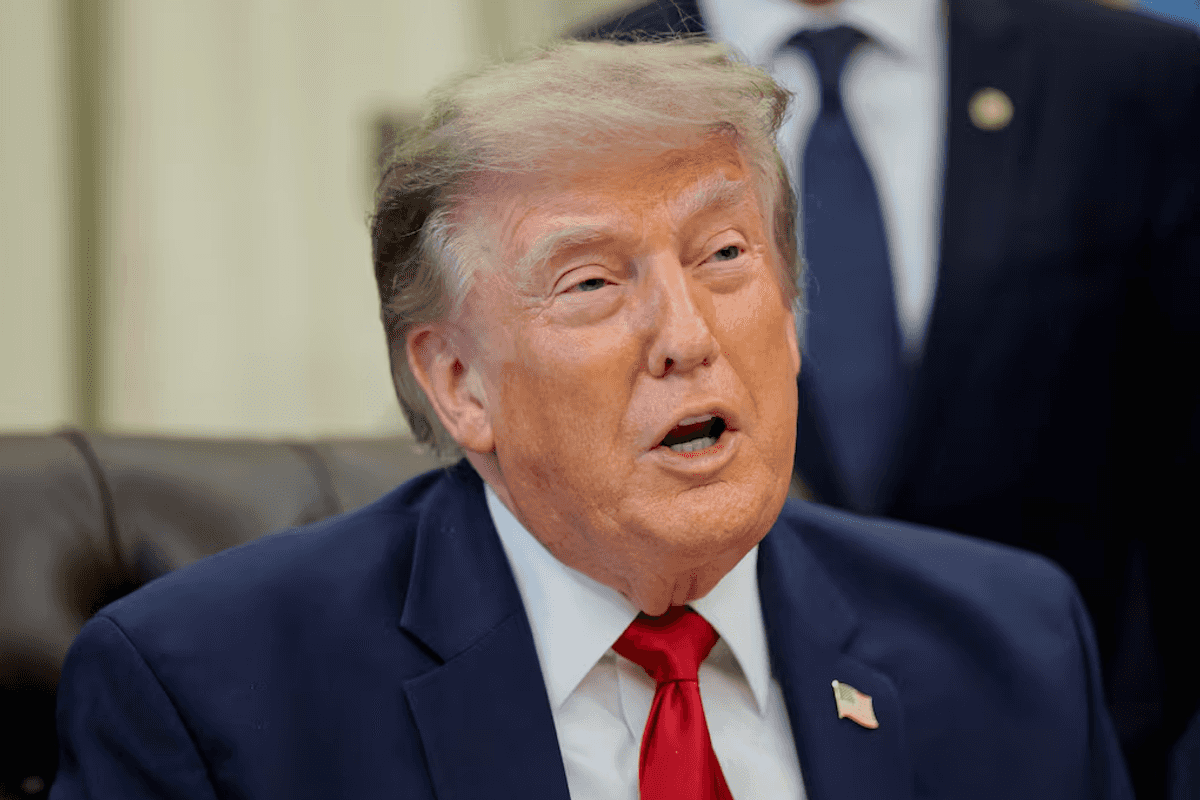
US President Donald Trump said Monday that Iran is facing a "last chance before decapitation" as negotiations with Tehran continue despite the Islamic Republic's denials. Speaking to reporters at the White House, Trump said he agreed to keep pursuing talks at the request of Saudi Arabia, the United Arab Emirates, Qatar and other regional countries.
What did Trump say about Iran facing decapitation?
Trump said Iran is being given a final opportunity to reach an agreement before facing military consequences. "This is a last chance for them to sign a good document," he said, adding he wants to give Tehran "every last chance before decapitation." Iran's foreign ministry denied Monday that talks with Washington were underway, but Trump insisted otherwise, saying, "We are talking right now."
The talks focus on two issues: reopening the Strait of Hormuz, which Trump said could happen "literally by tomorrow," and Iran's denuclearization, which he said could "take a little while." Washington and Tehran have been at war since February 28, when the United States and Israel launched surprise strikes on Iran. Months of on-and-off diplomacy since then have produced periods of relative calm, though Iran retains its enriched uranium stockpiles and the ability to fire missiles and drones at US and allied targets in the region.
What is happening in the Strait of Hormuz?
Early Tuesday, Britain's maritime security agency UKMTO said a cargo vessel was struck by an "unknown projectile" in the Strait of Hormuz off the coast of Oman. The vessel was not named, but it reported being hit, and authorities were investigating without releasing details on damage or injuries. The strait has remained a major sticking point since the ceasefire broke down, with Iran reprising a blockade it first imposed early in the war, obstructing vessels and firing on commercial ships.
Trump last week had threatened to hit Iran "very hard," potentially with renewed strikes on energy infrastructure, before pulling back on Saturday and saying the "perimeters" of a deal were in place. Before the war, ships passed freely through Hormuz, but Iran now insists on controlling the waterway and charging fees, a demand the United States rejects. Tehran has also refused to let ships use any route besides one that hugs the Iranian coastline.
Is Iran negotiating with the United States?
Iran says it is not currently negotiating with Washington. "Our negotiations are with Oman to secure passage through the Strait of Hormuz," foreign ministry spokesman Esmaeil Baqaei said, referring to the critical oil corridor. Trump called Tehran "duplicitous" for "openly and proudly" denying talks were happening, writing on social media that the two sides are, in fact, discussing a solution to a problem Iran caused "for decades."
He pointed to the US counter-blockade of Iranian ports, warning that nothing reaches Iran unless Washington allows it, and nothing will until a deal or "Total Surrender" is reached. Baqaei said Sunday that a deal was close on jointly managing the strait with Oman, which sits on its opposite shore. He described an emerging understanding on a route acceptable to both countries, one that respects each side's sovereign rights and security needs, though he stressed this would not mean fully reopening the strait.
What does denuclearization of Iran require?
Trump said at the start of the conflict that the war was necessary to address Iran's nuclear program, repeating Monday that denuclearization "has to happen." Western nations accuse Iran of pursuing a nuclear weapon, though Tehran maintains the program is entirely civilian. Speaking to reporters aboard Air Force One over the weekend, Trump said Iran and regional US partners had asked him to hold off on further strikes, which he claimed would have been the biggest attack since World War II. Iranian media denied that Tehran made any such request.
A previous ceasefire deal collapsed last month before it could open the Strait of Hormuz to ships carrying energy exports vital to the global economy.


Comments
See what people are discussing