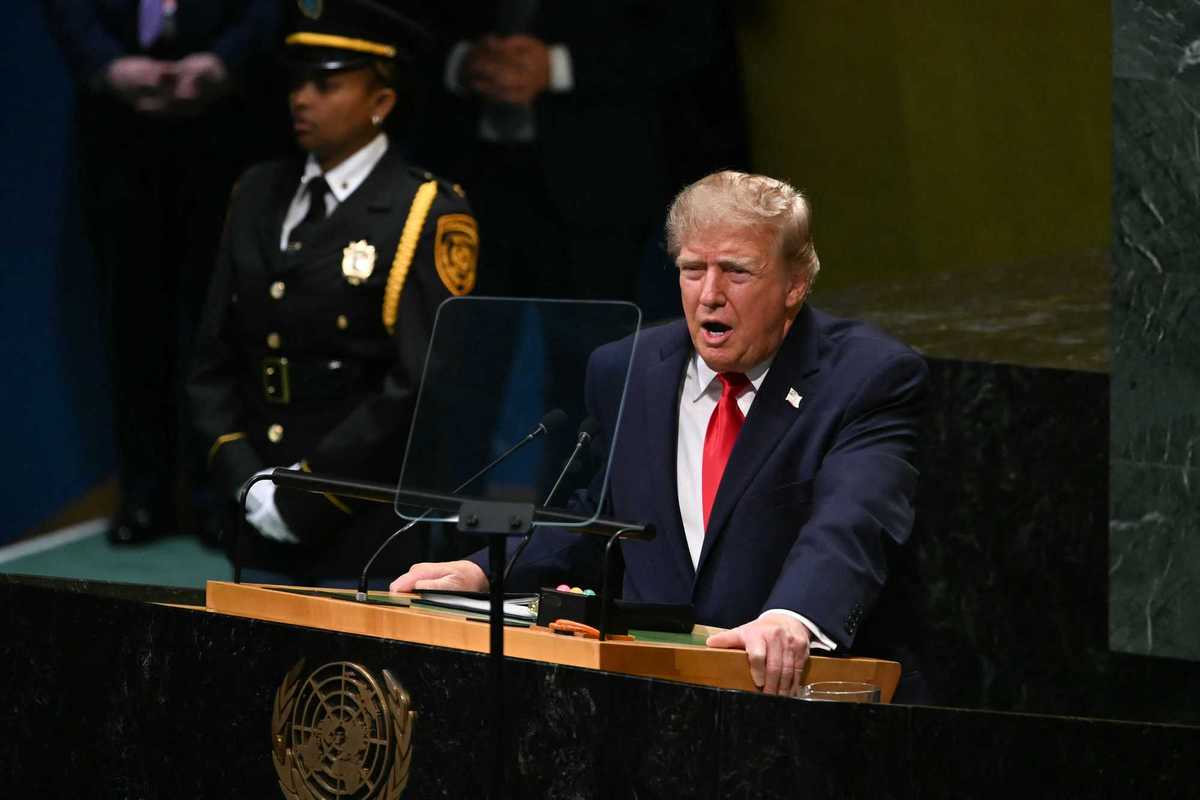
U.S. President Donald Trump announced on Tuesday, during his address to the 81st United Nations General Assembly that the federal government will officially rename artificial intelligence "super intelligence" in all official communications, while firmly rejecting international calls for global regulatory oversight.
Why did President Trump rename AI and reject international regulation?
Addressing world leaders in New York, President Trump argued that the word "artificial" undersells the capabilities of modern systems and expressed hope that other nations would adopt the term "super intelligence". He dismissed warnings from safety advocates and former tech executives regarding existential risks, comparing alarmist predictions to climate change warnings and asserting that the U.S. "totally rejects any attempt to construct a globalist scheme to control artificial intelligence".
The rebrand follows previous geographical renamings by the Trump administration, including designating the Gulf of Mexico as the "Gulf of America" and Lake Ontario as "Lake America". According to reporting by the Associated Press and Channels Television, Trump urged continued technological expansion to maintain American competitiveness, particularly against China.
How are UN and European leaders proposing to manage AI risks?
Trump’s opposition to international oversight stood in stark contrast to speeches from European heads of state and UN leadership. UN Secretary-General António Guterres called on the U.S. and China to establish bilateral communication channels on strategic AI risks similar to U.S.-Soviet dialogues during the Cold War, warning against surrendering life-and-death decisions to autonomous systems.
More than 20 European nations backed binding safety protocols for frontier AI models. British Prime Minister Andy Burnham announced that the UK will use its upcoming G20 presidency to advocate for a single global set of principles and standards on AI transparency and safety, while revealing a joint U.S.-UK defense partnership to guard critical infrastructure against cyberattacks. Meanwhile, French President Emmanuel Macron proposed pooling international resources to develop a cutting-edge open-source AI model, cautioning that non-aligned nations must not become "vassals" to American or Chinese tech hegemony.
What is the agenda for the upcoming UN Security Council session on AI?
The debate over AI governance moves to the UN Security Council on Wednesday, hosted under France’s monthly presidency. The session will feature briefings from major industry leaders, including OpenAI CEO Sam Altman, Anthropic CEO Dario Amodei, and Hugging Face co-founder Clément Delangue, marking a historic discussion on how rapidly advancing autonomous systems impact international peace and national security.






Comments
See what people are discussing