

Trump says Gulf allies back 'Operation Iron Gate' cordon on Iran, military strike 'unlikely' amid talks
US president says Gulf allies back a land and sea blockade against Iran under Operation Iron Gate, while describing imminent military escalation as unlikely despite US forces remaining on high alert

News Desk
The News Desk provides timely and factual coverage of national and international events, with an emphasis on accuracy and clarity.
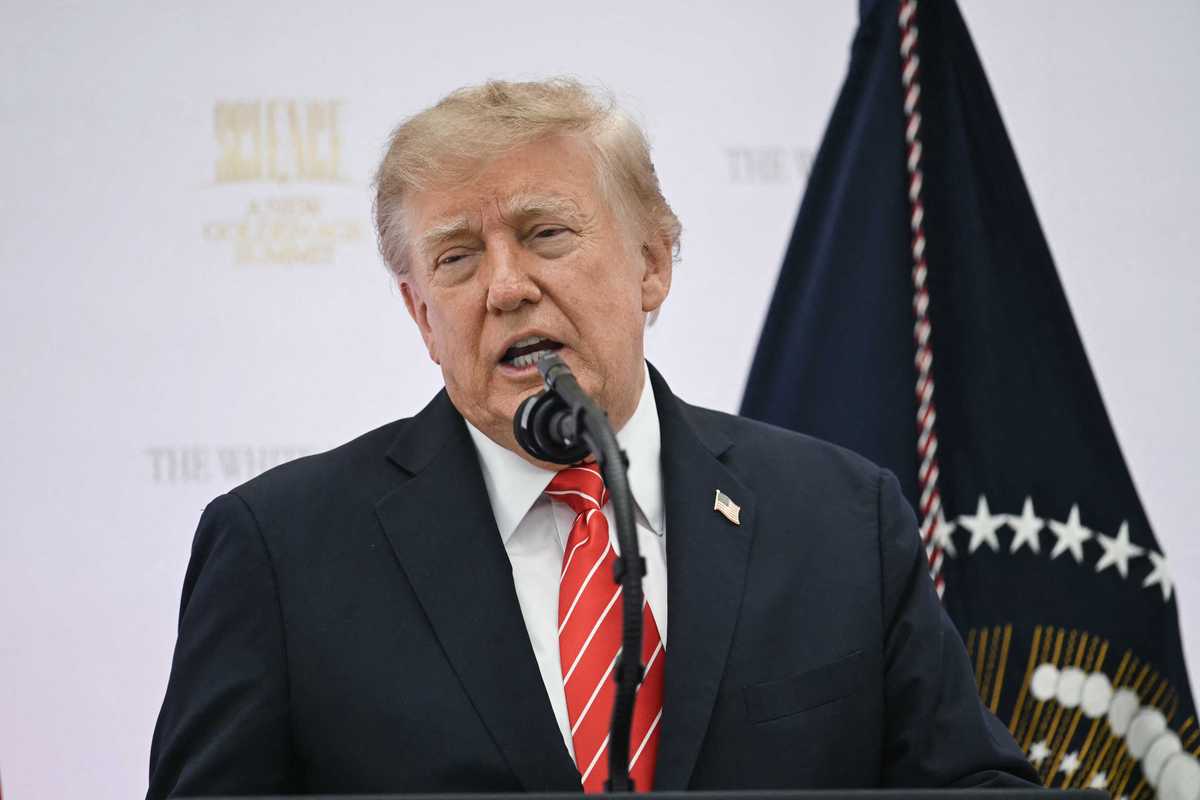
U.S. President Donald Trump declared that key Gulf nations favor sustaining a comprehensive land and sea cordon against Iran under "Operation Iron Gate," asserting that while American armed forces remain "locked and loaded," an imminent military escalation now appears "unlikely" as momentum shifts toward resolving the regional conflict.
The remarks mark a notable shift in tone from the White House, coming on the heels of high-level Pentagon reviews and backchannel diplomatic efforts to avert full-scale hostilities following the U.S. midterm elections.
What did Trump reveal regarding his consultations with Qatar and Gulf leaders?
According to a public statement issued by Donald J. Trump, he held an "excellent conversation" with the Prime Minister of Qatar, Sheikh Mohammed bin Abdulrahman bin Jassim Al Thani, to review the ongoing standoff with the Islamic Republic of Iran.
"Qatar, Saudi Arabia, UAE, Bahrain, Kuwait, and others, would prefer the status quo, in other words, a continuation of the Greatest Naval Blockade in History, and the new Operation Iron Gate — Therefore, Land and Sea." - President Donald J. Trump 🇺🇸 https://t.co/0MYgOZn5V9
— The White House (@WhiteHouse) November 9, 2026
Trump stated that regional partners—specifically naming Qatar, Saudi Arabia, the United Arab Emirates, Bahrain, and Kuwait—strongly favor maintaining the current economic and logistical pressure posture. He characterized this approach as the continuation of "the Greatest Naval Blockade in History" coupled with the newly activated Operation Iron Gate, which coordinates multi-agency interdictions across land borders and Caspian shipping corridors.
President Trump delivers an update following a meeting with the Prime Minister of Qatar regarding the historically successful Naval Blockade against Iran."At the conclusion of the military engagement, the American people and the people of the world will be far safer." https://t.co/IxOl06R7J0
— The White House (@WhiteHouse) November 9, 2026
The president emphasized that all participating regional leaders agreed that preventing Iran from acquiring a nuclear weapon remains strictly "non-negotiable."
How has White House adjusted its immediate military posture?
Addressing prospective kinetic operations, Trump maintained that the United States is fully prepared to strike if operational conditions deteriorate, but signaled an easing of an immediate war footing.
"Should there be any change with respect to developments in the Middle East, the United States of America is 'locked and loaded' and ready to go," Trump wrote. "At this point, however, that seems to be quite unlikely. Israel and the entire Middle East are protected from Iranian danger and threats."
Trump concluded by asserting that the administration is observing "positive momentum toward an end to this Conflict," promising that American strategic interests will remain safeguarded and that the conclusion of the military campaign will leave the American public and the wider international community "far safer and more secure."
How does the de-escalation signal intersect with Qatari mediation?
According to Al Jazeera, the president's statements follow days of high-intensity diplomatic mediation conducted by Qatari officials shuttling between Washington and Tehran.
Negotiators have been working to establish a phased, reciprocal de-escalation roadmap to defuse maritime tensions in the Strait of Hormuz, where commercial transit has been throttled following tanker mine incidents and aerial skirmishes.
While Tehran has demanded the removal of the naval blockade and sanctions relief as preconditions for formal talks, Trump’s comments suggest Washington is leaning toward long-term economic and logistical containment rather than launching an immediate air campaign as the aircraft carrier USS Theodore Roosevelt approaches the region.





Comments
See what people are discussing