

Trump says US scaling back military drills with South Korea hours before start
Trump says US is scaling back military drills with South Korea after criticizing costs and citing Seoul's refusal to assist with Iran's denuclearization

News Desk
The News Desk provides timely and factual coverage of national and international events, with an emphasis on accuracy and clarity.
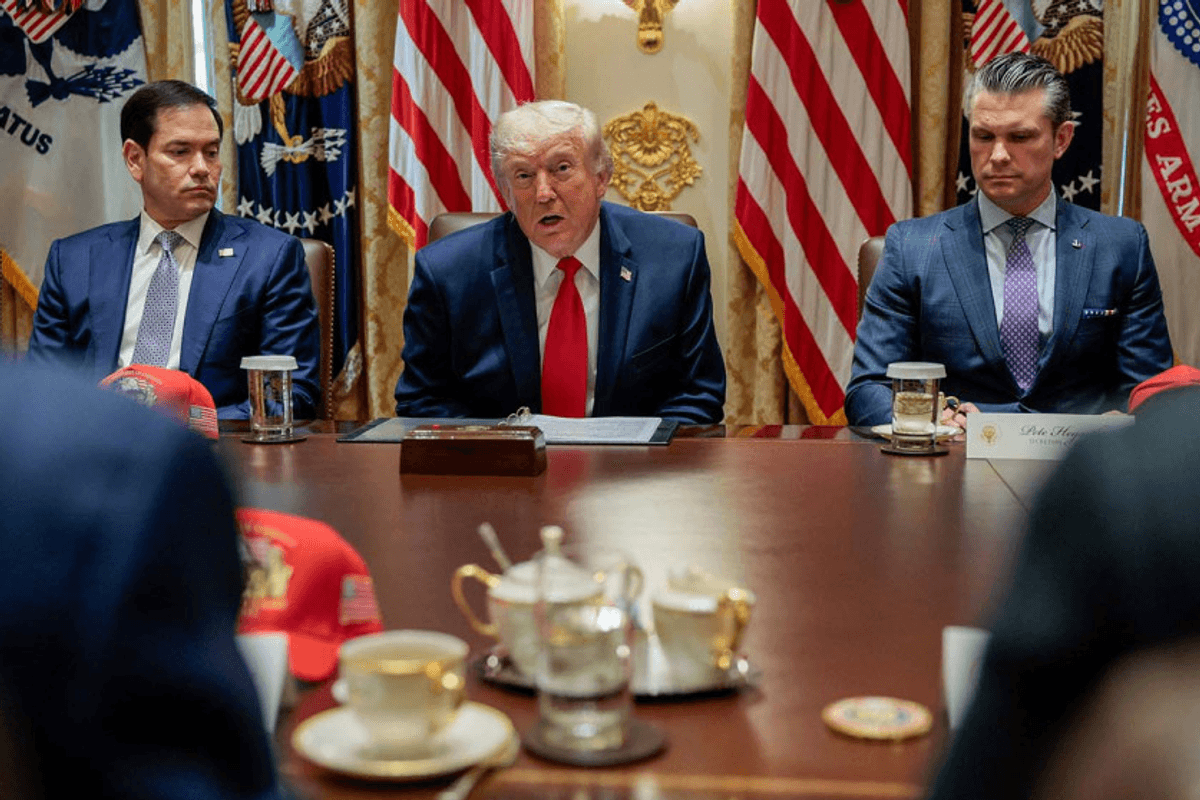
U.S. President Donald Trump announced that the U.S. would scale back military drills with South Korea on Monday, hours before the annual Ulchi Freedom Shield exercise began.
Trump ordered Defence Secretary Pete Hegseth to reduce maneuvers, calling them costly and hostile toward North Korea while criticizing Seoul for refusing to support American military actions against Iran.
Why is the US scaling back military drills with South Korea?
President Donald Trump ordered the reduction because he considers the annual drills overly expensive and unnecessarily hostile toward North Korean leader Kim Jong Un.
Trump also cited frustration over South Korea declining to support United States policy regarding Iran. Because the exercises were already scheduled, Trump instructed Defense Secretary Pete Hegseth to reduce their overall scope rather than canceling them completely.
The annual Ulchi Freedom Shield exercise is an 11-day summer training event designed to strengthen allied defense capabilities against potential nuclear threats from Pyongyang. Roughly 18,000 South Korean service members are participating in the scaled-down training maneuvers alongside stationed American forces. South Korea's defense ministry confirmed that scheduled drills commenced as planned despite the unexpected social media announcements from Washington.
According to reports from Al Jazeera, Trump previously halted major joint exercises following his 2018 diplomatic summit with Kim Jong Un in Singapore. The United States currently maintains approximately 28,500 military personnel in South Korea to uphold security commitments stemming from the 1950-53 Korean War armistice. However, Trump has repeatedly questioned long-standing security alliances while pressuring international partners to shoulder higher defense costs.
In addition to financial concerns, Trump expressed dissatisfaction with South Korean President Lee Jae Myung over broader geopolitical cooperation. Trump stated that Seoul declined his recent request to assist Washington with efforts to denuclearize Iran during ongoing Middle East hostilities. American officials are also frustrated by delayed South Korean corporate investment promises.
How have North Korea and South Korea reacted to the exercise changes?
Regional experts doubt that scaling back the military maneuvers will persuade Pyongyang to resume diplomatic dialogue with Washington. Kyungnam University professor Lim Eul-chul noted that North Korean leadership will only value a complete cancellation of joint exercises. Pyongyang recently conducted missile tests and warned of new deterrent measures in response to allied exercise preparations.
Security analysts point out that North Korea has significantly expanded its nuclear and missile capabilities since direct diplomatic talks stalled in 2019. Pyongyang has also deepened strategic ties with Moscow by supplying military equipment and ground troops for Russian combat operations in Ukraine. In exchange for military aid, North Korea receives financial resources, energy supplies, and advanced technical support from Russia.
Reporting by CBC News highlights that this year's Ulchi Freedom Shield exercises explicitly simulate combat scenarios against battle-hardened North Korean forces. Training modules focus on counteracting drone warfare, GPS signal jamming, and sophisticated cyberattacks.
Although South Korean President Lee Jae Myung offered unconditional peace talks, Pyongyang has consistently ignored outreach from Seoul.



Comments
See what people are discussing