

Trump shifts tone on Iran war as diplomacy signals emerge
Kamran Khan highlights Trump’s reversal on Iran as Brent jumps 7% before Trump's televised address

News Desk
The News Desk provides timely and factual coverage of national and international events, with an emphasis on accuracy and clarity.
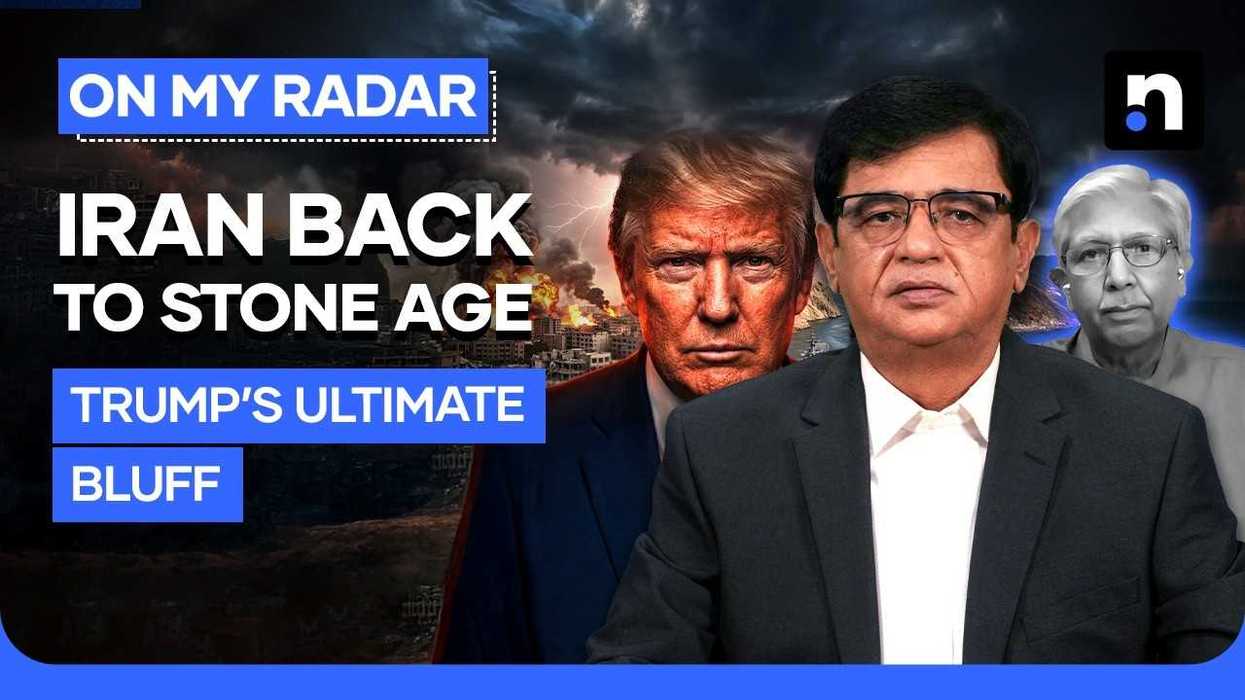
Kamran Khan says U.S. President Donald Trump has once again shifted his position on the Iran war, raising global expectations before undercutting them in a nationally televised address.
Speaking in his program “On My Radar,” Khan said Trump had, within 24 hours, twice claimed success in diplomacy and signaled an exit from the conflict. Yet in a 19-minute address to the American public, Trump described the war as a major success and warned that Iran’s energy infrastructure could be targeted if no deal is reached.
Trump, the current U.S. president, had earlier said the war could end within two to three weeks, with or without a deal. In his latest remarks, however, he offered no clear timeline for ending hostilities and instead indicated that tougher attacks could follow in the coming weeks.
Khan said the reversal reinforced concerns about policy inconsistency, with markets and allies struggling to interpret Washington’s direction.
Meanwhile, Iran’s President Masoud Pezeshkian made a rare direct appeal to the American public in an open letter, emphasizing diplomacy over confrontation.
In the letter, Pezeshkian wrote that the world stands at a delicate juncture where the choice between confrontation and engagement will shape the future of coming generations. While signaling openness to dialogue, he stressed that Iran has never initiated a war but has responded firmly to attacks.
In a separate conversation with European Council President António Costa, Pezeshkian suggested Iran could consider ending the war if credible guarantees of a lasting ceasefire are provided.
Khan described the letter as a “ray of hope” in an otherwise tense standoff, suggesting that negotiation channels may not be fully closed.
Pakistan’s Foreign Office said Iranian diplomats are prepared to come to Islamabad for talks with U.S. representatives. The development is being viewed as a possible starting point for formal ceasefire discussions.
Pakistan mediation
Pakistan has positioned itself as a mediator in the crisis. Khan noted that Islamabad previously conveyed a 15-point U.S. peace proposal to Tehran and offered to host negotiations. Pakistan’s foreign minister also traveled to China to discuss a separate five-point peace framework, which neither side has publicly rejected.
Despite these diplomatic signals, military pressure remains high.
According to CNN analyst Fareed Zakaria, Trump appears eager for a swift end to the war, while Iran may be leveraging oil markets and the strategic Strait of Hormuz to sustain pressure.
Oil prices have reflected the volatility. Before Trump’s speech, Brent crude was trading below $100 per barrel. It then surged about 7% to reach $107 per barrel amid renewed uncertainty.
Financial markets also reacted nervously. Khan said Trump’s shifting statements have unsettled not only U.S. allies but also American citizens already concerned about rising fuel prices.
Trump, in his address, described economic concerns as temporary and said the U.S. economy remains strong. However, some economists have warned of slowing growth, rising inflation and increasing unemployment if the conflict intensifies. A prolonged escalation, they caution, could push the United States toward recession.
Khan said the current moment presents a complex global scenario: escalating military rhetoric alongside fragile diplomatic openings.
The central question, he added, is whether this marks the final phase of the war — or merely a pause before further escalation.


Comments
See what people are discussing