

Trump signals fresh US-Iran talks as Hormuz blockade stalls peace
Kamran Khan highlights Trump extending ceasefire while Iran demands blockade be lifted first

News Desk
The News Desk provides timely and factual coverage of national and international events, with an emphasis on accuracy and clarity.
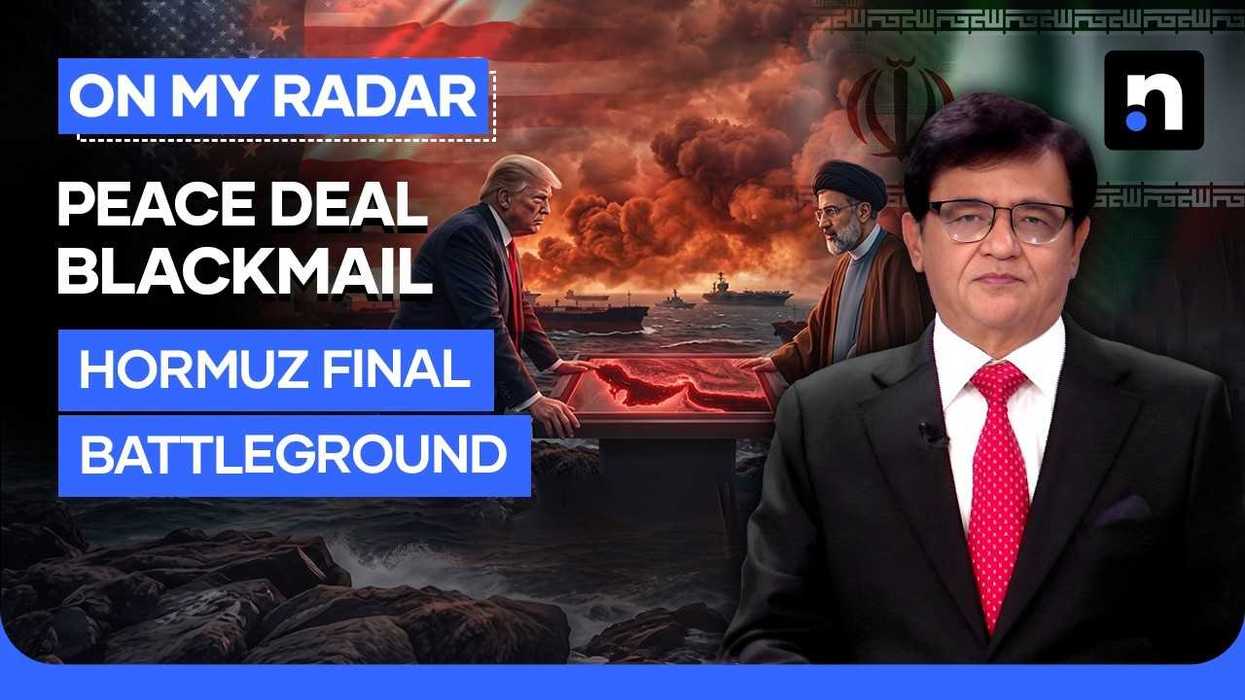
Kamran Khan said President Donald Trump has signaled that a second round of talks between the United States and Iran could begin within the next 36 to 72 hours, offering fresh hope for diplomacy after nearly two months of conflict.
Speaking on his show On My Radar, Khan said Trump told the New York Post that positive developments could emerge by Friday.
Khan said the current pause in missile and drone attacks was itself a source of relief after weeks of warfare that raised fears of a wider regional conflict.
He said the focus of the crisis had now shifted. According to Khan, Washington’s main objective was no longer Iran’s nuclear program, regime change or a ceasefire in Lebanon.
Instead, he said, the immediate issue had become the Strait of Hormuz, one of the world’s most strategically important shipping lanes.
Khan said peace prospects were effectively tied to whether the waterway remained open. “If Hormuz opens, the road to a peace deal opens,” he said.
The narrow strait connects the Persian Gulf to global markets and is vital for oil shipments. Khan said it also serves as a lifeline for Iran’s sanctions-hit economy.
He said Trump had extended a ceasefire for a third time at Pakistan’s request, but this time had also moved to tighten pressure on Iran through a blockade strategy.
Khan described the blockade as Trump’s key leverage, saying the U.S. president believed economic pressure could force Tehran to negotiate.
He said Trump had repeatedly claimed that the blockade was costing Iran $500 million a day.
According to Khan, around 90% of Iran’s economy depends on sea trade, while 40% of national income comes from oil exports.
He added that China buys about 90% of Iran’s oil, meaning restrictions around Hormuz were also affecting Chinese economic interests.
Khan said the strait had become a point of stubborn confrontation for both sides.
He said Iran was linking future talks to the lifting of the blockade, while the United States was insisting the pressure campaign would remain until a broader agreement was reached.
Khan cited Iran’s envoy to the United Nations, Amir Saeid Iravani, as saying Washington must first end the blockade before negotiations could proceed.
On the other side, Khan said Trump was using the blockade as a bargaining tool and wanted a deal before easing restrictions.
Still, Khan said Trump no longer wanted to continue the war and was eager for a rapid agreement with Iran.
He linked Trump’s latest ceasefire announcement to those efforts.
Khan said Trump wrote in a social media post that Iran’s government was “seriously fractured,” and announced that, at the request of Field Marshal Asim Munir and Prime Minister Shehbaz Sharif, military action against Iran would be delayed while Iranian leaders considered a joint proposal.
Khan said U.S. outlet Axios, citing unnamed officials, reported the ceasefire was not open-ended but intended for three to five days so Iran’s competing factions could coordinate a response.
He said Washington and Islamabad were now awaiting a message from Iran’s leadership.
Citing CNN and Axios, Khan said divisions had emerged inside Iran over how to handle negotiations with the Trump administration.
He said civilian leaders favored talks, while the Islamic Revolutionary Guard Corps opposed concessions and rejected negotiations until the naval blockade ended.
Khan added that media reports suggested an Iranian response was expected Wednesday, but none had emerged so far.
He also referred to confusion surrounding planned talks in Islamabad, where U.S. and Iranian delegations had been expected.
Khan said the United States stepped back after Iran showed no flexibility at the last moment.
He said Trump later held an emergency meeting with senior advisers before announcing another ceasefire extension.
Khan criticized Trump’s shifting public statements, saying they had damaged confidence in U.S. leadership during a volatile crisis.
He cited conflicting remarks over whether Vice President JD Vance would travel to Pakistan for talks.
According to Khan, Trump first said Vance would not attend for security reasons, then later said he was already en route, even though Vance was still in Washington at the time.
Khan said White House officials were forced to issue clarifications more than once.
He added that Trump then declared he would not extend the ceasefire again, only to reverse course hours later.
Khan said the rapid changes had raised a broader question for allies and rivals alike: whether Trump’s statements could be relied upon during high-stakes diplomacy.

Comments
See what people are discussing