

Trump threatens to bomb Oman over Strait of Hormuz negotiations with Iran
Trump threatens to bomb Oman if the Gulf nation interferes with US efforts to reach a Strait of Hormuz deal with Iran, raising regional tensions

News Desk
The News Desk provides timely and factual coverage of national and international events, with an emphasis on accuracy and clarity.
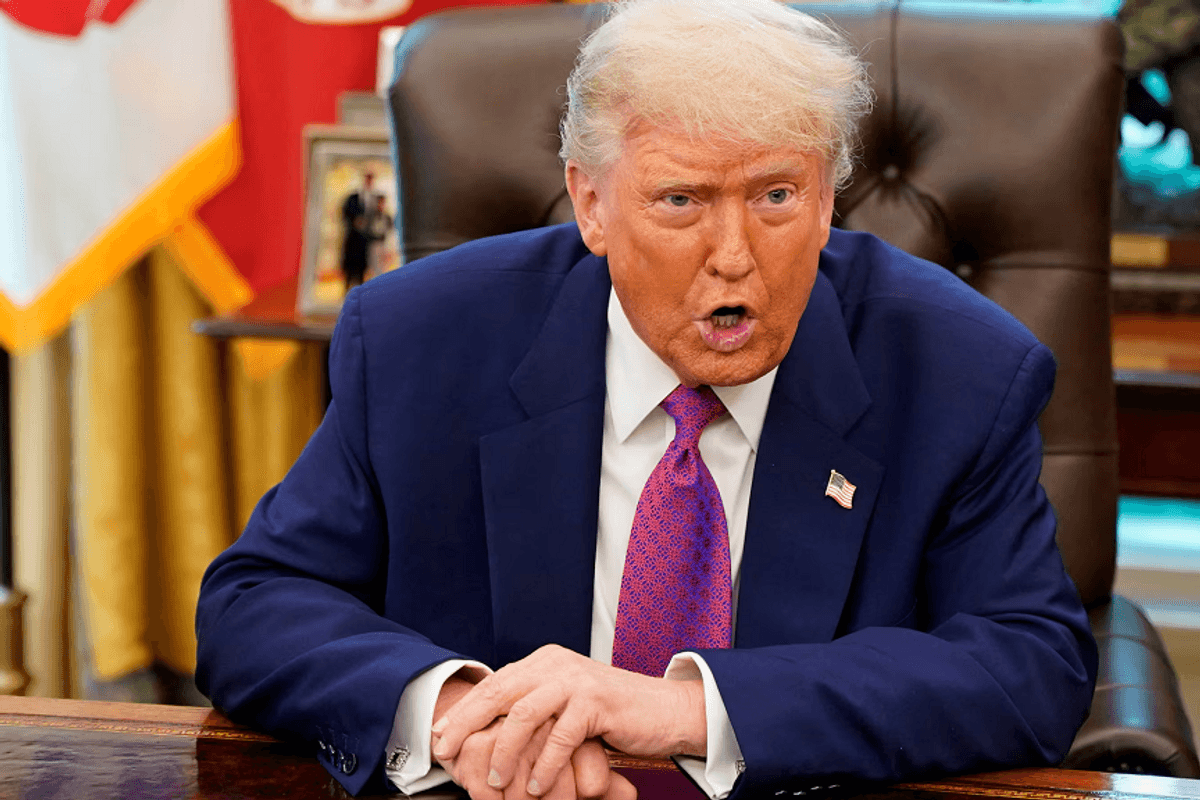
U.S. President Donald Trump threatened Monday to bomb Oman if the Gulf nation interferes with American efforts to secure a deal with Iran over the Strait of Hormuz.
The warning comes as Washington faces rising fuel prices and prolonged military deadlock six months into the regional conflict.
Why did Trump threaten to bomb Oman?
President Trump issued the threat during a Fox News interview after learning about parallel negotiations between Oman and Iran over transit rules in the Strait of Hormuz. Washington demands that Tehran surrender and accept American terms for reopening the vital waterway. Trump warned that any Omani interference in U.S. diplomatic objectives would trigger immediate military strikes.
According to account details shared by Fox News journalist Trey Yingst, Trump explicitly warned that the U.S. military would bomb Oman if the Gulf state disrupted American plans. Trump also urged Iranian leaders to raise the white flag of surrender to end the ongoing military standoff. Oman, a long-standing American ally in the Gulf region, has not issued an official public response to the remarks.
Trump maintained that his administration feels no urgency to resolve the conflict despite economic pressure in Washington. He revealed that American officials maintain a direct back-channel with leaders of Iran's Islamic Revolutionary Guard Corps. Trump characterized Iranian negotiators as skilled poker players while asserting that sanctions and military pressure are crippling their economy.
What is happening in the Strait of Hormuz negotiations?
Iranian and Omani diplomats have conducted weeks of bilateral discussions to establish future navigation arrangements through the narrow passage. Iranian foreign ministry officials confirmed Monday that both sides are preparing a joint declaration to define shipping routes. Iran controls the northern coastline of the waterway, while Oman borders the southern passage.
These regional talks gained momentum after the breakdown of a Pakistan-mediated interim agreement between Washington and Tehran. Renewed military exchanges near the waterway quickly disrupted maritime transport and expanded conflict across Middle Eastern commercial shipping corridors. Iran seeks to establish access controls and collect transit fees, a position that Washington opposes firmly.
International partners continue advocating for diplomatic solutions to reopen the global energy chokepoint. Turkish President Recep Tayyip Erdogan held a telephone conference with Trump, urging the White House to utilize diplomacy to de-escalate regional tensions. Reporting by The Guardian confirms that Turkey remains committed to supporting peaceful resolution efforts.
How does the Strait of Hormuz crisis impact US politics?
The prolonged closure of the Strait of Hormuz has severely choked global oil shipments and driven up domestic fuel costs across the United States. Rising energy prices create significant political challenges for Republicans as voters prepare for upcoming midterm elections. Opposition Democrats continue criticizing the administration over economic volatility and protracted military commitments.
Iran continues leveraging its control over the passage to counter American attempts to dismantle its military assets. Concurrently, Iran-aligned Houthi forces in Yemen maintain a naval blockade against Saudi Red Sea ports. This dual pressure restricts major oil export routes across the Middle East, amplifying broader global supply disruptions.
Trump recently suggested declaring the Strait of Hormuz a United States territory. Iranian officials rejected the claim promptly, declaring that the strategic waterway will remain under Iranian jurisdiction. Military analysts monitor the chokepoint closely as diplomatic efforts face continued friction from escalating political rhetoric.




Comments
See what people are discussing