

Trump warns Iran to open Strait of Hormuz or get 'hit very hard'
President Trump said talks with Iran are progressing but warned Tehran of severe military strikes unless it reopens the Strait of Hormuz to shipping

News Desk
The News Desk provides timely and factual coverage of national and international events, with an emphasis on accuracy and clarity.
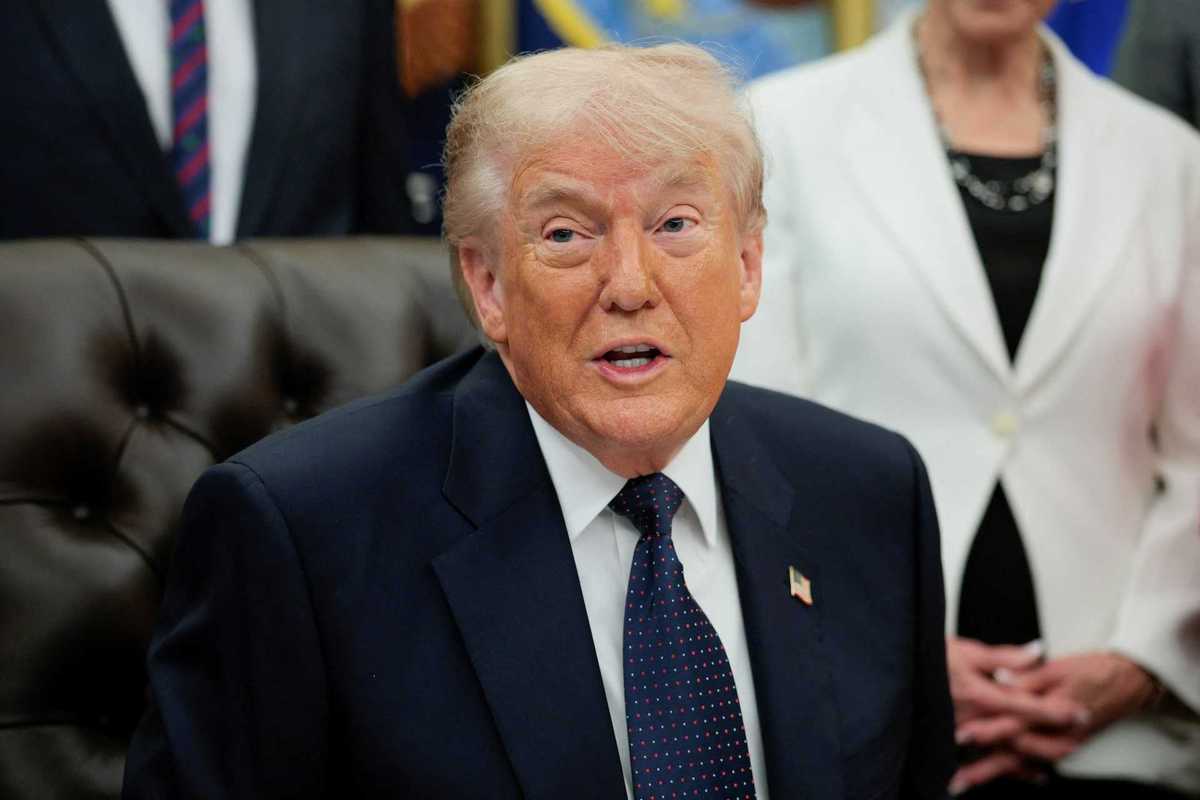
President Donald Trump said Tuesday that talks with Iran were progressing, while warning Tehran of severe military action if it does not reopen the Strait of Hormuz. He spoke during a visit to California, adding that Iran wants a deal to end five months of conflict with the United States.
Can Trump reopen the Strait of Hormuz?
Trump says a deal to reopen the Strait of Hormuz could come within days, citing progress in talks with Iran. Treasury Secretary Scott Bessent said an agreement to reopen the waterway could be reached within a day, a claim that pushed oil prices lower on Tuesday.
Trump combined calls for diplomacy with renewed threats at the White House on Monday, calling the moment Iran's "last chance before decapitation." The United States and Iran have been at war since Feb. 28, when Washington and Israel launched surprise attacks on Iranian targets. A ceasefire and preliminary agreement followed in later months, but diplomatic efforts have not ended the conflict.
The Strait of Hormuz connects the Persian Gulf to global shipping routes and remains central to the standoff. Iran wants to control the passage and charge tolls on vessels, a move Washington strongly opposes. Trump has repeatedly threatened military action while signaling a deal could be close, warning last week that Iran could be hit "very hard," including strikes on civilian infrastructure.
Who is mediating the Iran-US talks?
Iran's Foreign Ministry denied that negotiations with Washington were underway, despite Trump's repeated claims that talks were taking place. Secretary of State Marco Rubio said Tuesday that the United States was involved in negotiations with Oman and Iran aimed at increasing traffic through the Strait of Hormuz. Qatar, which has been mediating the talks, said negotiations were continuing but that no direct US-Iran meetings were planned.
Qatari Emir Sheikh Tamim bin Hamad Al-Thani spoke by phone with Trump on Tuesday, and Doha said the two leaders discussed efforts to de-escalate regional tensions. Trump said he expected to know by Tuesday "one way or the other" how the talks were progressing, describing the issues as "not very complex." Washington's goals include reopening the Strait of Hormuz and securing Iran's denuclearization, though Trump acknowledged the latter "could take a little while."
Trump accused Tehran of being "duplicitous" for denying the talks and said a US counter-blockade of Iranian ports would stay in place unless there was "a Deal, or Total Surrender." More than five months into the conflict, Iran continues to launch missiles and drones at US and allied targets in the region, as well as at commercial shipping. Britain's maritime security agency, UKMTO, said Tuesday that an unnamed cargo vessel was struck by an "unknown projectile" in the Strait of Hormuz off the coast of Oman, with one crew member reported missing.
How has the conflict affected Red Sea shipping and oil prices?
Iran continues to enforce what officials describe as an effective blockade of the strait, requiring ships to coordinate crossings with its authorities. The disruptions have increased the importance of the Red Sea route, where Iran-backed Houthi rebels in Yemen have declared a maritime blockade on Saudi Arabia. Saudi Arabia has kept exporting through its Red Sea port of Yanbu, allowing shipments to bypass the Strait of Hormuz.
On Tuesday, the Indian vessel MSV Faize Noore Oliya sank in the Red Sea off Yemen following an unattributed attack, though all crew members were rescued. The Red Sea provides access to the Suez Canal, a major global shipping route that earlier Houthi attacks during the Gaza war forced many vessels to avoid by rerouting around southern Africa. Oil markets reacted positively to renewed hopes for a Hormuz deal, with benchmark Brent crude falling more than 6% to below $79 a barrel.




Comments
See what people are discussing