

US-Iran ceasefire dispute over Lebanon clouds negotiations
Conflicting statements from Islamabad and Washington cloud ongoing diplomacy

Aamir Abbasi
Editor, Islamabad
Aamir; a journalist with 15 years of experience, working in Newspaper, TV and Digital Media. Worked in Field, covered Big Legal Constitutional and Political Events in Pakistan since 2009 with Pakistan’s Top Media Organizations. Graduate of Quaid I Azam University Islamabad.

Ali Hamza
Correspondent
Ali; a journalist with 3 years of experience, working in Newspaper. Worked in Field, covered Big Legal Constitutional and Political Events in Pakistan since 2022. Graduate of DePaul University, Chicago.
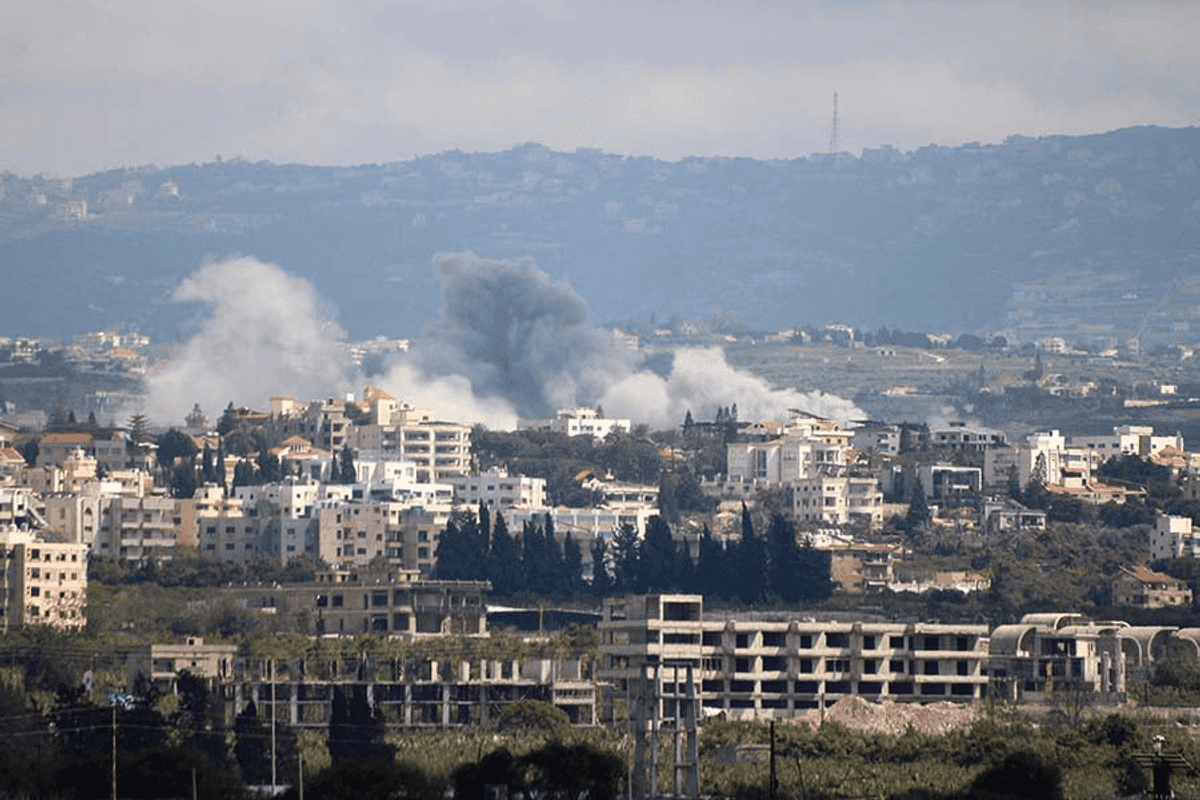
Negotiations between the United States and Iran are facing uncertainty amid a dispute over whether Lebanon was included in a recently announced ceasefire between the two countries.
The disagreement has raised questions about the scope of the truce and the durability of diplomatic efforts aimed at easing regional tensions.
U.S. President Donald Trump said Lebanon was not part of the ceasefire. His remarks contradicted Pakistan’s position as a mediator in the talks.
Prime Minister Shehbaz Sharif said in a message posted on X on April 8, 2026, that Iran and the United States had agreed to an immediate ceasefire “everywhere, including Lebanon and elsewhere.”
Pakistan, which has played a central mediating role, maintains that Lebanon was explicitly included in the arrangement. Officials in Islamabad said the agreement was designed to cover multiple fronts to reduce broader regional tensions.
Conflicting statements
Senior officials from Pakistan’s Ministry of Foreign Affairs told Nukta that the prime minister’s ceasefire announcement clearly included Lebanon. They said Pakistan also issued an official statement and discussed the matter in a phone call with the foreign minister of Saudi Arabia.
Another government official separately confirmed to Nukta that the ceasefire plan did include Lebanon.
White House spokesperson Karoline Leavitt said Lebanon was not part of the ceasefire arrangement, indicating that the truce was narrowly focused on U.S.-Iran tensions.
The differing accounts have added uncertainty to ongoing diplomatic contacts between Washington and Tehran.
On Thursday, Pakistan’s Ministry of Foreign Affairs condemned Israeli strikes on Lebanon, warning that they could undermine the recently brokered ceasefire.
In a press release, the ministry said the Israeli actions risk widening the conflict at a critical moment when diplomatic efforts had begun to ease tensions. It called for restraint and urged all parties to avoid steps that could jeopardize what it described as a fragile truce.
The warning came days after Pakistan led an urgent diplomatic push that resulted in a two-week ceasefire between Iran and the United States. The agreement, endorsed by Tehran and acknowledged by Washington, opened the door for further negotiations.
Israeli operations continue
Fresh Israeli strikes on Lebanon have raised concerns about whether the ceasefire can hold, particularly as tensions persist across multiple fronts in the region.
Israeli Prime Minister Benjamin Netanyahu said Israel would continue its operations in Lebanon, signaling no immediate pause despite ongoing diplomatic efforts.
International affairs expert Shaukat Paracha described Israel’s strikes as a “spoiler” to the ceasefire process. He said Israel may not favor a halt in conflict with Iran or a return to regional stability.
Paracha urged Washington and Tehran to remain cautious and continue dialogue despite disruptions. He said the United States should use its influence to press Israel to halt its attacks.
He added that sustainable peace in conflict situations requires compromise and warned that rigid positions could prolong instability.
United Nations officials have also expressed concern. They warned that escalating cross-border violence involving Lebanon could widen the conflict and undermine ongoing diplomatic efforts, calling for maximum restraint.
Analysts said the divergence over Lebanon highlights a vulnerability in the ceasefire framework. While the truce may have reduced the immediate risk of direct confrontation between Washington and Tehran, it does not address Israel’s parallel conflict dynamics in Lebanon.
Pakistan’s mediation had been credited with helping avert imminent military escalation and positioning the country as a key intermediary.
However, diplomats warned that if Israeli operations intensify and provoke a broader response from Iran or its regional allies, the ceasefire could collapse before substantive talks begin.



Comments
See what people are discussing