

US, Iran hold New York talks as Trump signals possible diplomatic breakthrough
Kamran Khan says three-hour talks offer a new diplomatic opening despite threats and Iran's tough demands

News Desk
The News Desk provides timely and factual coverage of national and international events, with an emphasis on accuracy and clarity.
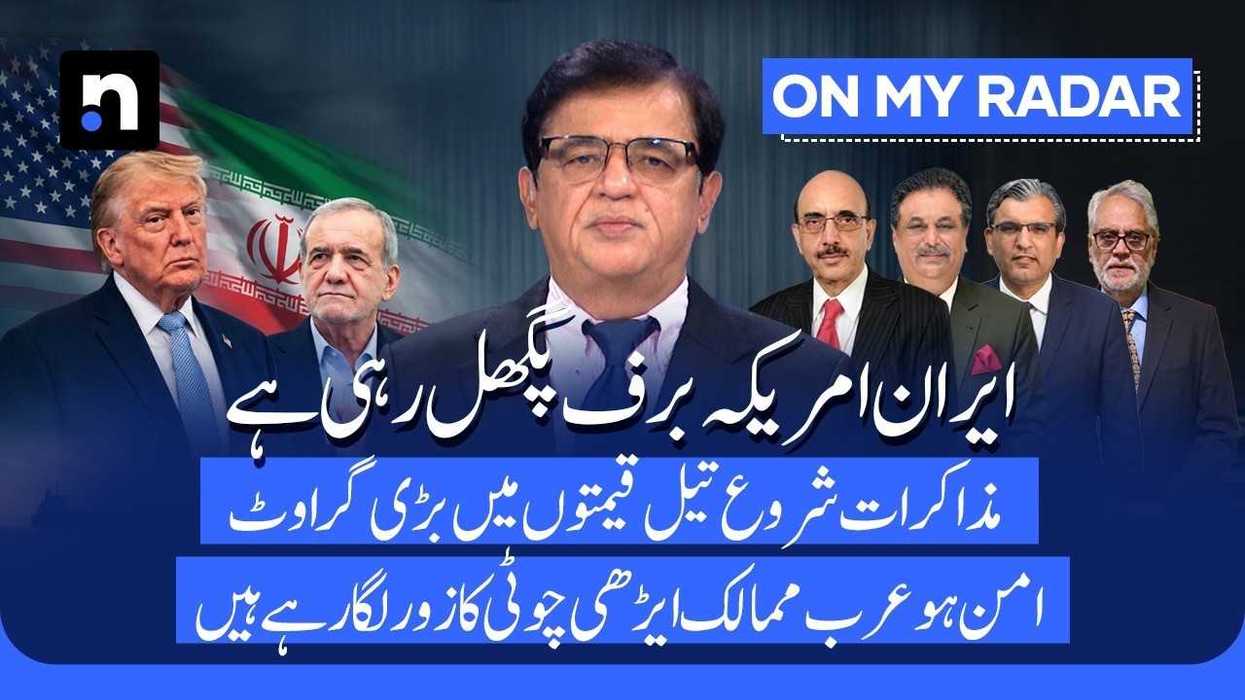
After three months of stalled diplomacy and seven months of war, U.S. and Iranian officials held talks in New York on the sidelines of the United Nations General Assembly, opening a new channel for discussions aimed at ending the conflict.
U.S. President Donald Trump said the talks lasted three hours and described them as a “very good” and “very productive” meeting, saying momentum toward a possible agreement had developed. The talks were held through Qatari mediation, with U.S. special envoy Steve Witkoff and Jared Kushner engaging with Iranian Foreign Minister Abbas Araghchi.
According to Witkoff, mediators repeatedly carried messages between the U.S. and Iranian delegations. He said one round of discussions had been completed and could prove “constructive and promising,” with the mediation effort expected to continue.
Trump gave a more direct account, saying Witkoff and Kushner had spent three hours meeting with Iranian officials. He called the meeting “very good” and “productive” and said there was significant momentum toward a deal.
The development came only hours after Trump used his address to the U.N. General Assembly to issue a stark warning to Iran. He said Tehran faced a choice between reaching a deal and being “annihilate[d],” while maintaining that the United States would not allow Iran to obtain a nuclear weapon.
Iran's Foreign Ministry confirmed that talks had taken place through Qatar and said Tehran had conveyed its conditions to Washington. Iran is seeking an immediate end to the war, an end to U.S. military pressure and the lifting of economic sanctions, along with the restoration of Iranian assets.
A senior Iranian official told Reuters that if the United States reduces military pressure and ends its blockade of Iranian ports, Tehran could reopen the Strait of Hormuz within seven days. The waterway is a critical route for global energy shipments, making its status a major issue in any effort to end the conflict.
Iran's security chief, Mohsen Rezaei, had also said in an interview with Al Jazeera that Tehran had conveyed its conditions to Washington through Qatar and Pakistan and was waiting for a U.S. response.
The diplomatic push has also involved Arab governments seeking to prevent further damage to their territory, infrastructure, shipping and economies. Trump met Tuesday with representatives of nine Arab countries to discuss the war and the broader regional situation.
Reuters reported that Qatar had proposed a regional security framework involving Iran and Gulf countries. A regional source said Iran was reviewing the proposal.
For Arab countries, the immediate concern is no longer only which side prevails in the war. Their priority is preventing further attacks from damaging their territory, infrastructure, shipping routes and economies.
Global oil markets have also reacted to signs of renewed diplomacy. Brent crude fell below $100 a barrel after rising on fears of a wider war. The benchmark has declined for six consecutive days, with the cumulative fall exceeding 9%. If the decline continues, it would mark Brent's longest losing streak since August 2025.
The New York talks mark the first shuttle discussions between the United States and Iran in months, although neither side has publicly announced a change in its core position. Reuters reported that the contacts raised hopes of progress but did not produce any publicly declared concessions.
The diplomatic opening therefore remains fragile. Trump continues to combine calls for an agreement with threats of further military action, while Iran is demanding an end to military pressure, the lifting of sanctions and restoration of its assets. Iranian President Masoud Pezeshkian said Wednesday that Tehran would not surrender but remained open to diplomacy to end the war.
Kamran Khan's analysis highlights the contrast between the threats exchanged publicly and the renewed diplomatic contacts taking place behind the scenes, as the United States, Iran and regional governments face growing pressure to find a way out of the conflict.



Comments
See what people are discussing