

US-Iran peace deal near as Hormuz reopens, markets rally
Kamran Khan says fresh moves on Hormuz and Lebanon signal a US-Iran peace deal may be near

News Desk
The News Desk provides timely and factual coverage of national and international events, with an emphasis on accuracy and clarity.
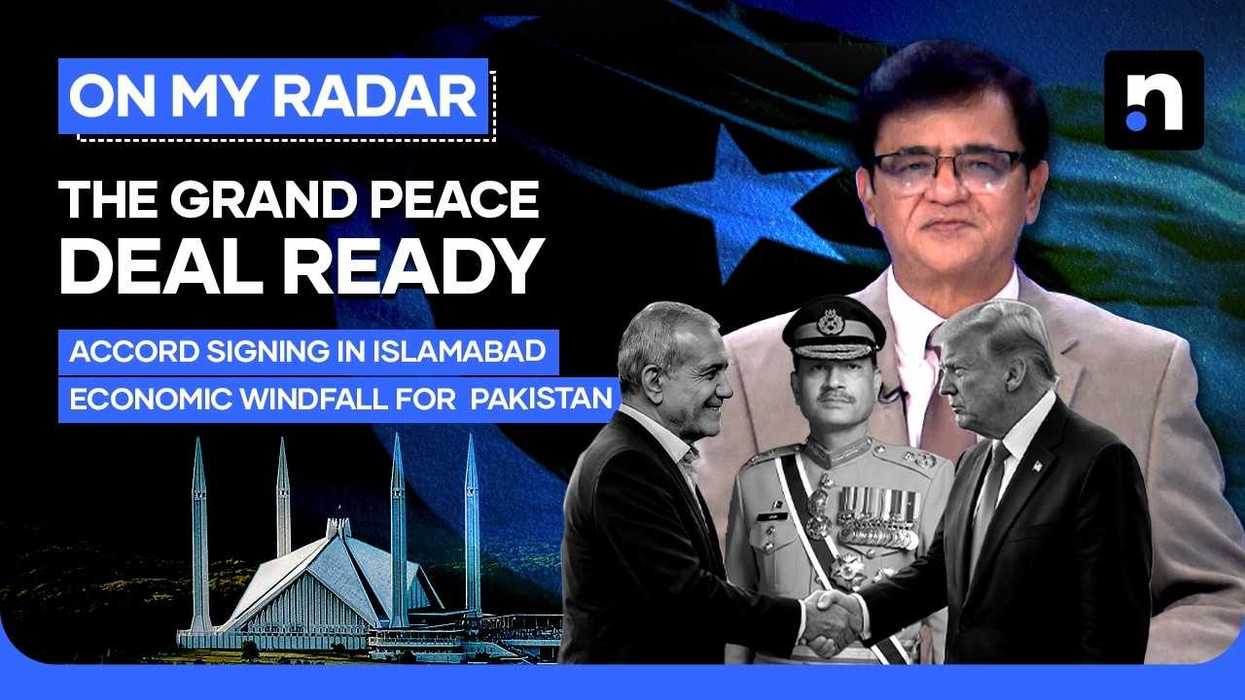
Kamran Khan says signs are emerging that the United States and Iran have reached a peace understanding, citing a series of developments over the past two days involving regional ceasefires, maritime access and diplomatic contacts.
Speaking on his program “On My Radar,” Khan said the first major signal came when U.S. President Donald Trump announced a 10-day ceasefire between Israel and Lebanon, which he described as meeting a longstanding Iranian demand.
Khan said Iran responded Friday by announcing the reopening of the Strait of Hormuz, one of the world’s most critical oil shipping lanes.
According to Khan, Iranian Foreign Minister Abbas Araghchi said in a post on X that all commercial ships would be allowed to pass through the strait during the ceasefire period, with traffic following routes designated by Iran.
Khan said Trump quickly thanked Iran in a post on Truth Social after the announcement.
He said global oil markets reacted sharply after Iran’s move. Brent crude fell about 11% to $88 per barrel, while U.S. benchmark West Texas Intermediate dropped nearly 12% to $83 per barrel.
Khan added that U.S. and European stock markets also rose after the developments.
Citing Iranian, American and Pakistani sources, Khan said the two sides had reached a basic compromise on the most important issues.
He said a memorandum of understanding, or MOU, could be signed soon, adding that only final drafting work remained.
Khan said informed sources told him that a peace statement expected from Islamabad was being prepared with a key role played by Field Marshal Asim Munir, who he said had spent the past three days in Iran holding talks with decision-makers.
According to Khan, Iranian President Masoud Pezeshkian thanked Pakistan for what he described as a sincere diplomatic role that also preserved Iran’s dignity and self-respect.
Khan added that Iranian Parliament Speaker Mohammad Bagher Ghalibaf also praised Pakistan, particularly Asim Munir, for efforts linked to the Lebanon-Israel ceasefire.
He said those remarks reflected Islamabad’s growing importance in the diplomatic process.
Khan said Trump’s public comments over the past day suggested urgency for a deal with Tehran.
He said Trump repeatedly told reporters that an agreement with Iran could happen soon.
Khan also said Trump claimed Iran was ready to accept terms related to its nuclear program and was prepared to return to the negotiating table.
He cited U.S. Sen. Lindsey Graham as saying Trump himself was engaged in direct talks with Iran.
Khan said, because of Pakistan’s mediation efforts, Trump had indicated a second round of talks could begin in Islamabad this week.
He added that Trump had also signaled he could visit Pakistan personally.
Khan said tensions over Lebanon had escalated before the first round of talks, but that obstacle was removed when Trump announced the Israel-Lebanon ceasefire Thursday night.
He added that Trump also told media he had invited Israeli Prime Minister Benjamin Netanyahu and Lebanese President Joseph Aoun to the White House for meaningful talks, which Khan said would be the first such effort since 1983.
Khan said international observers believed the Lebanon ceasefire made it easier to persuade Iran during negotiations.
He concluded that Friday had brought the world closer to peace, with Islamabad emerging as an important diplomatic channel.


Comments
See what people are discussing