

US-Iran standoff turns into high-stakes brinkmanship amid fading hopes for talks
Kamran Khan says Araghchi’s visit sparks hope, but deep mistrust stalls momentum

News Desk
The News Desk provides timely and factual coverage of national and international events, with an emphasis on accuracy and clarity.
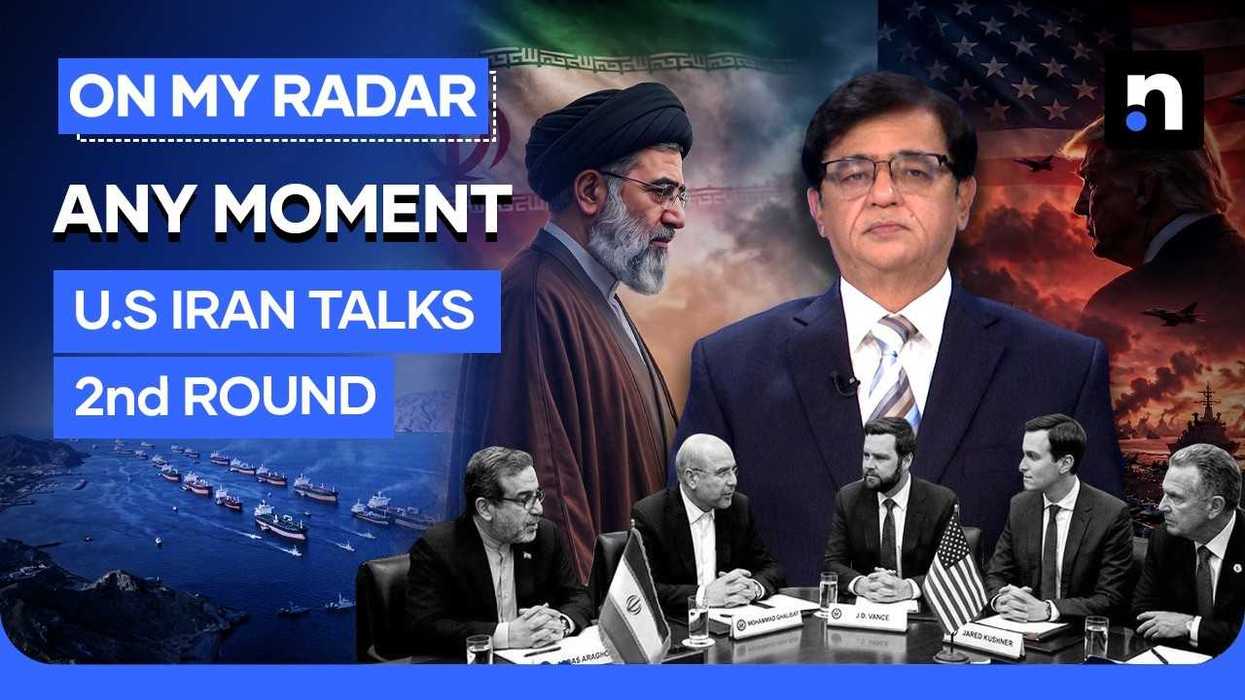
Tensions between the United States and Iran have evolved into what appears to be a “game of hide-and-seek” between hopes for peace and threats of war, according to remarks made during an episode of “On My Radar.”
News that Iranian Foreign Minister Abbas Araghchi would arrive in Islamabad raised expectations that a second round of U.S.-Iran negotiations might be imminent.
However, Iranian media later tempered those expectations, reporting that while Araghchi would visit Islamabad on Friday, his regional tour would also include Muscat and Moscow.
In a post on X, Araghchi said the purpose of his visits was to “closely coordinate with our partners on bilateral matters and consult on regional developments,” adding that “our neighbors are our priority.”
The initial assumption of renewed talks followed phone calls earlier in the day between Pakistan’s Chief of Army Staff Field Marshal Asim Munir, Deputy Prime Minister Ishaq Dar, and Araghchi, during which ceasefire-related matters were discussed.
Informed sources had suggested that peace negotiations between Washington and Tehran could soon resume, with Araghchi’s visit potentially laying the groundwork. But those expectations quickly faded, largely due to deep mistrust between the two sides.
Despite an undeclared extension of the ceasefire, Iranian leadership remains skeptical of U.S. President Donald Trump’s intentions, with doubts persisting in Tehran.
While direct military confrontation has subsided, a new phase of psychological pressure continues. Trump, for his part, appears less eager to secure a deal and has shown irritation when questioned about the ceasefire timeline.
Positioning around the Strait of Hormuz has become central to U.S. strategy. Speaking at the Oval Office, Trump said he was under no pressure to end the conflict and repeatedly stressed, “We have plenty of time” for talks with Iran.
Iran, meanwhile, appears keen to maintain the ceasefire. Despite the seizure of Iranian vessels by the United States, Tehran has refrained from retaliatory action.
Reports of internal divisions in Iran, along with the absence of Supreme Leader Mojtaba Khamenei from public view, have added to uncertainty. However, President Masoud Pezeshkian, Parliament Speaker Mohammad Bagher Ghalibaf, and Araghchi have jointly denied internal rifts and pledged loyalty to the supreme leadership.
Even as missile and drone exchanges have subsided, risks remain. The United States has increased its naval presence in the region, deploying a third carrier group – a move not seen since the 2003 Iraq war, according to U.S. Central Command.
U.S. Defense Secretary Pete Hegseth said Iran still has an “open window” for talks.
At the same time, Israel has signaled readiness to resume military action. Israeli Defense Minister Israel Katz said his country is prepared to restart war against Iran and is awaiting a “green light” from Washington.
Beyond the military standoff, concerns are mounting over the global economic impact of the crisis. Continued disruption around the Strait of Hormuz could have far-reaching consequences for global energy supplies.
The central question now is no longer just about sustaining a ceasefire, but which side will make the first move in a high-stakes standoff where both are waiting for the other to blink.

Comments
See what people are discussing