

US seeks fresh coalition to restore shipping in Hormuz, WSJ reports
US proposes new coalition called the Maritime Freedom Construct to restore commercial shipping through the Strait of Hormuz amid stalled Iran peace talks

News Desk
The News Desk provides timely and factual coverage of national and international events, with an emphasis on accuracy and clarity.
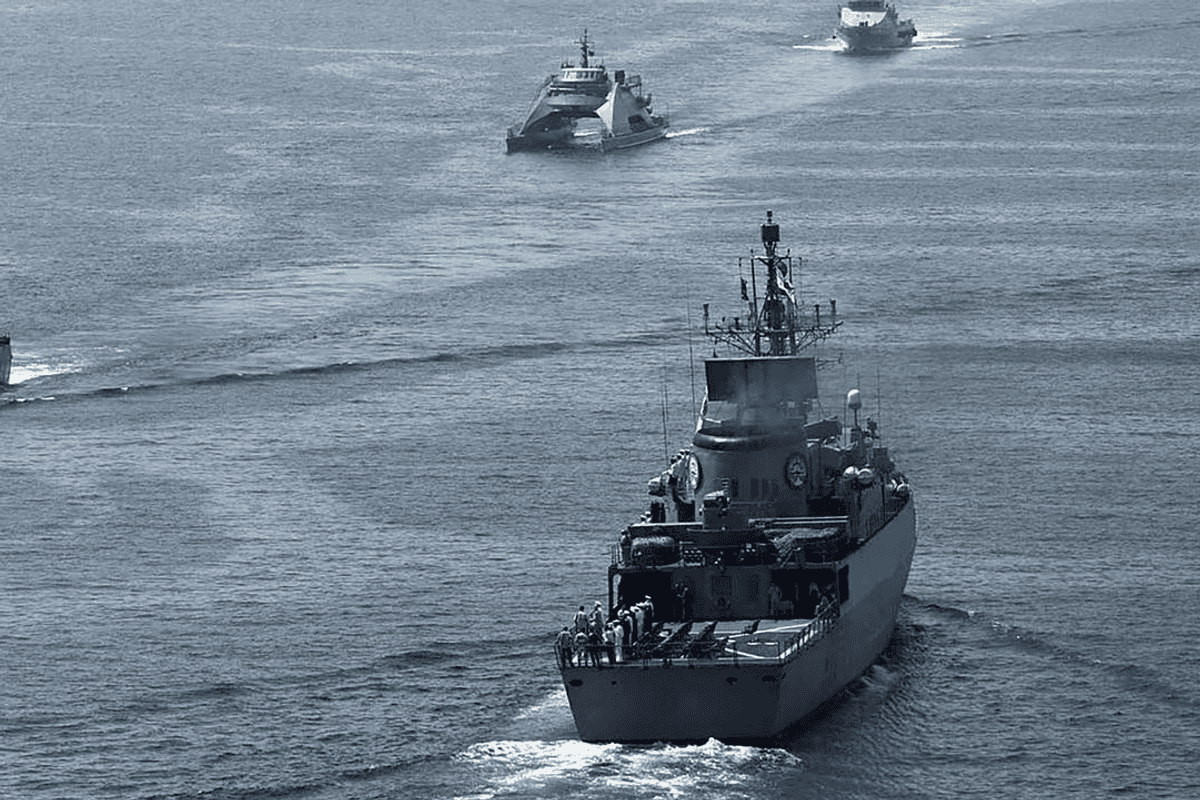
The United States is pushing to assemble a new international coalition to restore commercial shipping through the Strait of Hormuz, the Wall Street Journal reported, citing an internal State Department cable sent to US embassies earlier this week.
The initiative, called the Maritime Freedom Construct, asks foreign governments to join a US-led framework for information-sharing, diplomatic coordination and sanctions enforcement, weeks after President Donald Trump declared the waterway open for business but traffic remained disrupted.
What is the Maritime Freedom Construct and why is the US launching it?
The Maritime Freedom Construct is a proposed US-led coalition to restore safe navigation through the Strait of Hormuz. It would be jointly managed by the State Department and US Central Command. The State Department would serve as the diplomatic hub, while CENTCOM would provide real-time maritime awareness and coordinate intelligence-sharing among participating militaries.
The cable directs US diplomats to ask partner governments whether they wish to join as a "diplomatic and/or military partner."
A senior administration official confirmed the plan was among several policy options under consideration by the president. The initiative is not formally a military alliance, but it does seek both diplomatic and military participation from other nations.
Why are ships not moving through the Strait of Hormuz?
Iran has sought to disrupt transit through the strait by laying mines and targeting tankers that operate without its consent. Tehran has reportedly targeted vessels that do not pay transit fees. At the same time, the US Navy has imposed a broad blockade on ships linked to Iranian ports, leaving the critical waterway in a state of prolonged uncertainty.
Tensions over the strait have become a central obstacle in stalled US-Iran peace talks. The corridor carries roughly one-fifth of global oil supplies, and its disruption has driven volatile energy prices and rattled global markets.
Trump has instructed aides to prepare for a prolonged blockade until Tehran concedes to US nuclear demands, the Wall Street Journal previously reported.
What has Trump said about the Strait of Hormuz and the blockade?
Speaking in the Oval Office this week, Trump said the United States would continue the blockade and military campaign "unless they agree that there will be no nuclear weapon." He told reporters the blockade was "genius" and "100% foolproof." Earlier this month, he dismissed NATO as a "paper tiger," saying: "NATO didn't help us."
Trump has repeatedly criticized allies for failing to provide military support during the conflict with Iran. In late March, he suggested European partners should take the lead on securing the strait themselves.
"Build up some delayed courage, go to the Strait, and just TAKE IT," he wrote on Truth Social on March 31, adding: "Go get your own oil!"
What role are European countries playing in Hormuz security?
Senior European officials have pushed back against Trump's criticism, arguing they were not given advance notice of the US decision to go to war, which limited their ability to respond.
Several leaders have also publicly called the conflict a strategic misstep. European governments have since held multiple meetings to map out a post-conflict strategy for safe navigation through the strait.
The United Kingdom and France recently co-chaired discussions involving more than 50 countries on Hormuz security. US officials have criticized the pace of those efforts as too slow for a rapidly evolving crisis.
The State Department cable acknowledges the overlap, stating the Maritime Freedom Construct "would be complementary to other security maritime task forces, including the maritime planning effort the UK and France are leading."
What happens if the Strait of Hormuz stays closed?
The strait is the world's most important oil chokepoint, through which roughly one-fifth of global oil typically transits. Continued disruption keeps upward pressure on energy prices and threatens supply chains across Asia, Europe and beyond.
The cable warns that "collective action is essential to demonstrate unified resolve and impose meaningful costs on Iranian obstruction of transit through the Strait."



Comments
See what people are discussing