

US says Iran ceasefire intact despite UAE strikes, Hormuz tensions
Kamran Khan says tensions surged after UAE strike, but ceasefire remains intact

News Desk
The News Desk provides timely and factual coverage of national and international events, with an emphasis on accuracy and clarity.
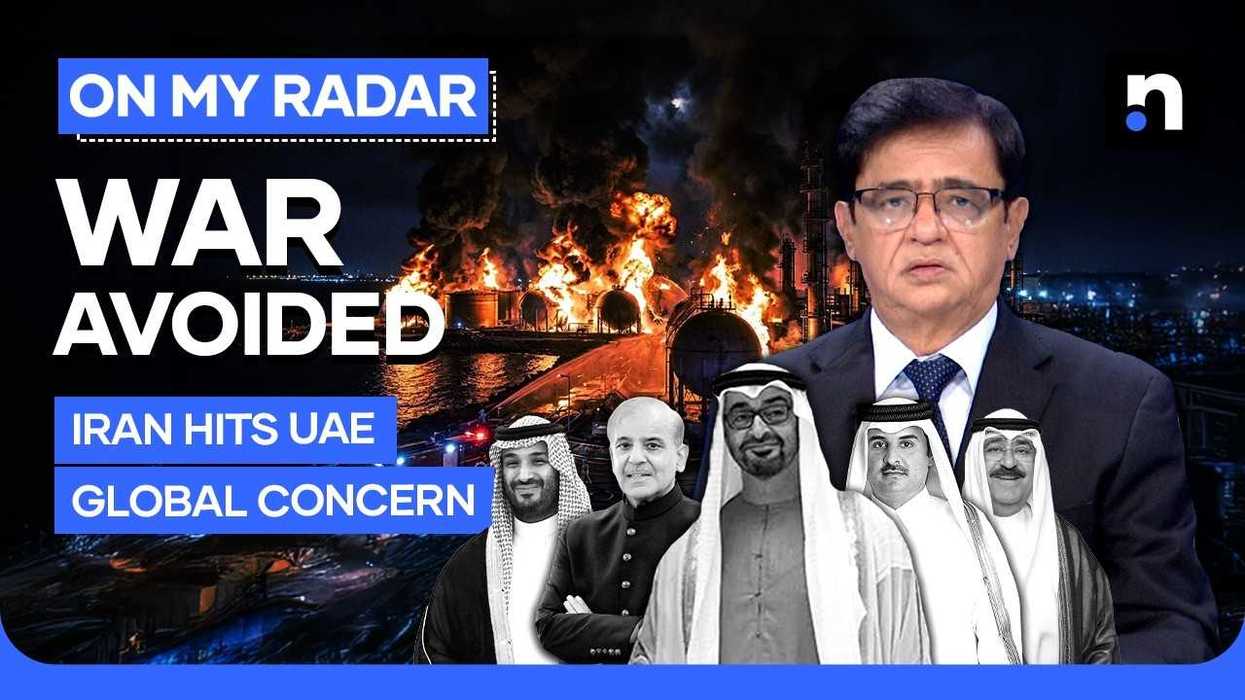
Kamran Khan says fears of a breakdown in the U.S.-Iran ceasefire eased after American officials signaled the truce remains intact despite rising regional tensions.
Speaking on his program “On My Radar,” Kamran Khan said the situation had appeared highly dangerous until recently, following clashes in the Strait of Hormuz and reported Iranian attacks in the United Arab Emirates.
He said the developments had raised concerns that the ceasefire could collapse and trigger a wider conflict in a key global energy corridor.
According to Kamran Khan, U.S. Defense Secretary Pete Hegseth rejected the possibility of renewed war and said the ceasefire had not ended. The statement provided a measure of relief after a sharp escalation in tensions.
Kamran Khan said U.S. military chief Gen. Dan Caine also offered reassurance, stating that Iran’s actions had not reached a level that would terminate the ceasefire.
He added that the United States has established a significant presence in the Strait of Hormuz amid ongoing tensions.
Kamran Khan said the situation worsened a day earlier after President Donald Trump’s push to reopen the strategic waterway under “Project Freedom” was met with a response from Iran.
The United Arab Emirates said Iran launched missile and drone strikes on the Fujairah oil port, triggering a fire and injuring three Indian nationals.
Kamran Khan noted that the Fujairah pipeline is designed to bypass the Strait of Hormuz, highlighting its strategic importance.
According to the UAE Defense Ministry, 12 ballistic missiles, three cruise missiles and four drones were intercepted. The UAE condemned the attack as unprovoked and described it as terrorism, while affirming its right to defend itself.
Kamran Khan said the attack drew strong global condemnation, including from Pakistan.
Prime Minister Shehbaz Sharif expressed solidarity with UAE President Sheikh Mohammed bin Zayed Al Nahyan, saying Pakistan stands with the Emirati government and people.
Saudi Crown Prince Mohammed bin Salman also condemned the strikes in a call with the UAE leadership, while other Arab states and European countries issued similar responses.
Kamran Khan said the global reaction reflects concern that tensions could escalate again after relative calm following the April 8 ceasefire.
He said Iran’s state media claimed the UAE attack was not preplanned, suggesting uncertainty within the country’s leadership.
Reports cited by Kamran Khan indicated internal divisions, with President Masoud Pezeshkian reportedly angered by actions attributed to the Islamic Revolutionary Guard Corps.
Pezeshkian described the UAE strikes as irresponsible and warned that escalating tensions with regional countries could have dangerous consequences, Kamran Khan said.
Iranian Foreign Minister Abbas Araghchi also warned the United States and the UAE against being drawn into a wider conflict, according to Kamran Khan.
He said Araghchi criticized “Project Freedom,” calling it “Project Deadlock,” and stressed that recent events show there is no military solution to the crisis.




Comments
See what people are discussing