

US, Iran trade strikes in new threat to ceasefire
US and Iran exchange strikes near the Strait of Hormuz, straining the ceasefire and pushing oil prices to a two-week high

News Desk
The News Desk provides timely and factual coverage of national and international events, with an emphasis on accuracy and clarity.
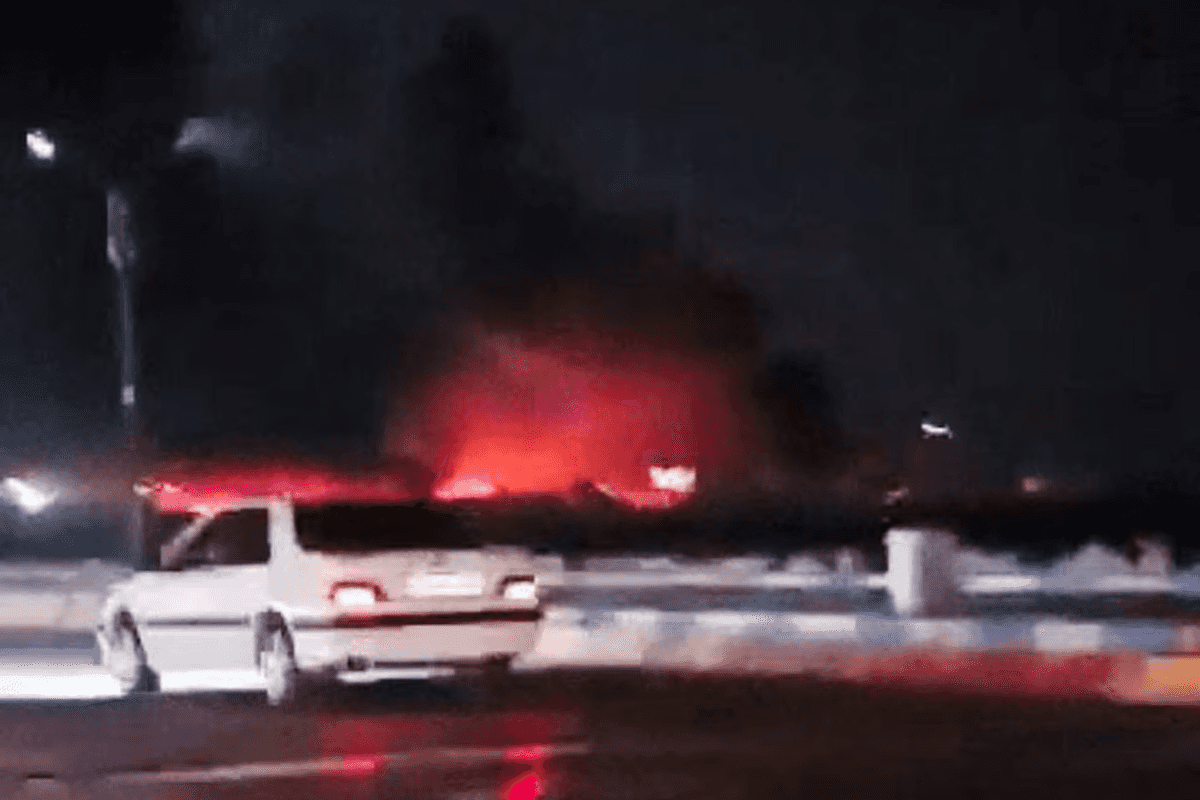
Smoke rises from a fire after an explosion, amid reports of explosions by Iranian state media, in Bandar Abbas, Hormozgan Province, Iran in this screengrab obtained from a social media video released July 8, 2026.
Reuters
The United States and Iran exchanged fresh strikes early Wednesday after Tehran hit three commercial ships in the Strait of Hormuz, straining the fragile ceasefire meant to end their war.
Washington revoked an oil sanctions waiver and struck more than 80 Iranian military sites, while Iran's Revolutionary Guards said they hit US bases in Bahrain and Kuwait.
Did the US strike Iran today?
Yes. The US military struck more than 80 Iranian targets Tuesday, including air defense systems, coastal radar sites and dozens of Revolutionary Guard boats, calling it retaliation for Iran's attacks on three commercial ships in the Strait of Hormuz. Iran responded by hitting US bases in Bahrain and Kuwait.
U.S. Central Command forces have begun launching a series of powerful strikes against Iran to impose heavy costs for targeting and attacking commercial shipping crewed by innocent civilians in an international waterway. The U.S. strikes are in response to Iranian attacks on three…
— U.S. Central Command (@CENTCOM) July 7, 2026
US Central Command said the strikes were meant to degrade Iran's ability to keep attacking commercial traffic through the waterway. Iranian state media reported explosions around the strait, including six on the island of Qeshm and seven in the city of Sirik. More blasts were reported in the port city of Bandar Abbas.
Why did Iran attack ships in the Strait of Hormuz?
Iran struck the vessels after Oman proposed a temporary transit corridor along its coastline, an idea Tehran opposed as it seeks to charge fees on ships using the strait. Britain's maritime security agency said an unknown projectile hit one tanker, sparking a fire, before two more ships were struck.
Major MOU Violations by the US:
Violating Iranian adjustments in the Strait
Persistent threats of further strikes
Reinstating oil sanctions
Attacks on southern Iran
Continued Zionist aggression on🇱🇧
The era of bullying and extortion is over. It leads nowhere. We don’t fold.
— محمدباقر قالیباف | MB Ghalibaf (@mb_ghalibaf) July 8, 2026
US Central Command identified the vessels as the Al Rekayyat, flagged in the Marshall Islands, the Saudi-flagged Wedyan and the Liberia-flagged Cyprus Prosperity. All three were struck near Oman. Qatar, which owns the Al Rekayyat, called the attack unacceptable and summoned Iran's deputy ambassador. Iran called Qatar's accusations unacceptable in turn.
What happened to Iran's oil sanctions waiver?
The US Treasury Department canceled a license issued in June that had let Iran produce, sell and deliver crude oil through August 21. The move raised pressure on Tehran as it negotiates a final settlement to the broader conflict.
A US official told AFP that Iran's actions in the strait were unacceptable and would carry consequences. The official said the US-Iran memorandum of understanding was entirely performance-based, adding that Tehran would only see benefits if it showed good behavior. US negotiators, the official said, were still working in good faith toward a final deal.
Is the US-Iran ceasefire still holding?
The ceasefire is under real strain, though talks continue. Iran's chief negotiator, Mohammad Bagher Ghalibaf, accused the US of major breaches of their agreement, including the reinstated oil sanctions and what he called violations of Iranian adjustments in the strait.
Oil prices jumped more than 2% in early Asian trading Wednesday, hitting a two-week high, as the renewed attacks revived fears over global energy supplies. Security expert Andreas Krieg of King's College London said Iran was signaling that no alternative fee system would be accepted, and that any tankers bypassing Iran through Oman's proposed corridor would face punishment.
Maritime traffic had cautiously resumed after Washington and Tehran signed their memorandum last month, but Iran has insisted there will be no return to pre-war conditions. Under their 14-point agreement, Iran and Oman must hold talks with other Gulf states on the strait's future administration. Qatar, once reluctant to mediate, has since hosted indirect talks between Iran and the United States.




Comments
See what people are discussing