


News Desk
The News Desk provides timely and factual coverage of national and international events, with an emphasis on accuracy and clarity.
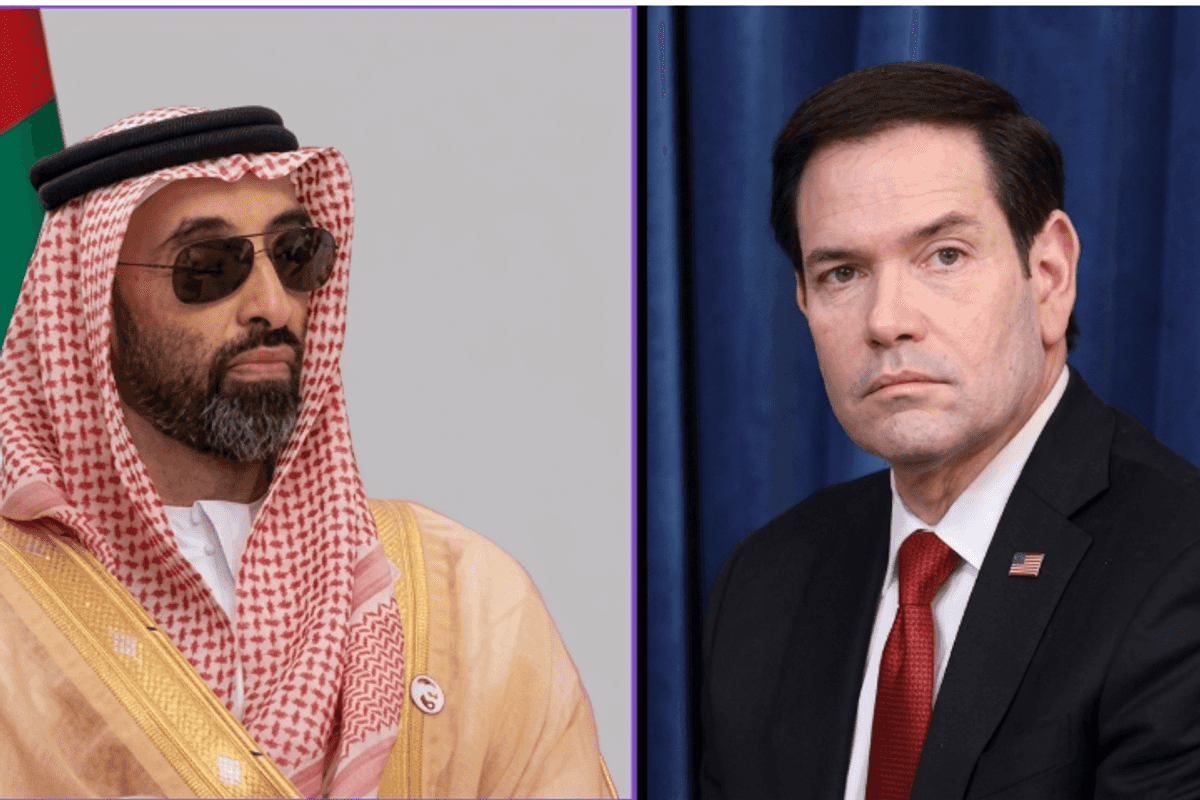
UAE National Security Advisor Sheikh Tahnoon bin Zayed Al Nahyan (L); US Secretary of State Marco Rubio (R).
Nukta
US Secretary of State Marco Rubio spoke on Wednesday with UAE National Security Advisor Sheikh Tahnoon bin Zayed Al Nahyan, with the two officials discussing freedom of navigation through the Strait of Hormuz, Lebanon, and US-UAE coordination to hold Iran accountable.
The State Department confirmed the call in a statement released earlier today.
The call came amid the UAE accusing Iran of firing two ballistic missiles toward commercial shipping lanes in the Gulf.
What did Rubio and the UAE discuss about the Strait of Hormuz?
The two officials discussed the importance of freedom of navigation through the Strait of Hormuz alongside a number of regional security issues, including Lebanon, according to the State Department statement. They also reaffirmed continued U.S.-UAE coordination to hold Iran and its proxies accountable for ongoing attacks. The call reflects deepening U.S.-UAE alignment on containing Iranian military activity as regional tensions continue to escalate.
The talks followed a significant escalation on Tuesday. The UAE Ministry of Defense confirmed detecting two ballistic missiles launched from Iranian territory targeting maritime navigation lanes in the Gulf. One missile landed in international waters while the second fell inside UAE territorial waters, prompting emergency authorities to briefly issue a nationwide missile threat alert to residents.
The Rubio-Tahnoon call came on the same day UAE President Sheikh Mohamed bin Zayed Al Nahyan also spoke with US President Donald Trump, according to WAM. The two leaders discussed bilateral cooperation, ways to strengthen US-UAE ties, and the latest developments in the Middle East.
What was the UAE's response to the Iranian missile incident?
The UAE Ministry of Economy announced an immediate suspension of all commercial trade and financial transactions with Tehran following the missile incident, citing escalating regional security risks. National air defense tracking systems had identified the incoming projectiles as direct threats to commercial vessel traffic. A brief emergency mobile phone alert instructed residents to seek shelter after the incident was confirmed.
Iran's foreign ministry spokesman Esmaeil Baqaei categorically denied the claims, saying Tehran had not launched any missiles toward the Gulf state. He said unverified accusations harm regional trust and undermine diplomatic security initiatives between neighboring nations. The denial follows a pattern of disputed claims between Tehran and Gulf states over attacks on shipping and civilian infrastructure since the conflict began in February.



Comments
See what people are discussing