

Vance, Rubio strike different tone on Iran and Israel
Vance and Rubio have offered contrasting views on Israel's actions even as the White House insists there is no rift over Iran policy

News Desk
The News Desk provides timely and factual coverage of national and international events, with an emphasis on accuracy and clarity.
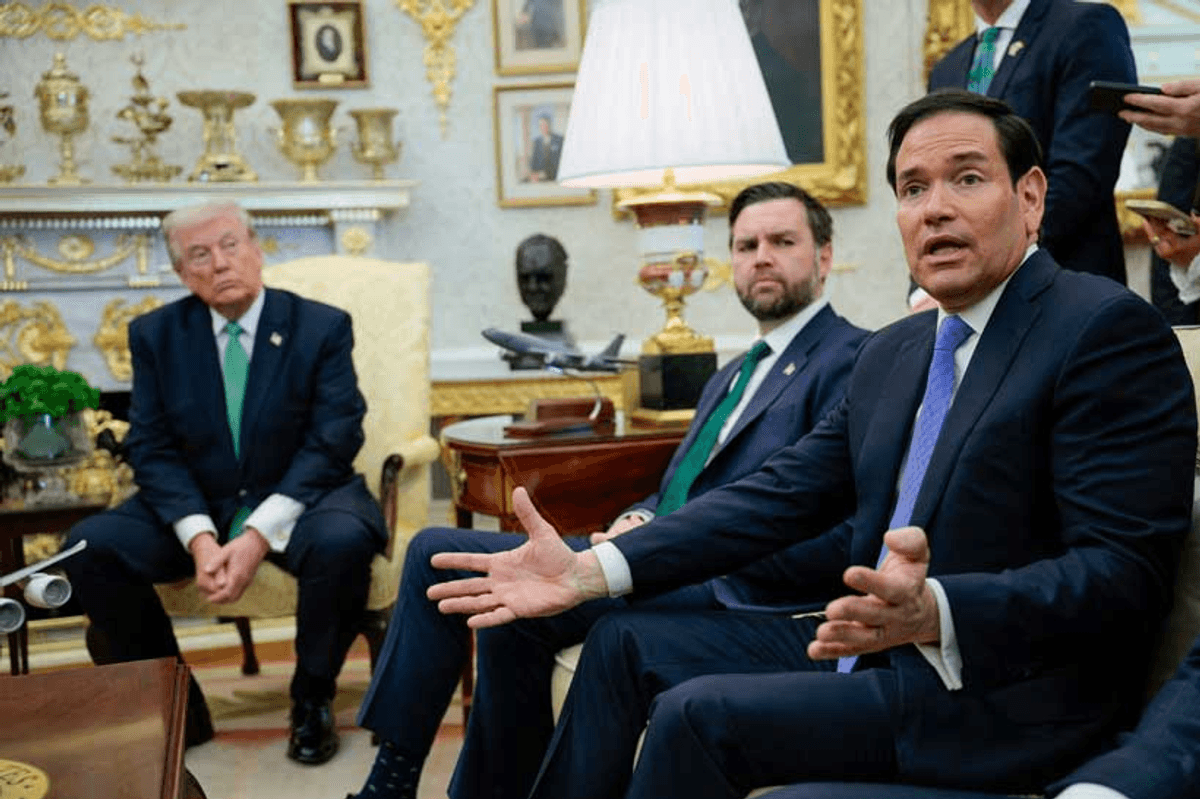
The White House has firmly denied any divergence between Vance and Rubio.
Reuters/File
President Donald Trump's administration has pushed to present a united front on the Iran war.
But Vice President JD Vance and Secretary of State Marco Rubio have diverged in their public statements over the past week, particularly on Israel's military campaign against Hezbollah in Lebanon, Reuters reported.
Are Vance and Rubio split on Iran and Israel?
Yes, their public comments have differed. Vance criticized Israeli strikes on Beirut infrastructure as harmful to U.S.-led peace efforts, while Rubio defended Israel's campaign as a justified response to Hezbollah attacks. The White House denies any real policy division between the two men.
Vance, speaking at the White House last week, said Israeli bombings of civilian infrastructure in Beirut were undermining the preliminary U.S.-Iran deal. The strikes were aimed at weakening Hezbollah, which has continued attacking Israel from Lebanese territory.
Rubio, who traveled through the Gulf this week, repeatedly described Israel's actions in Lebanon as a justified response to Hezbollah. When reporters pressed him on Vance's criticism, he deflected and instead recounted a Hezbollah assault on an Israeli checkpoint earlier in the week.
What were Vance and Rubio doing abroad this week?
Both men were sent on high-profile trips to defend the interim U.S.-Iran peace accord signed on June 17. Vance traveled to Switzerland for talks with Iranian officials, while Rubio visited the UAE, Kuwait and Bahrain to reassure allies worried the deal favors Tehran.
Speaking to reporters on Sunday, Vance struck an optimistic tone on the Iran talks. He has said in recent weeks that Gulf states could help fund Iran's reconstruction, and he revealed in an interview released Thursday that the U.S. had invited an Iranian intelligence official to act as a deconfliction liaison with the Pentagon in Qatar.
Rubio took a more cautious line on the same issue. On Tuesday, he said he would not ask Gulf allies to fund Iran's reconstruction during his trip, calling that possibility "far down the road." On Thursday, he told regional officials that any deal must be ironclad in protecting U.S. and allied interests. "While we want a deal, we don't want a deal at any price," he said.
Has the White House addressed the apparent rift?
The White House has firmly denied any divergence between Vance and Rubio. Spokeswoman Anna Kelly said the administration is unified behind Trump's goal of preventing Iran from acquiring a nuclear weapon. State Department spokesman Tommy Pigott called talk of a foreign policy split "tired and fake," adding that the administration is "100% in lockstep" behind the president.
A separate State Department spokesperson said there was no divergence on Lebanon specifically, framing the administration's shared goal as restoring Lebanese government sovereignty over its territory. Not everyone is convinced by these denials, however.
What do analysts say about the Vance-Rubio divide?
Michael Rubin, a senior fellow at the American Enterprise Institute, said the two officials hold clearly different views despite the public denials. "At their core they represent different strains," he said. Their backgrounds support that reading: Vance has criticized foreign wars as costly, while Rubio built his Senate career as a hawk on Iran, Russia and Cuba.
Both men are viewed as potential 2028 presidential contenders and represent competing factions within the Republican Party. Neoconservatives tend to favor foreign intervention, while a growing bloc of Republican voters and policy professionals argue recent wars were reckless and expensive. A Reuters/Ipsos poll that closed Monday found only 52% of Republicans believe the Iran conflict has left the U.S. in a stronger position, underscoring that party divide.
Have Vance and Rubio actually agreed on anything?
Despite their different tones, both men have backed every major Trump foreign policy decision, including the capture of Venezuelan leader Nicolas Maduro, the February strike on Iran and the subsequent push for peace. Both have also said they will judge Iran by its actions rather than its words as negotiations continue.
Asked Thursday how his views on Iran differed from Vance's, Rubio said both men take their cues from Trump. "Everyone here is aligned behind the president," he said.



Comments
See what people are discussing