

War with Iran faces mounting skepticism among Americans and US allies
Kamran Khan says divisions at home and in Europe are complicating Washington’s strategy in Iran conflict

News Desk
The News Desk provides timely and factual coverage of national and international events, with an emphasis on accuracy and clarity.
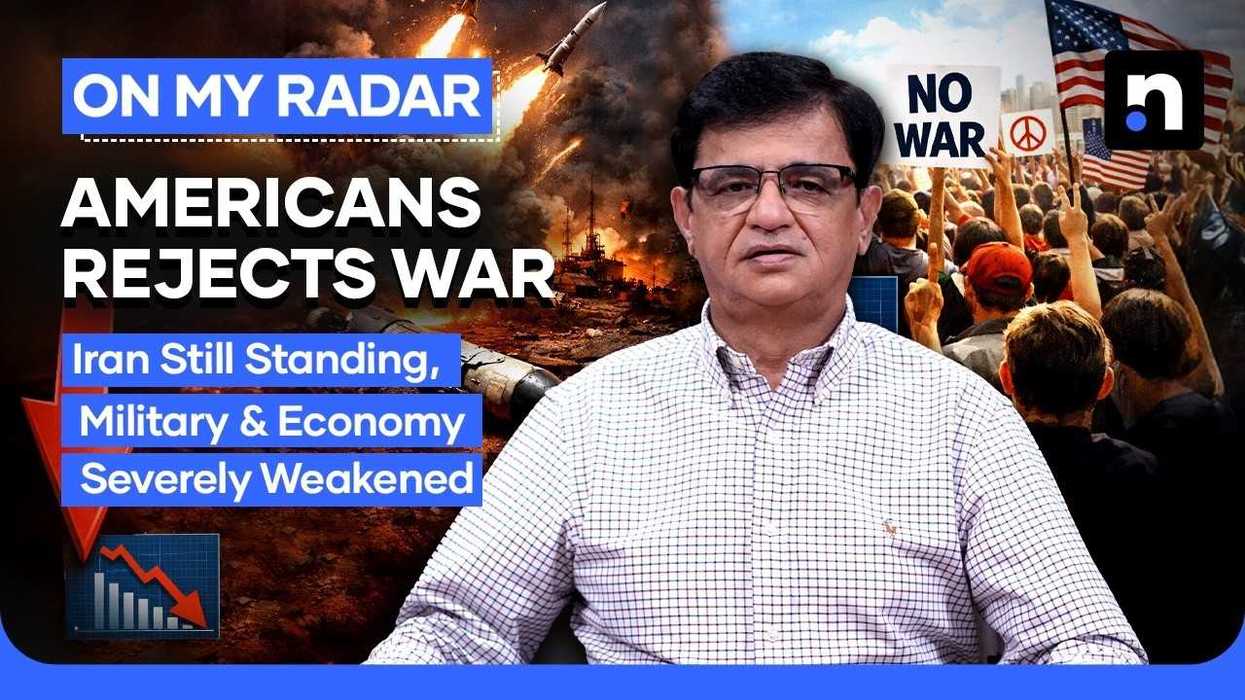
The shockwaves of the ongoing conflict involving Iran are spreading far beyond the battlefield, triggering political debate, economic uncertainty, and rising skepticism among the American public.
Speaking on the latest episode of “On My Radar,” Kamran Khan said the military confrontation — marked by U.S. and Israeli airstrikes and Iranian missile and drone attacks — is increasingly becoming a political issue inside the United States rather than simply a regional security operation.
In a discussion on the program, Masood Khan, former Pakistan ambassador to the United States and China and former Pakistan envoy to the United Nations, joined Yousuf Nazar, former Citigroup emerging markets investments head and chief macro strategist.
Both analysts examined the political, military, and economic consequences of the conflict and warned that the situation could rapidly evolve into a broader geopolitical crisis if not contained.
Recent polling by Reuters and Ipsos suggests public opinion in the United States is divided. Only about 27% of Americans support U.S. and Israeli military action against Iran, while 43% oppose it. Another 29% say they remain undecided about the conflict.
The survey also indicates growing concern about President Donald Trump’s decision-making. About 56% of respondents said the president moved too quickly in using military force against Iran.
Analysts say those numbers reflect a deeper fatigue in American society after two decades of military involvement overseas, particularly in Iraq and Afghanistan. The prospect of another prolonged Middle East conflict is reviving memories of costly and politically divisive wars.
Public opinion in the United States could become a decisive factor if the conflict drags on. They said the political environment in Washington may shift quickly if economic pressure rises or if American troop casualties begin to mount.
Political divisions inside the United States are also widening. Republican voters largely support the military campaign against Iran, while most Democrats and independent voters remain skeptical. Even within Republican circles, however, support appears conditional.
According to the Reuters–Ipsos survey, roughly 42% of Republican voters say they could withdraw their support if U.S. troop casualties begin to rise.
Economic concerns are already emerging as one of the most significant factors shaping public opinion.
Global oil markets reacted immediately after the conflict began, with prices rising amid fears of disruptions in the Strait of Hormuz, a vital shipping route that carries nearly 20% of the world’s oil supply.
If shipping through the narrow waterway is disrupted, analysts warn that global energy prices could spike sharply, affecting transportation, food costs, and inflation worldwide.
Polling data suggests Americans are already worried about those economic consequences. About 45% of respondents told Reuters and Ipsos that they would be less supportive of the war if gasoline and fuel prices rose significantly.
Economists warn that higher energy prices could increase transportation costs, push up airline fares, and eventually drive food prices higher — adding new pressure on the U.S. economy at a time when policymakers are already trying to control inflation.
The political implications could be significant for the Trump administration, especially as the elections approach.
At the same time, Washington is also facing growing criticism from European allies.
British Prime Minister Keir Starmer recently said any military intervention must have clear legal justification and a defined strategy, warning that airstrikes alone cannot achieve regime change.
Spain’s Prime Minister Pedro Sánchez went further, saying the world should not gamble with the fate of millions of people by escalating military conflict.
Those comments have added to diplomatic tensions between Washington and several European capitals.
President Trump responded by criticizing Britain’s leadership and suggesting that Spain could face economic consequences if it continues opposing the military campaign.
On the battlefield, U.S. officials say the joint U.S.–Israeli operation has targeted thousands of sites across Iran, including missile bases, air force facilities, drone installations, and command centers.
According to U.S. military officials, more than 2,000 targets have been struck in recent days, and several Iranian naval vessels and missile launchers have been destroyed.
Military analysts say the strikes appear to have slowed the pace of Iranian ballistic missile attacks. U.S. officials estimate that such attacks have declined significantly in recent days as launch facilities and supply networks are disrupted.
However, Iranian drone operations continue to pose challenges.
Defense officials say hundreds of Iranian drones have been launched toward targets across the Gulf region, with some managing to evade air defenses.
In the Capitol Hill briefing this week, U.S. defense officials acknowledged that Iranian low-flying drones have proven more difficult to detect and intercept than initially expected.
For Washington, the broader strategic question remains unresolved.
If the conflict remains short and limited, U.S. officials may present it as a strategic success. But if fighting continues, disrupts oil markets or spreads across the Middle East, analysts say the political consequences could grow significantly, both internationally and within the United States.



Comments
See what people are discussing