

Rising food costs lead to slight uptick in Pakistan’s weekly inflation
On a year-on-year basis, the Sensitive Price Indicator recorded an increase of 3.20%

Business Desk
The Business Desk tracks economic trends, market movements, and business developments, offering analysis of both local and global financial news.
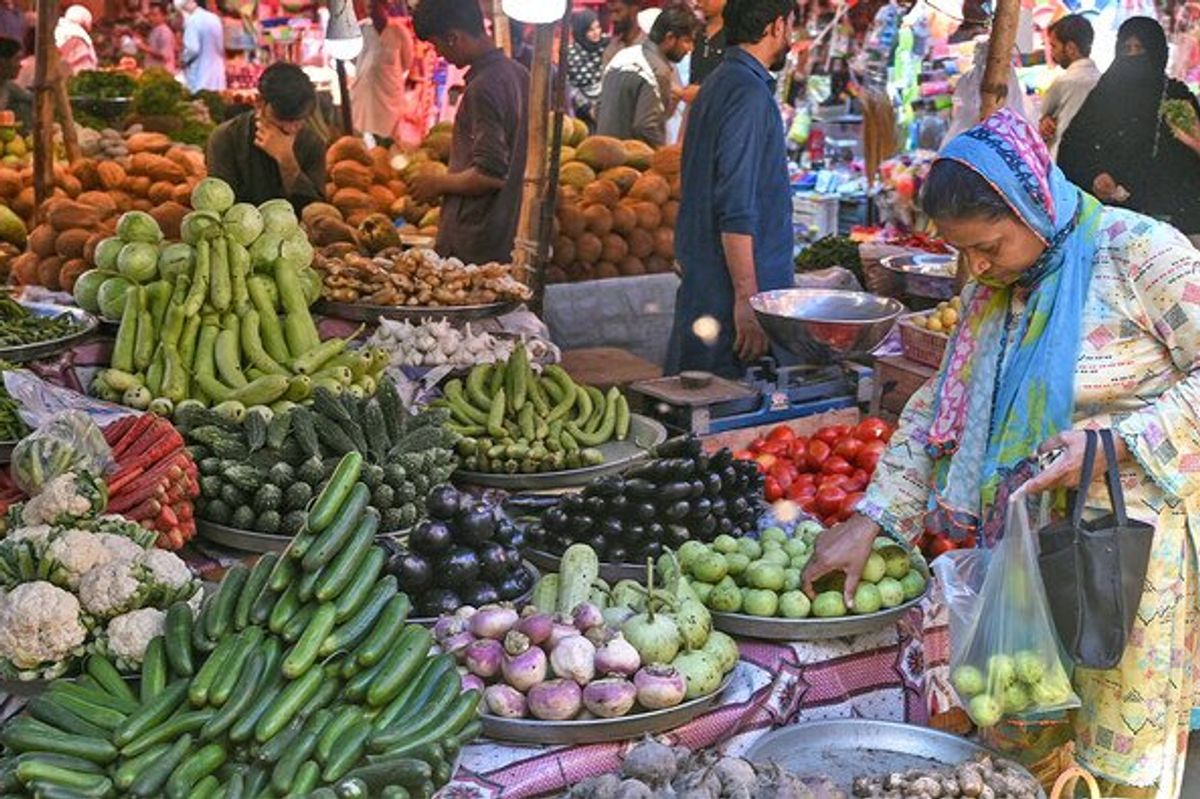
The biggest week-on-week increase was observed in the prices of wheat flour
Pakistan’s weekly inflation increased by 0.12% in the first week of January due to higher food prices, according to official data.
On a year-on-year basis, the Sensitive Price Indicator (SPI) went up by 3.20%.
According to data released by the Pakistan Bureau of Statistics (PBS), the biggest week-on-week increase was observed in the prices of wheat flour (5.07%), chicken (2.86%), garlic (2.44%), chilies powder (1.01%), and LPG (0.88%).
The items whose prices saw the biggest decline included potatoes (3.73%), onions (2.20%), pulse gram (1.51%), eggs (1.44%), and pulse mash (0.65%).
The price of wheat flour registered an increase of 31.12% year-on-year, followed by gas prices (29.85%), beef (13.15%), chilies powder (11.43%), and sugar (11.18%).
Inflation trackers
Pakistan tracks inflation weekly and monthly. The former is called the SPI, while the latter is tracked through the Consumer Price Index (CPI).
The SPI, which tracks the prices of 51 essential commodities from 50 markets across 17 cities, is used as a key gauge of short-term inflation trends.
During the week from January 2-8, the prices of out of 51 items, prices of 21 (41.18%) items increased, 08 (15.68%) items decreased and 22 (43.14%) items remained stable.
In December, the CPI or headline inflation cooled to 5.6% after staying over 6% during the previous two months.
The number was in line with the analysts’ expectations, who had forecast the inflation to remain within the range of 5.8%.
The government and the State Bank of Pakistan (SBP) have projected cumulative inflation for fiscal year 2025-26 in the 5% to 7% range, citing improved economic conditions.
Earlier this month, the Asian Development Bank (ADB) said Pakistan’s economic growth outlook has strengthened for 2025 and 2026 as prices of key food items have stabilized after spiking in the months following last year’s floods.
The ADB noted that Pakistan’s government has revised its GDP growth estimate for FY25 to 3%, up from an earlier 2.7% projection. Despite disruptions from the June flooding, the economy expanded 5.7% in the fourth quarter, and large-scale manufacturing has grown robustly in recent months of FY26.



Comments
See what people are discussing