

IMF Pakistan head, OICCI discuss Pakistan's economic outlook, Middle East conflict risks
Fund’s representative notes challenges for Pakistan despite economic stabilization

Business Desk
The Business Desk tracks economic trends, market movements, and business developments, offering analysis of both local and global financial news.
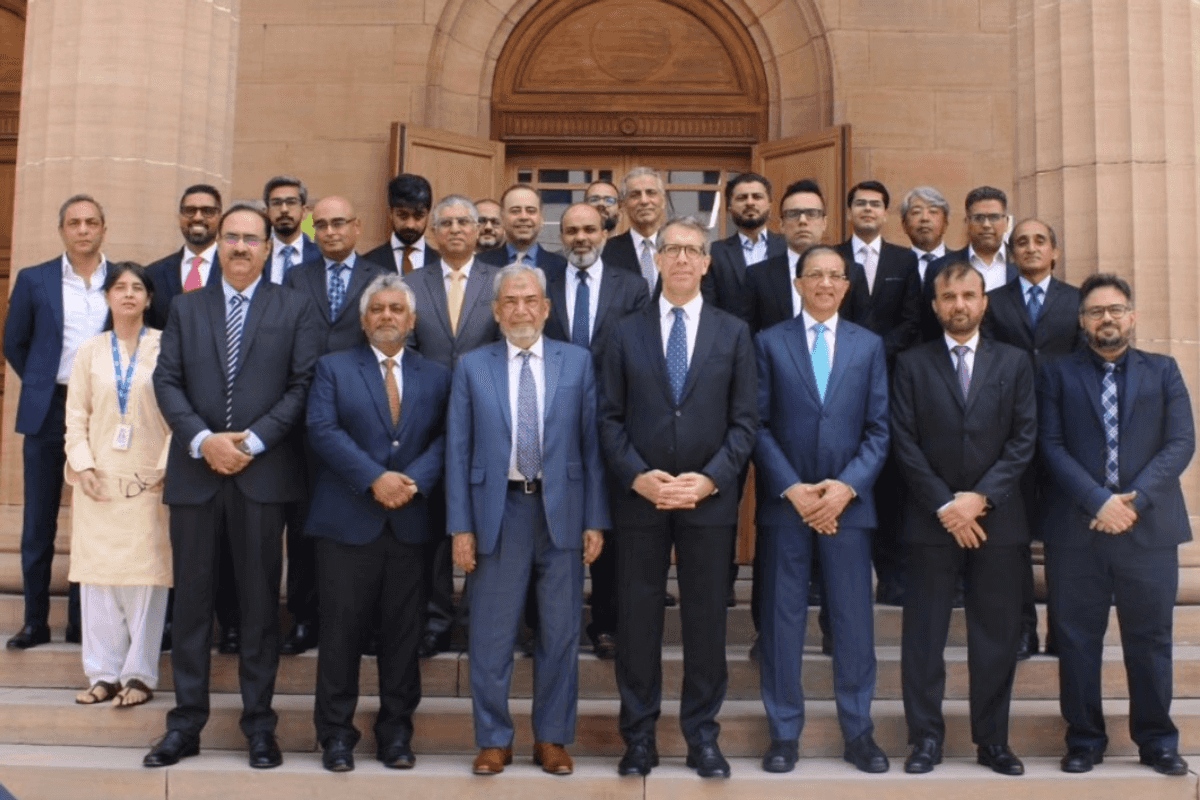
Overseas Investors Chamber of Commerce and Industry representatives pose with the IMF resident representative in Pakistan, Mahir Binici, on Monday
OICCI/Facebook
The Overseas Investors Chamber of Commerce and Industry (OICCI) hosted the IMF resident representative in Pakistan, Mahir Binici, on May 11 for a session on Pakistan's economic outlook and the evolving global landscape.
The discussion covered the completion of the third review of Pakistan's IMF program and the economic implications of the ongoing Middle East conflict.
What did the IMF resident representative discuss with OICCI?
Binici highlighted that Pakistan's stabilization efforts under the IMF program have helped restore confidence, strengthen external buffers, and support macroeconomic stability.
The IMF Executive Board has disbursed $1.1 billion under the Extended Fund Facility and $200 million under the Resilience and Sustainability Facility following the third review. Total disbursements under both arrangements now stand at $4.8 billion.
How is the Middle East conflict affecting Pakistan's economy?
The session explored the economic impact of the ongoing Middle East conflict, particularly the sharp rise in oil prices and disruptions to global energy markets.
Discussions covered the potential effects on Pakistan's growth trajectory, remittances, inflation, exchange rate management, and external account performance.
The IMF representative noted that Pakistan faces increasingly challenging global conditions despite its domestic stabilization progress.
What policy priorities did OICCI members raise with the IMF?
Member company representatives engaged in dialogue on fiscal discipline, exchange rate flexibility, structural reforms, energy pricing, tax broadening, and banking sector resilience.
Participants strongly emphasized maintaining reform momentum and improving policy predictability to support sustainable economic growth.


Comments
See what people are discussing